
Why Your AC Runs Nonstop When It's 105F+ in Apache Junction
When it is 108 outside, a long-running AC is often doing exactly what it should. Here is how to tell the difference between a hard-working system and one that is actually failing.
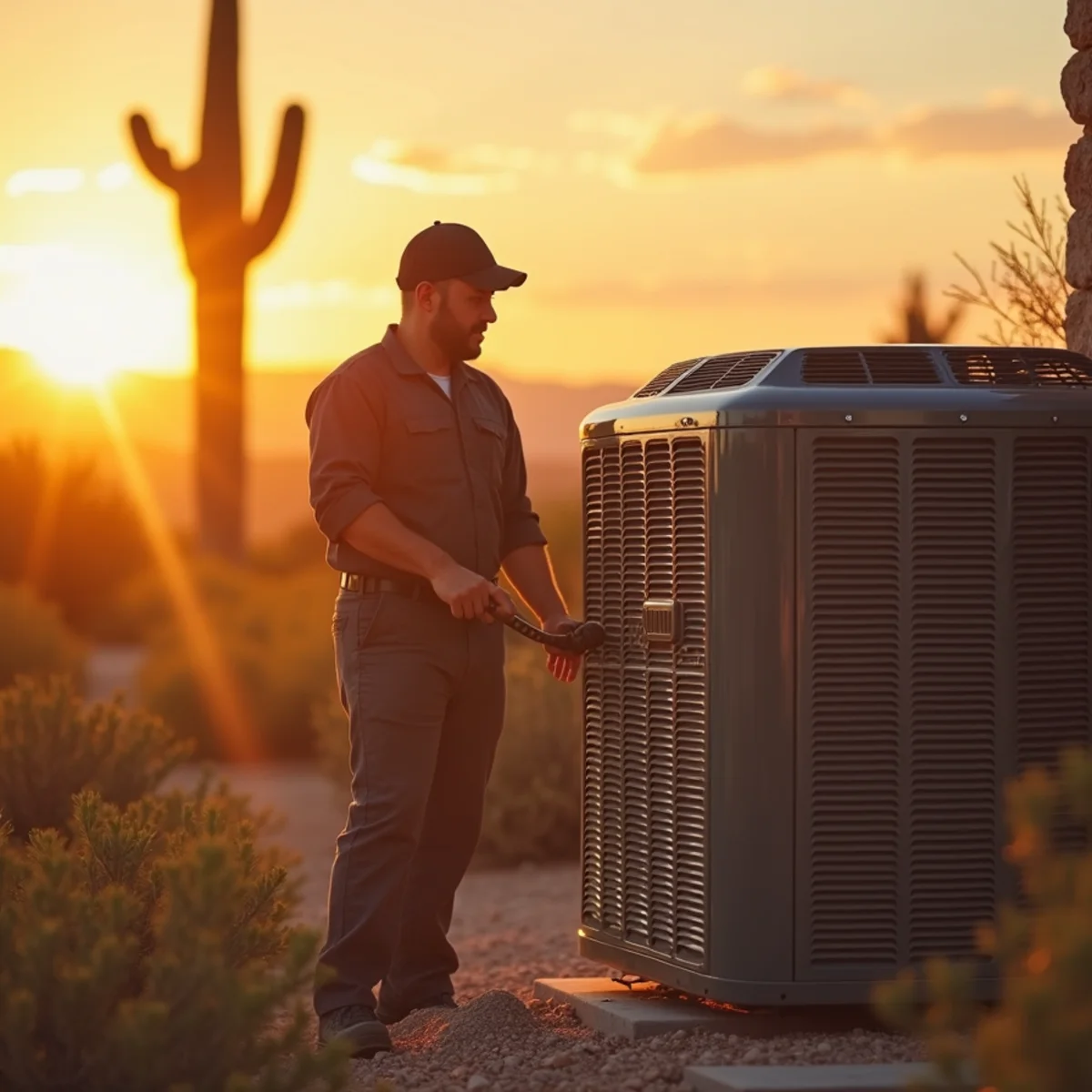
It is the middle of July in Apache Junction, the outdoor thermometer reads 108, and your air conditioner has not shut off since breakfast. Before you assume the worst, take a breath. On the hottest afternoons of the year, a healthy system running almost continuously is not a malfunction. It is physics. The real question is not whether your AC runs a lot, but whether it can still hold the temperature you set.
This guide walks through why long run times are normal in our climate, the warning signs that separate a hard-working unit from a failing one, and the handful of things a homeowner can safely check before calling a professional.
Long Run Times Are Normal in Extreme Heat
Air conditioners are sized to pull your home down to a comfortable temperature on a design day, not to blast through a 110-degree afternoon in twenty minutes. A properly sized system in Apache Junction is expected to run 80 to 90 percent of the time when outdoor temperatures push past 105. If your house is holding at 78 while it is 108 outside, your AC is winning, even if the compressor rarely stops.
The rule of thumb most of our technicians use: a healthy AC should maintain roughly a 20 to 25 degree difference between the outdoor temperature and the indoor temperature. At 108 outside, holding 83 to 85 inside is the ceiling of what many residential systems can do. Expecting 72 in that heat is asking for more than the equipment was designed to deliver.
When Nonstop Running Signals a Real Problem
Constant running becomes a red flag when the house keeps drifting warmer even though the system never rests. If the thermostat is set to 78 and the room climbs past 82 while the unit runs all afternoon, something is dragging the system down. Here are the usual suspects we find on service calls across town.
- A dust-caked condenser coil. Our haboobs and dry soil pack the outdoor coil with a felt of dirt that traps heat and forces the compressor to work harder for less cooling.
- A clogged air filter. Desert dust loads filters twice as fast here, and a choked filter starves airflow across the indoor coil.
- Low refrigerant from a slow leak. Undercharged systems lose capacity and run endlessly trying to catch up.
- A failing capacitor or weak compressor that no longer moves refrigerant efficiently.
- Leaky ductwork in a 140-degree attic, dumping cooled air into unconditioned space before it ever reaches your rooms.
- Undersized equipment, or a home with poor insulation and sun-baked west-facing windows.
The capacitor is the single most common failure we see after a monsoon power surge. If you want the deeper story on that, our write-up on capacitor failure after a monsoon storm covers the symptoms in detail. When capacity drops for any of these reasons, the fix usually calls for our same-day AC repair in Apache Junction team to measure refrigerant, temperatures, and electrical draw.
What You Can Safely Check Yourself
None of these steps require opening an electrical panel or touching refrigerant lines. Work through them in order before you call.
- Check the air filter. If it is gray and matted, replace it. In dust season, plan on a fresh filter every 30 days.
- Walk to the outdoor condenser and look at the coils. If you can barely see metal through the dirt, that airflow is choked. You can gently rinse the fins with a garden hose on low pressure, spraying from the inside out, but only with the breaker off at the disconnect. If that feels like more than you want to take on, leave it for a pro.
- Confirm every supply register is open and unblocked by furniture, rugs, or boxes.
- Close blinds and curtains on west and south windows during peak afternoon sun. West-facing glass in Apache Junction is a heat cannon from 3 to 7 p.m.
- Raise the thermostat setpoint two or three degrees during the worst heat. Asking for 76 at 4 p.m. in July may simply be beyond the equipment, and easing off lets it recover.
- Feel the air at a vent. Comfortably cool is fine. Room-temperature air means capacity has dropped and it is time to call.
| What you notice | Likely meaning | Your move |
|---|---|---|
| Runs constantly, holds 78-82 | Normal for extreme heat | No action needed; ease the setpoint up |
| Runs constantly, house keeps warming | Lost capacity (coil, filter, refrigerant) | Check filter and coil, then call |
| Warm air at the vents | Refrigerant, capacitor, or compressor | Shut it off and schedule a repair |
| Ice on the copper lines | Airflow or refrigerant problem | Turn system off, call for service |
The Local Angle: Why AJ Systems Struggle More
Apache Junction sits at the base of the Superstition Mountains where reflected heat, blowing dust, and monsoon power surges gang up on cooling equipment. Homes on the sun-exposed east side and the older block-and-frame ranches around town often run builder-grade systems that were marginal even when new. Add a decade of dust-loaded coils and a slow refrigerant leak, and a unit that once cycled comfortably now runs flat out and still loses ground.
If your system genuinely cannot keep up on a normal 104-degree day, that is worth a professional look before the worst of the season. Our guide to July heat and AC emergencies in Apache Junction explains why a marginal system becomes an emergency fast, and homeowners across Pinal County can reach us same-day when the heat turns dangerous.
The bottom line: a long run time by itself is not a diagnosis. A system that holds temperature is healthy. A system that runs nonstop and still loses the house needs a technician to measure what is actually happening under the hood.
Frequently Asked Questions
Not by itself. In Apache Junction, a correctly sized system is expected to run 80 to 90 percent of the time when it is over 105 degrees outside. Long run times only signal trouble when the house keeps getting warmer despite the system never resting.
Most residential systems can only pull indoor air about 20 to 25 degrees below the outdoor temperature. At 110 outside, holding the mid-80s may be the equipment's honest limit. If it used to do better, a dirty coil, clogged filter, or low refrigerant is likely the reason.
No. Shutting it off lets the house and everything in it soak up heat, and the system then runs even harder trying to recover. Set a steady, realistic temperature and let it hold rather than cycling it on and off.
Yes. Easing the setpoint up two or three degrees during the 3 to 7 p.m. peak reduces the load the system fights against, lets it catch up, and lowers your energy bill. It is the simplest relief for a system that is running constantly.
Talk to a Local Apache Junction Technician
Same-day across Apache Junction & Gold Canyon — 24/7 in triple-digit heat.
Call +1 (327) 210-5999Related articles
July in Apache Junction: Why 104F Average Highs Make AC Failure an Emergency
In most of the country a broken AC is an inconvenience. In an Apache Junction July, with average highs of 104F and stretches past 110F, it becomes a genuine health emergency in hours. Here is the math, the risk, and the plan.
Read moreCapacitor Failure After a Monsoon Storm: AJ's Most Common Breakdown
The single most common AC failure we fix in Apache Junction is a blown capacitor. Here is how to spot it, why our heat and monsoon storms cause it, and why it is one of the cheaper fixes if you catch it fast.
Read more