
Post-Haboob Condenser Cleaning: A Step-by-Step Safety Guide
After a monsoon haboob rolls through, your outdoor AC coil can be caked in fine dust that chokes cooling. Here is how to clean it safely, the steps you must never skip, and the exact moments to stop and call a pro.
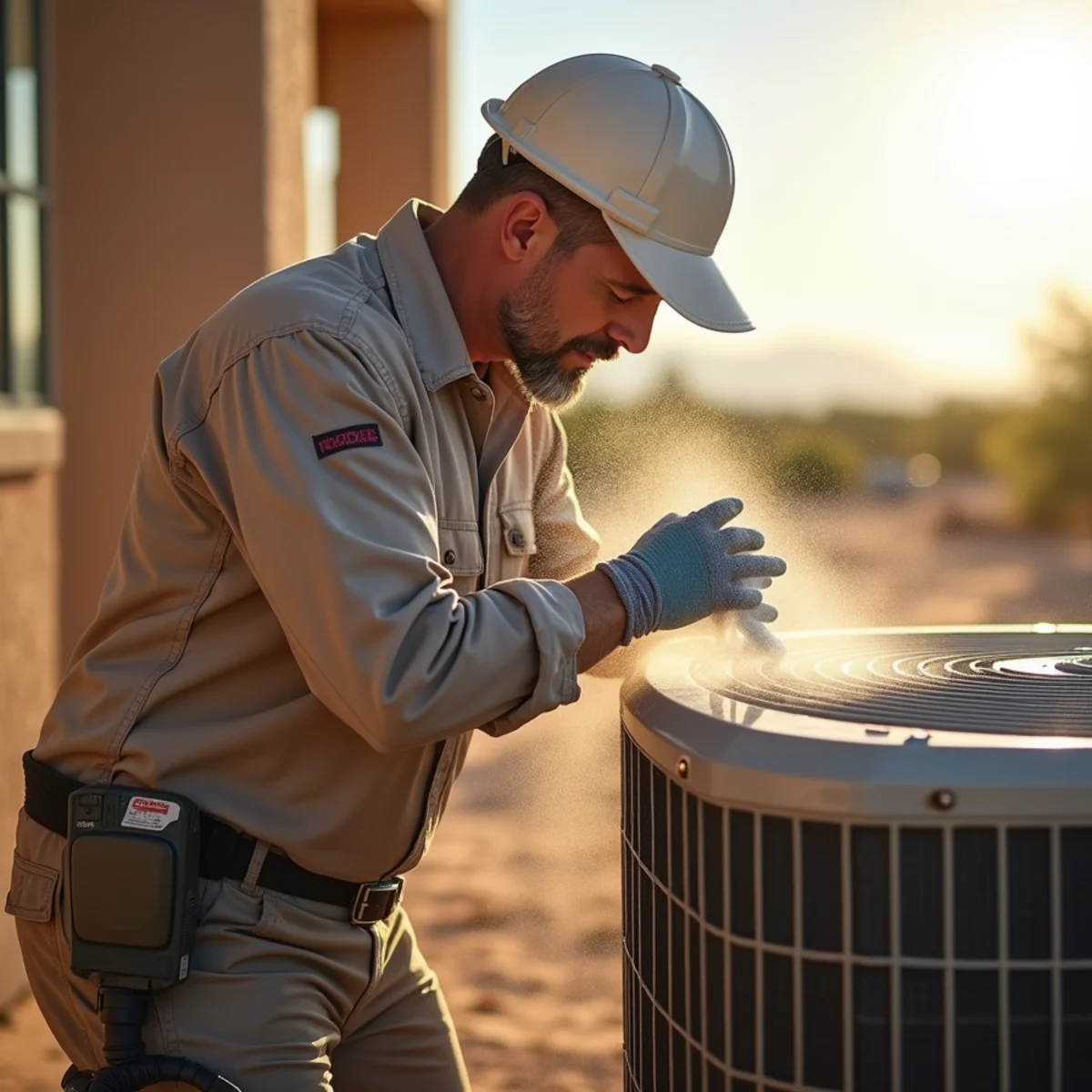
When a haboob rolls off the desert and swallows Apache Junction, it drives fine dust into everything, and your outdoor condenser is one of the worst-hit parts of the house. That coil is a dense grid of thin metal fins with a fan pulling air through it constantly, so a dust wall coats it in minutes. A dust-clogged coil cannot shed heat, which means your AC runs longer, cools worse, and works harder in the exact 110-degree stretch when you need it most. Cleaning it helps, but a condenser is also a machine with stored electrical charge and pressurized refrigerant, so doing this safely matters more than doing it fast.
Step 1: Cut the Power. Every Time. No Exceptions.
Water and electricity around a spinning fan is exactly the combination you must eliminate first. Do both of these before you pick up a hose:
- Turn the air conditioner Off at the thermostat inside the house.
- Go to the outdoor unit and pull the disconnect, the small box on the wall beside the condenser. Pull the block straight out, or flip the switch to Off.
With power cut at both points, the fan cannot start while your hands or the hose are near it. Do not skip the disconnect just because the thermostat is off; a thermostat alone is not a guarantee the unit stays dead.
Step 2: Clear the Loose Debris by Hand
- Pick off leaves, seed pods, plastic, and any tumbleweed fragments caught against the coil or grille.
- Look for a packrat nest or wasp nest, common in AJ, and clear the area before you go further.
- Do not jam anything metal or sharp between the fins; they bend easily and bent fins block airflow just like dust does.
Step 3: Rinse Gently From the Outside In
The single biggest mistake homeowners make is blasting the coil with a pressure washer. High pressure flattens the soft aluminum fins into a solid wall that traps more dust than it started with. Use a regular garden hose only.
- Set the hose to a normal flow, not a jet nozzle and never a pressure washer.
- Spray the coil from the outside of the cabinet, straight through the fins, top to bottom.
- Let the water carry the dust out the way it came in; avoid spraying at a hard angle that packs debris deeper.
- Rinse until the water running off the fins runs clear rather than muddy.
- Keep water off the top of the unit where the electrical components and fan motor sit.
| Do | Do not |
|---|---|
| Use a garden hose on normal flow | Use a pressure washer or jet nozzle |
| Spray straight through the fins | Spray at a steep angle that packs dust in |
| Rinse outside-in, top to bottom | Aim water at the top-mounted motor and wiring |
| Pick debris off by hand | Poke metal tools between the fins |
Step 4: Let It Dry, Then Restore Power
Give the unit fifteen to twenty minutes to drip and dry. Then reverse your shutdown: push the disconnect block back in or flip its switch to On, go inside, set the thermostat to Cool, and confirm cold air reaches the vents and the outdoor fan is spinning smoothly. If it cools normally, you are done.
When to Stop and Call a Pro
A rinse fixes surface dust. It does not fix a coil packed solid deep in the fins, refrigerant driven low by a hard summer, or electrical parts that took a hit. Call for monsoon and storm HVAC repair in Apache Junction if any of the following is true:
- The air is still warm or weak after cleaning and a dry-out.
- The unit hums but the fan will not spin, a classic sign of a failed capacitor.
- The breaker trips when the system tries to start.
- You see bent or crushed fins across a large area that need professional combing.
- There is a burning smell, grinding noise, or oily residue near the refrigerant lines.
- The coil is so caked that a hose rinse barely changes it and it needs a real coil cleaning.
Storms hit the whole area at once, so after a big blow we field calls across Cortez Ranch and the surrounding neighborhoods within the hour. If you want to understand the full range of damage a dust storm does beyond a dirty coil, our companion guide on what haboobs do to your AC walks through the electrical and refrigerant risks a rinse cannot address.
Frequently Asked Questions
The outside rinse is safe if you cut power at both the thermostat and the outdoor disconnect first, use only a garden hose on normal flow, and never open any panel, touch the capacitor, or disturb refrigerant lines. Anything beyond a gentle exterior rinse is a technician's job.
No. A pressure washer flattens the soft aluminum fins into a solid wall that blocks airflow worse than the dust did, and it can drive water into electrical parts. Use a regular garden hose, spraying straight through the fins from the outside, top to bottom.
A rinse only removes surface dust. Warm air after cleaning usually points to a deeper problem like a failed capacitor, low refrigerant, or a coil packed solid, all of which need a licensed tech. If the unit hums without the fan spinning or the breaker trips, stop and call for storm repair.
Check it after every significant haboob. A single dust wall can coat the coil in minutes. A quick visual look after each storm, plus a gentle rinse when the fins are visibly caked, keeps the system shedding heat through the hottest, dustiest weeks of the year.
Talk to a Local Apache Junction Technician
Same-day across Apache Junction & Gold Canyon — 24/7 in triple-digit heat.
Call +1 (327) 210-5999