
Haboob Aftermath: What Dust Storms Do to Your AC
A single haboob can pack a condenser coil with fine grit and choke your airflow overnight. Here is what dust storms actually do to a desert AC and how to catch the damage before your next cooling failure.
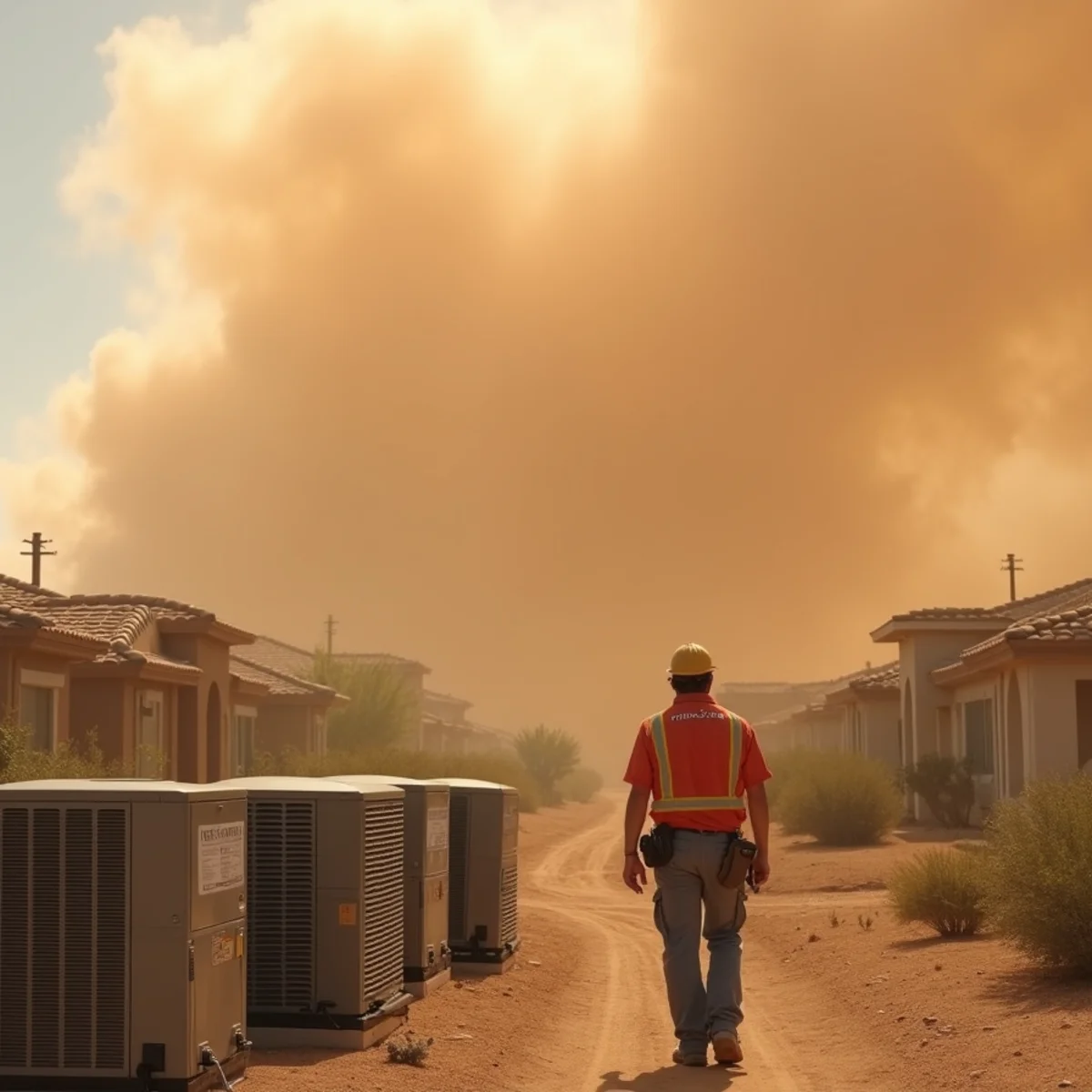
If you have watched a haboob swallow the Superstition Mountains from your back patio, you already know how much material these storms move. A mature dust wall can stand thousands of feet tall and carry a desert's worth of fine silt across the East Valley in minutes. When that grit settles, a lot of it settles into the one appliance you cannot live without in July: your air conditioner. The damage is rarely dramatic on the day of the storm. It shows up a week or two later as a system that runs longer, cools less, and eventually quits.
Here is what actually happens inside your equipment when a dust storm rolls through Apache Junction, and how to tell whether your AC needs attention before the next triple-digit week exposes the weakness.
Where the Dust Actually Goes
Your outdoor condenser is essentially a big radiator wrapped in thin aluminum fins, with a fan pulling air through it to dump the heat your home is shedding. Haboob silt is far finer than ordinary yard dust, so it does not just coat the surface, it packs into the gaps between those fins and bonds there when the next bit of monsoon humidity or rain hits it. That turns a breathable coil into something closer to a caked filter.
- Condenser fins clog, so the unit cannot reject heat and head pressure climbs.
- The compressor works harder against that pressure, runs hotter, and draws more electricity.
- Fine grit works into the fan motor bearings and the contactor, wearing both out early.
- Indoor air filters load up in days instead of weeks as dust that got inside recirculates.
- Evaporator coils and blower wheels collect a film that quietly cuts airflow all season.
Warning Signs After a Storm
In the days following a haboob, pay attention to how your system behaves. The earliest symptoms are subtle, and catching them early is the difference between a cleaning and a compressor.
- The house is slower to cool down in the afternoon than it was a week ago.
- The outdoor unit sounds louder, grittier, or the fan hesitates before spinning up.
- Your electric bill jumps even though your habits have not changed.
- The indoor filter is filthy far sooner than your normal schedule.
- You see a visible crust of packed silt across the outdoor coil fins.
What You Can Safely Do Yourself
There is a limited, safe amount of post-storm care a homeowner can handle. Start by turning the system off at the thermostat and, ideally, at the outdoor disconnect before you go near the unit. Replace the indoor air filter, since a fresh filter protects everything downstream. You can gently rinse loose surface dust off the outdoor coil with a garden hose on low pressure, spraying straight through the fins from the inside out if you can reach, never with a pressure washer, which folds the fins flat and makes the clog permanent.
When to Bring in a Technician
If a light rinse and a new filter do not restore normal cooling, or if you see packed silt that will not wash off, it is time for a professional cleaning. Our monsoon and storm HVAC repair service is built for exactly this: we deep-clean condenser and evaporator coils, comb bent fins, check the capacitor and contactor for grit damage, verify refrigerant pressures, and confirm the compressor is not running hot from weeks of restricted airflow. That last check matters, because a compressor that has been fighting a clogged coil for weeks is a compressor living on borrowed time.
We see the worst of it up in the higher-elevation neighborhoods that catch the leading edge of these storms. Homes in the Superstition Foothills area sit right where the dust wall tends to break against the mountains, and those condensers take a beating. Wherever you are in Apache Junction, a post-storm tune-up before the next heat spike is cheap insurance.
| Component | Haboob impact | Fix |
|---|---|---|
| Condenser coil | Silt packs the fins, blocks heat rejection | Professional deep clean and fin combing |
| Compressor | Overheats fighting high head pressure | Verify pressures and amp draw |
| Fan motor | Grit in bearings, early wear | Inspect, lubricate or replace |
| Air filter | Loads up in days | Replace, then check monthly in monsoon |
| Evaporator coil | Fine film cuts airflow | Inspect and clean indoor coil |
Get Ahead of the Next Dust Wall
Monsoon season runs storm after storm, so one cleaning is not always enough. Keep spare filters on hand, check your outdoor unit after every major blow, and rinse loose dust while it is still loose. When the coil is packed or the system is limping, call us. We serve all of Apache Junction and Gold Canyon same-day, 24/7 in the worst of the heat, and we know exactly what these storms do because we clean up after them every summer. Reach us at +1 (327) 210-5999 and let us get your AC breathing again before the next haboob.
Frequently Asked Questions
A single strong haboob can pack enough fine silt into a condenser coil to noticeably cut cooling, and the grit that gets into bearings and contactors shortens their life. The damage often shows up on the first hot day after the storm, not during it.
A gentle low-pressure rinse of the powered-off outdoor coil is fine and helpful. Never use a pressure washer, which flattens the fins, and never spray into the electrical compartment. Deep cleaning should be left to a technician.
Check it monthly at minimum, and after every major dust storm. In heavy dust, Apache Junction filters can load up in a couple of weeks, and a clogged filter starves the whole system and can freeze the coil.
Yes, that is the classic sign of a partly clogged coil. Weaker cooling means the system is working harder and running hotter, which stresses the compressor. A post-storm cleaning restores capacity and protects the expensive parts.
Talk to a Local Apache Junction Technician
Same-day across Apache Junction & Gold Canyon — 24/7 in triple-digit heat.
Call +1 (327) 210-5999