
Monsoon Storm HVAC Repair in Apache Junction, AZ
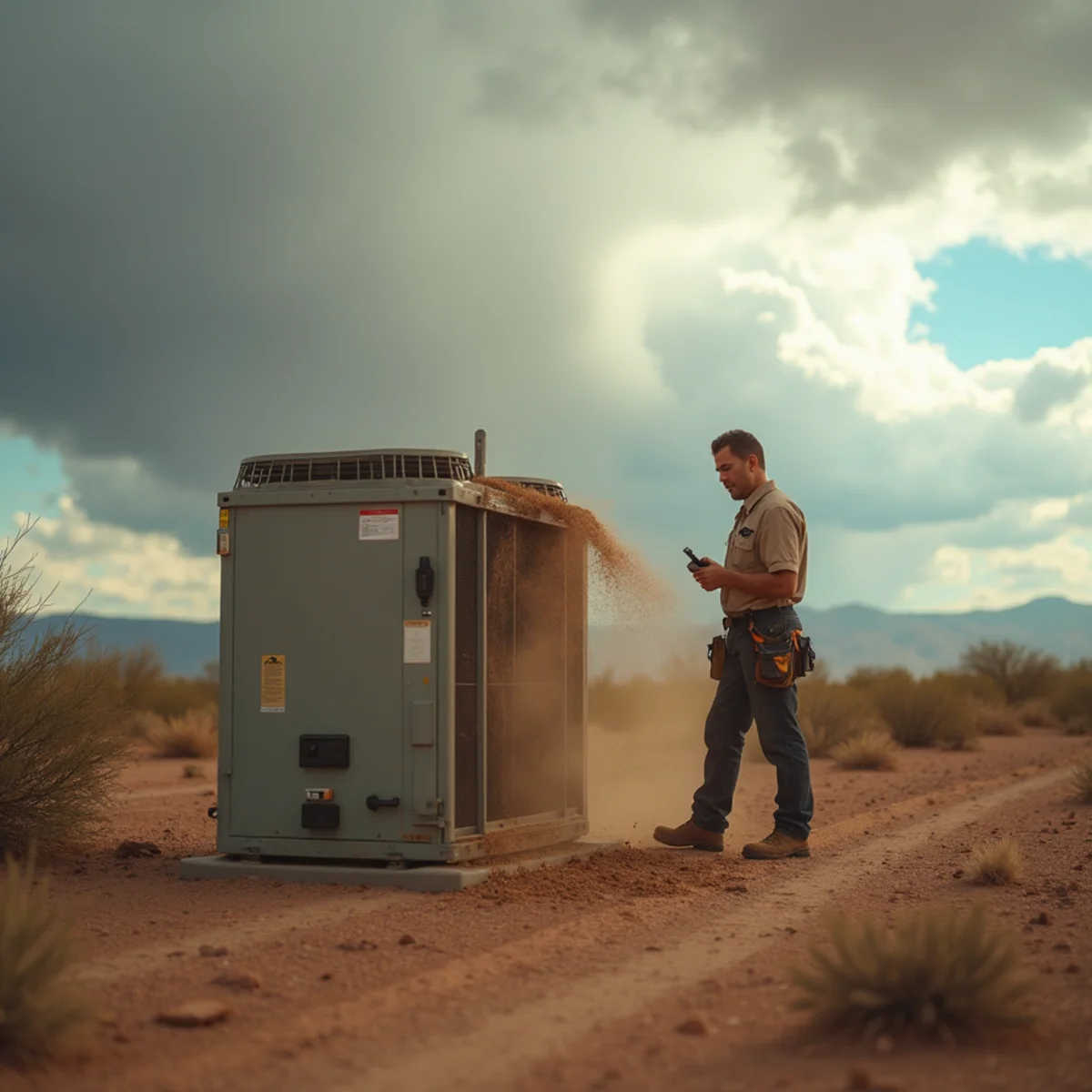
Monsoon season is the hardest stretch of the year on Apache Junction HVAC systems. The storms that build over the Superstition Mountains bring three distinct threats in a single afternoon - power surges that fry compressors and control boards, haboob dust that packs condenser coils solid, and driving wind and debris that can physically damage the outdoor unit. When your AC quits after a storm, in the middle of triple-digit heat, it is a genuine emergency, and we answer monsoon-damage calls 24/7 across Apache Junction and Gold Canyon.
- Licensed • Bonded • Insured
- 4.9★ (137 reviews)
- 24/7 Emergency Service
- 15+ Years Local
The dangerous part is that monsoon damage often hides. A power surge can weaken a capacitor or scorch a control board without killing the system outright, so it limps for a few days and then fails on the next 110-degree afternoon. Dust caked on the condenser coil chokes heat rejection gradually, spiking your bills and overheating the compressor before it finally trips. We know the failure patterns these storms leave behind and how to find the damage before it strands you.
As a licensed Arizona ROC contractor with EPA-certified technicians, we handle the full range of storm aftermath - surge-damaged electrical components, dust-clogged coils, debris in the unit, and the post-storm inspection that catches trouble early. We also help you get ahead of it with surge protection and coil cleaning before the next cell rolls through.
Signs You Need Monsoon Storm HVAC Repair in Apache Junction
- The AC stopped working during or right after a monsoon storm
- The breaker or disconnect tripped when the power surged and the unit will not restart
- The outdoor unit hums but the fan will not spin after a storm
- Cooling has gotten weak and bills have jumped since the last dust storm
- The condenser coils are visibly packed with dust and debris
- You see storm debris, bent fins, or damage on the outdoor unit
- The system short-cycles or trips the breaker on hot afternoons after a surge
- Burning smells or scorched electrical components after a lightning-heavy storm
Why Homeowners Choose Us
24/7 storm-damage response
Monsoon failures do not wait for business hours, and neither do we. We answer storm-damage calls around the clock across Apache Junction and Gold Canyon, because a dead AC in triple-digit heat is an emergency.
We know the monsoon failure patterns
Surge-scorched control boards, weakened capacitors, dust-choked coils, seized fan motors - we have seen every way these storms take out a system, so we find the real damage fast instead of guessing.
Hidden-damage inspection
A lot of surge and dust damage does not fail the system immediately - it fails it three days later on a 110-degree afternoon. We check the components storms weaken so a limping unit does not strand you.
Coil cleaning that restores capacity
Haboob dust packed into the condenser coil kills heat rejection and overworks the compressor. Proper coil cleaning brings back the cooling capacity and efficiency the storm stole.
Prevention for the next storm
We install surge protection and handle pre-season coil cleaning so the next cell that rolls off the Superstitions does far less damage - turning emergency repairs into routine maintenance.
Our Process, Step by Step
- 1
Rapid safety and damage check
We start with the electrical - checking the disconnect, breaker, capacitor, contactor, and control board for surge damage - then inspect the coil and unit for dust packing and physical debris.
- 2
Full storm-aftermath diagnosis
We trace the actual failure, whether it is a fried component, a choked coil, a seized motor, or a combination, and we look for the hidden damage that has not failed yet but will.
- 3
Repair and cleanup
We replace surge-damaged electrical parts, clean the packed condenser coil, clear debris, and straighten what can be straightened, then test the system under real cooling load.
- 4
Verify and protect
We confirm the temperature split and airflow, walk you through what the storm did, and offer surge protection and a coil-cleaning schedule so the next monsoon does less harm.

Need Monsoon Storm HVAC Repair Today? We’re Minutes Away.
Same-day across Apache Junction & Gold Canyon — 24/7 in triple-digit heat.
The Three Ways a Monsoon Kills an AC
Monsoon storms attack an Apache Junction air conditioner on three fronts at once. First is the electrical surge. Lightning strikes and grid fluctuations during a storm send spikes through the lines that can weaken or destroy capacitors, contactors, and the control board, and in the worst cases damage the compressor itself. Surge damage is the sneakiest of the three because it often does not stop the system cold - it leaves it wounded to fail later.
Second is the dust. A haboob is a wall of fine desert grit, and it packs into the condenser coil like insulation. That coil is where your system dumps heat, so when it clogs, heat rejection collapses - the compressor runs hotter, efficiency tanks, bills climb, and eventually the unit overheats and trips. Third is physical force: monsoon microbursts drive wind, rain, and debris into the outdoor unit, bending fins, clogging the cabinet, and sometimes damaging the fan. Any one of these can down a system; a bad storm delivers all three in twenty minutes.
Your Post-Storm HVAC Checklist
After a monsoon storm passes, a few quick steps protect your system and help you know when to call. First, if the AC tripped the breaker during the storm, reset it once - but if it trips again, stop and leave it off; repeated tripping means a real fault, and forcing it can turn a cheap repair into a compressor. Second, look at the outdoor unit from a safe distance for obvious debris, bent fins, or a fan that hums but will not turn.
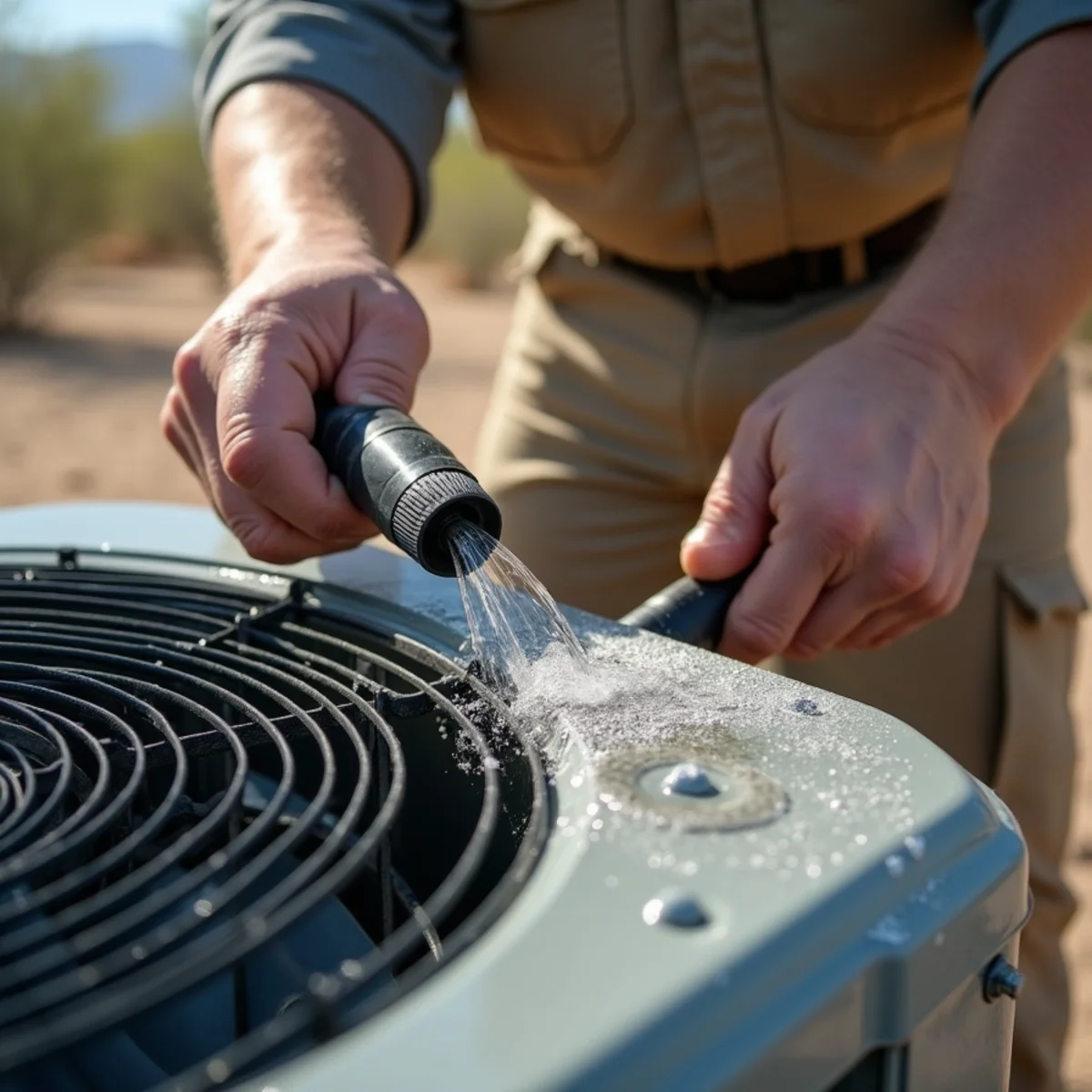
Third, watch the cooling over the next few days. If the house is not getting as cold as it did, if the system runs much longer, or if your bills jump, the coil is likely dust-packed or a component was weakened - both worth a call before the next hot spell. What you should not do is open the electrical panel, touch the refrigerant lines, or spray a pressure washer into the coil fins, which bends and destroys them. When in doubt after a storm, a post-monsoon inspection is cheap insurance - we catch the hidden surge and dust damage before it strands you on the next 110-degree afternoon. For the deeper cleaning steps, our [post-haboob condenser cleaning guide](/blog/clean-condenser-after-dust-storm/) walks through what is safe to do yourself.
What Affects Your Price
We never quote blind. Every written estimate is itemized so you can compare line by line — here is what moves the number:
- Which components the surge damaged - a capacitor is far cheaper than a control board or compressor
- Whether the coil needs a standard cleaning or is packed solid and needs deep service
- The extent of physical debris or fin damage to the outdoor unit
- Whether hidden secondary damage is found during inspection
- Emergency or after-hours dispatch versus a scheduled post-storm inspection
- Whether surge protection is added to guard against the next storm
- The age and refrigerant type of the system if major repair is weighed against replacement
- Any electrical or disconnect work needed to restore safe operation
Prefer to spread the cost? Ask about HVAC financing & monthly payment options.
Where We Provide Monsoon Storm HVAC Repair
Our base at 461 W Apache Trl in Apache Junction puts us minutes from most Superstition-area homes, and we run Pinal County and the East Valley every day. Same-day across Apache Junction & Gold Canyon — 24/7 in triple-digit heat. We bring monsoon storm hvac repair to homeowners across Pinal County, Mesa, Gold Canyon, Queen Creek, San Tan Valley, plus the Apache Junction neighborhoods off Ironwood Drive and Idaho Road. Not sure you’re in range? Call +1 (327) 210-5999 and we’ll give you the soonest arrival window for your street — arrival depends on location, traffic, and technician availability.
Browse every city and neighborhood we serve to see local details for your area.
Monsoon Storm HVAC Repair — Common Questions
Almost always one of three things: a power surge damaged an electrical component like the capacitor or control board, haboob dust packed the condenser coil and caused it to overheat, or storm debris damaged the outdoor unit. We diagnose which it was and check for hidden damage, because surge and dust problems often fail the system days later on a hot afternoon.
Reset it once. If it trips again, stop and leave the system off, then call us. A breaker that trips repeatedly is protecting you from a real fault - often surge-damaged electrical or a struggling compressor - and forcing it can turn an inexpensive repair into a very expensive one.
Yes. Fine haboob dust packs into the condenser coil where your system rejects heat. When it clogs, the compressor runs hotter and hotter until it overheats and trips - and even before that, efficiency drops and your bills climb. Proper coil cleaning restores the capacity the storm stole, and never use a pressure washer, which destroys the fins.
Two things help most: a surge protection device on the HVAC circuit to guard the electronics against storm spikes, and pre-season coil cleaning so dust does not accumulate to a dangerous level. Adding these turns what would be emergency repairs into routine maintenance. We install surge protection and can set up a cleaning schedule before monsoon season.
It often comes down to the cause. Many policies cover sudden storm events like a lightning surge or wind-driven debris damage, while gradual problems like a dust-clogged coil are usually treated as maintenance and left out. We are not insurance adjusters, but we document exactly what the storm did - surge-damaged components, physical damage, debris - so you have a clear record if you file a claim. Check with your carrier on your specific coverage and deductible before assuming either way.
You might also need
Ready for Monsoon Storm HVAC Repair? Talk to a Local Tech Today.
Same-day across Apache Junction & Gold Canyon — 24/7 in triple-digit heat.
461 W Apache Trl, Apache Junction, AZ 85120 Licensed • Bonded • Insured