
New AC Installation: What to Expect on Install Day in Apache Junction
A new AC is a big purchase and a full day in your home. Knowing exactly what the crew does, and why each step matters, turns install day from stressful to smooth.
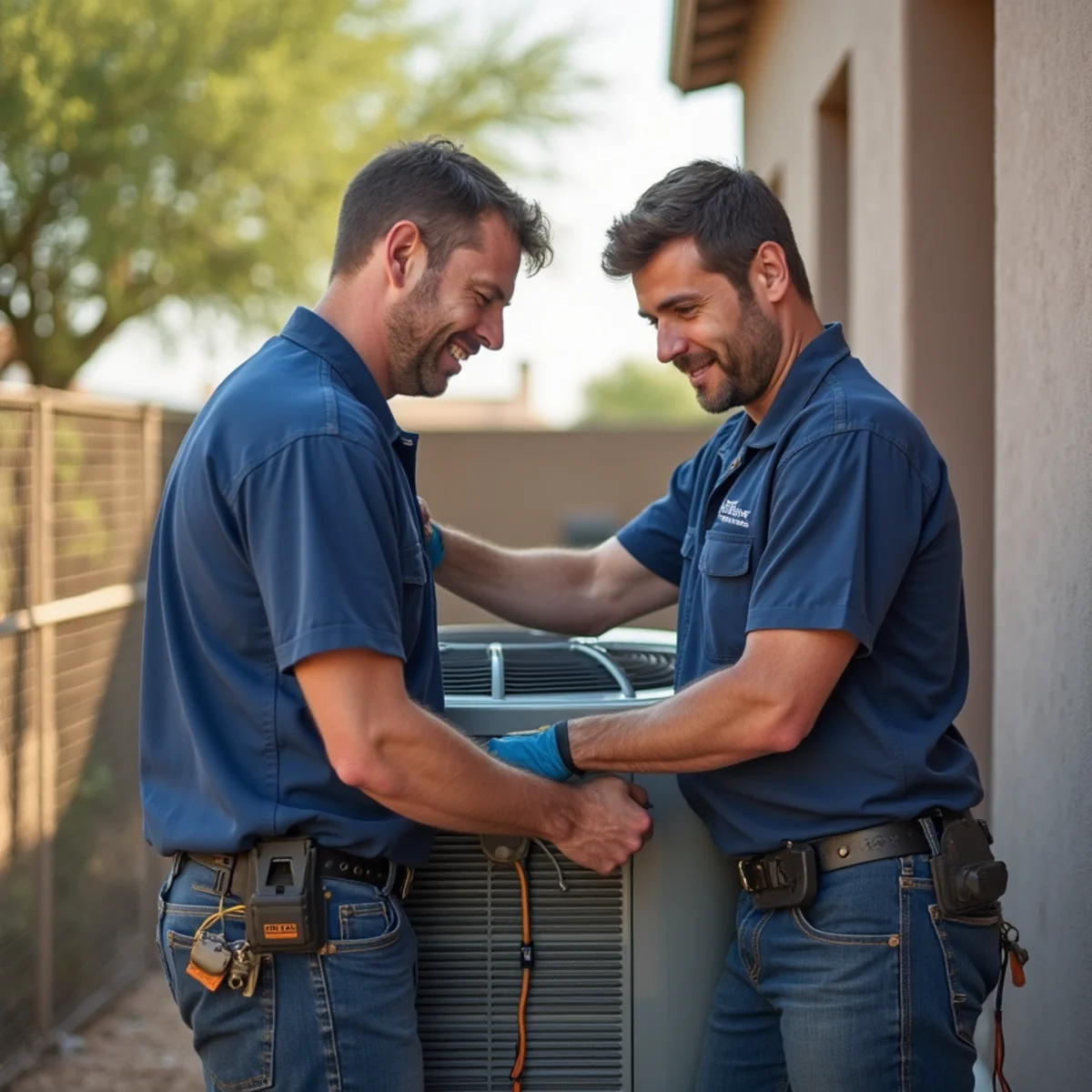
A standard residential AC or heat pump installation takes most of a day, usually four to eight hours, and follows a clear sequence: the crew protects your home, removes the old equipment, sets and connects the new system, pulls a vacuum and charges it, pulls the required permit, and then commissions the system by verifying it performs to spec before they leave. Knowing that sequence, and what each step is for, helps you tell a thorough installation from a rushed one. Here is how a proper install day unfolds in Apache Junction.
Before Install Day: Sizing, Quote, and Scheduling
The real work starts before anyone shows up with equipment. A good installer performs a load calculation to confirm the correct system size, walks your home, and gives you a written quote for the specific equipment going in. This is the stage to confirm the model, the SEER2 rating, and whether any ductwork repairs are part of the scope. If this groundwork was skipped and you were quoted a size off square footage alone, pause, correct sizing is the foundation everything else rests on, as we explain in what size AC do I need.
The Install-Day Timeline
| Stage | What happens | Rough timing |
|---|---|---|
| Arrival and protection | Crew reviews the plan, lays floor protection, stages tools | First 30 minutes |
| Old system removal | Safely recover refrigerant, disconnect and haul out old equipment | 1-2 hours |
| New equipment set | Place condenser and air handler or furnace coil, mount and level | 1-2 hours |
| Connections | Refrigerant lines, electrical, condensate drain, thermostat wiring | 1-2 hours |
| Evacuation and charge | Pull a deep vacuum, then charge refrigerant to spec | 1 hour |
| Commissioning and walkthrough | Test, measure performance, review operation with you | 30-60 minutes |
Total time varies with the complexity of the job, a straight like-for-like swap is faster than a project that includes duct repairs or a new line set. A crew that moves carefully through evacuation and commissioning rather than racing to finish is doing it right. This is the heart of a professional AC installation.
What the Technicians Are Actually Doing
A few steps deserve explanation because they are where quality is won or lost, and where corner-cutting shows up later as poor cooling or an early failure.
- Recovering the old refrigerant. It is illegal and harmful to vent refrigerant, so the crew recovers it from the old system first. Watch for this, it is a basic marker of a licensed, responsible installer.
- Pulling a deep vacuum. Before charging, the crew evacuates all air and moisture from the lines. Skipping or rushing this traps moisture that corrodes the system from the inside, a leading cause of premature failure in sloppy installs.
- Charging to specification. Refrigerant is weighed and adjusted to the manufacturer's spec for your line length, not just topped off by feel. An incorrect charge quietly robs efficiency and capacity, the very things you paid for.
- Verifying airflow. The crew confirms the system moves the right volume of air, because even a perfect charge underperforms on starved or leaky ductwork.
None of these steps are visible in the finished product, which is exactly why they are the first to get cut by the cheapest bidders. You cannot see a skipped vacuum or a careless charge from your living room, but you will feel it two summers later as weak cooling, a high bill, or an early compressor failure. This is the part of the job where hiring an experienced, licensed crew pays you back: it is the difference between a system that hits its rating and one that quietly never does, no matter how good the equipment on the invoice looks.
Permits and Commissioning
A new HVAC system is a permitted mechanical installation. A legitimate contractor pulls the required permit, and the work is subject to inspection, which protects you: it confirms the install meets code, and it keeps your equipment warranty and your home records clean for resale. Be wary of any installer who proposes skipping the permit to save a little money, it is a red flag about everything else they might cut.
How to Prepare Your Home
You do not need to do much, but a little preparation makes the day go faster and protects your belongings.
- Clear the work paths. Open a route from the entry to the indoor unit, often a hallway closet, garage, or attic access, and clear space around the outdoor condenser.
- Move fragile and valuable items. Take breakables off shelves along the crew's path and clear the area near the air handler.
- Secure pets. Doors will be open and equipment moving in and out, so keep pets in a closed room or crate.
- Plan for a cooling gap. The house will be without AC for part of the day, so on a hot day plan errands or a comfortable room, and keep water handy for yourself and the crew.
- Make parking available. The crew needs close access to move heavy equipment and haul away the old unit.
After the Crew Leaves
Before the crew departs, they should walk you through your new thermostat, explain the maintenance your warranty requires, and hand over documentation, the model and serial numbers, the permit, the warranty registration, and the commissioning readings. Hold onto all of it. Manufacturer warranties often require registration within a set window and proof of annual maintenance to stay valid, which we cover in our HVAC warranty guide for Arizona. Booking your first maintenance visit now protects both the warranty and the lifespan of your investment.
A new system installed right will carry your home through a decade-plus of desert summers. Our crews install across Apache Junction with the full sequence above, correct sizing, proper evacuation and charging, permitting, and documented commissioning, so you get the performance you paid for. With 15-plus years in the desert, a 4.9-star reputation across 137-plus reviews, and free estimates, we make install day smooth from quote to walkthrough. Call +1 (327) 210-5999 to get started.
Frequently Asked Questions
Most residential AC or heat pump installations take four to eight hours, usually most of a day. A straightforward like-for-like replacement is on the shorter end, while jobs that include ductwork repairs, a new line set, or a system-type change take longer. A careful crew will not rush the evacuation and commissioning steps, since that is where installation quality is won or lost, so expect those to take real time.
Yes. A new HVAC system is a permitted mechanical installation, and a legitimate contractor pulls the required permit and allows for inspection. The permit protects you by confirming the work meets code and keeping your warranty and home records clean for resale. Be cautious of any installer who suggests skipping the permit to save money, it often signals other corners being cut.
Commissioning is the final installation step where the crew measures the finished system to prove it performs to specification. That includes the temperature split across the coil, refrigerant pressures, airflow volume, and electrical draw. It is how you know the system is not just running but running correctly. A reputable installer documents these readings and reviews them with you before leaving the job.
Clear a path from the entry to the indoor unit and open space around the outdoor condenser, move breakables and valuables away from the crew's route, and secure pets since doors will be open. Plan for the house to be without cooling for part of the day, so on a hot day arrange a comfortable spot or errands, and leave close parking available for moving heavy equipment and hauling away the old unit.
Talk to a Local Apache Junction Technician
Same-day across Apache Junction & Gold Canyon — 24/7 in triple-digit heat.
Call +1 (327) 210-5999Related articles
What Size AC Do I Need? Why Square-Footage Math Fails in the Desert
The tonnage your neighbor has is not the tonnage you need. Here is why desert AC sizing defeats every rule of thumb, and what a real load calculation accounts for.
Read moreHVAC Warranty Guide for Arizona: Parts, Labor, and What Voids Coverage
Three different warranties cover your new HVAC system, and each has its own rules, deadlines, and ways to lose it. Here is how to keep every layer of coverage intact.
Read moreSEER2 Explained: What Arizona Homeowners Actually Need to Know
SEER2 is the efficiency number on every new system, and in the DOE Southwest region it comes with minimums you have to verify. Here is what it means and what matters beyond the number.
Read more