
HVAC Warranty Guide for Arizona: Parts, Labor, and What Voids Coverage
Three different warranties cover your new HVAC system, and each has its own rules, deadlines, and ways to lose it. Here is how to keep every layer of coverage intact.
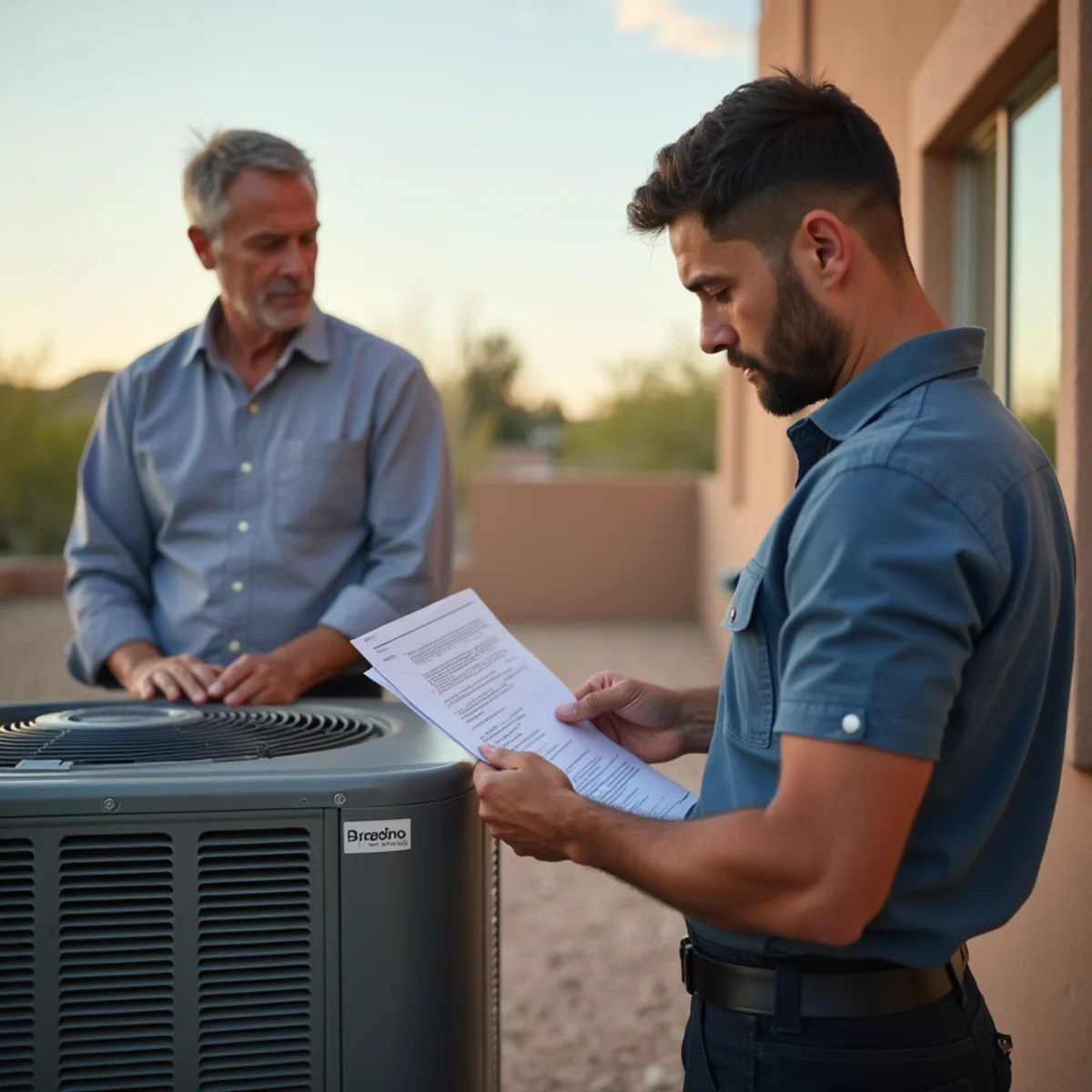
Your new HVAC system is protected by three separate warranties, and homeowners routinely confuse them: the manufacturer's parts warranty covers the physical components, a labor warranty covers the cost of the work to replace a failed part, and the installer's workmanship warranty covers the quality of the installation itself. Each has different terms, different timelines, and different ways to accidentally void it. Understanding all three, and the two things that most often sink coverage, registration and maintenance, protects the $7,000-to-$11,500 investment a new system represents.
The Three Layers of HVAC Warranty
Think of warranty coverage as three layers stacked on top of each other. A failure might be covered by one, two, or all three, and the gaps between them are where surprise bills come from.
| Warranty | What it covers | Who provides it |
|---|---|---|
| Manufacturer parts | Physical components like compressor, coil, motors | Equipment manufacturer |
| Labor | The cost of labor to replace a covered part | Manufacturer program or contractor |
| Workmanship | Quality of the installation itself | The installing contractor |
The crucial gap to understand: a manufacturer parts warranty typically covers the part but not the labor to install it. If your compressor fails in year six, the part may be free, but without a labor warranty you could pay significant labor to swap it. That is why the labor warranty matters as much as the headline parts number, and why you should ask about both at purchase, during your AC installation planning, not after a failure.
One more distinction trips people up: an extended labor warranty or a paid service agreement is not the same as the manufacturer's parts coverage, even though both get called a warranty in conversation. Read what each document actually covers and for how long rather than assuming a single blanket policy protects everything. The clearest way to avoid an expensive surprise is to ask your installer to spell out, in writing, which failures fall under parts, which under labor, and which under workmanship, before you ever need to file a claim.
The Registration Deadline That Trips Up Everyone
Registration is fast and free, but it is easy to forget in the shuffle after an install. A good contractor either registers the equipment for you or hands you the model and serial numbers with clear instructions and the deadline. Confirm this happened. If you installed your system recently and are not sure it was registered, check now, you may still be inside the window. This is one reason to keep every document the crew leaves behind, as we note in our guide on what to expect on install day.
The Maintenance Requirement
Here is the clause that surprises homeowners during a claim: most manufacturer warranties require proof of annual professional maintenance to remain valid. If a major component fails and you cannot show records of yearly service, the manufacturer can deny the claim. In other words, skipping maintenance does not just shorten your system's life, it can quietly void the warranty you are counting on.
In the desert this requirement cuts both ways in your favor. Annual HVAC maintenance keeps your warranty valid and genuinely extends equipment life in a climate that punishes neglected systems, so the service you need for coverage is the same service that protects your investment. Keep dated invoices for every visit as your proof. Our breakdown of whether a maintenance plan is worth it in Arizona weighs the full return.
What Voids an HVAC Warranty
Beyond skipped registration and missing maintenance, several other actions can void coverage. Knowing them helps you avoid an expensive surprise.
- Unlicensed or DIY installation. Manufacturer warranties generally require installation by a licensed professional. A system installed improperly, or by an unlicensed party, can void coverage from day one.
- Using non-approved or mismatched parts. Repairs with unauthorized components, or pairing a new condenser with an incompatible old coil, can void the warranty on the affected equipment.
- Skipping required maintenance. As above, no service records can mean a denied claim.
- Missing the registration window. Reducing a ten-year warranty to the shorter base term.
- Transferring without following the rules. Many warranties can transfer to a new homeowner if sold, but only if a specific process and timeline are followed, worth knowing if you buy or sell a home.
Protecting the Installer's Workmanship Coverage
The workmanship warranty, from the contractor who installed the system, covers problems caused by the installation itself, like a refrigerant leak at a poorly brazed joint or a drain that was not routed correctly. Terms vary by contractor, so ask how long it lasts and what it includes before you hire. This is also why choosing a reputable, established installer matters: a workmanship warranty is only as good as the company standing behind it years from now.
A quality installer stands behind their work and helps you navigate the manufacturer side too, registering equipment, documenting commissioning, and keeping service records that keep every layer intact. That is exactly how we operate across Apache Junction and the surrounding area.
The Bottom Line on Warranties
Three layers, two deadlines, one habit. Confirm you have parts, labor, and workmanship coverage; register the equipment inside the manufacturer's window; and keep up annual maintenance with dated records. Do those, and your system is protected the way it was meant to be. Skip any of them, and you can find yourself paying out of pocket for a failure that should have been covered.
Our team installs and services residential HVAC systems with full documentation, handles registration, and keeps the maintenance records that keep your coverage valid. With 15-plus years in the desert, a licensed and insured crew, and a 4.9-star reputation across 137-plus reviews, we make sure your warranty actually works when you need it. Call +1 (327) 210-5999 with any warranty question or to schedule the maintenance that keeps your coverage intact.
Frequently Asked Questions
Most manufacturers require you to register new equipment online within 60 to 90 days of installation to unlock the full warranty, often ten years on parts. Miss that window and coverage can drop to a much shorter base warranty, sometimes as little as five years. A good contractor either registers the system for you or provides the model and serial numbers with the deadline, so confirm it was done.
Not automatically. The manufacturer's parts warranty typically covers the physical component but not the labor to install it, so a free compressor could still come with a significant labor charge. Labor coverage is a separate warranty, offered through a manufacturer program or the installing contractor. Ask about both parts and labor coverage at the time of purchase rather than discovering the gap after a failure.
Yes. Most manufacturer warranties require proof of annual professional maintenance to stay valid, and a claim can be denied if you cannot show service records. In the desert this works in your favor, since the yearly service that keeps coverage valid is the same service that extends equipment life in a harsh climate. Keep dated invoices for every maintenance visit as your proof.
The most common causes are missing the registration deadline, failing to keep annual maintenance records, and installation by an unlicensed party or DIY. Using non-approved or mismatched parts, such as pairing a new condenser with an incompatible old coil, can also void coverage on that equipment. Warranties can often transfer to a new homeowner, but only if a specific process and timeline are followed.
Talk to a Local Apache Junction Technician
Same-day across Apache Junction & Gold Canyon — 24/7 in triple-digit heat.
Call +1 (327) 210-5999Related articles
New AC Installation: What to Expect on Install Day in Apache Junction
A new AC is a big purchase and a full day in your home. Knowing exactly what the crew does, and why each step matters, turns install day from stressful to smooth.
Read moreIs an HVAC Maintenance Plan Worth It in the Sonoran Desert?
Maintenance plans get pitched hard, so skepticism is fair. But in a climate where the AC runs half the year at 110 degrees, the math is different. Here is the honest case.
Read moreAC Repair or Replace? An Honest Framework for Apache Junction Homeowners
Repairing a dying AC in the desert can be throwing good money after bad, and replacing a fixable one is a waste. Here is an honest, number-driven framework for deciding which is which.
Read more