
Monsoon Season HVAC Survival Guide for the East Valley
Arizona's monsoon season throws three punches at your AC at once: dust storms that smother the condenser, power surges that fry electronics, and humidity that overwhelms swamp coolers. Here is how East Valley homeowners get through it with the system intact.
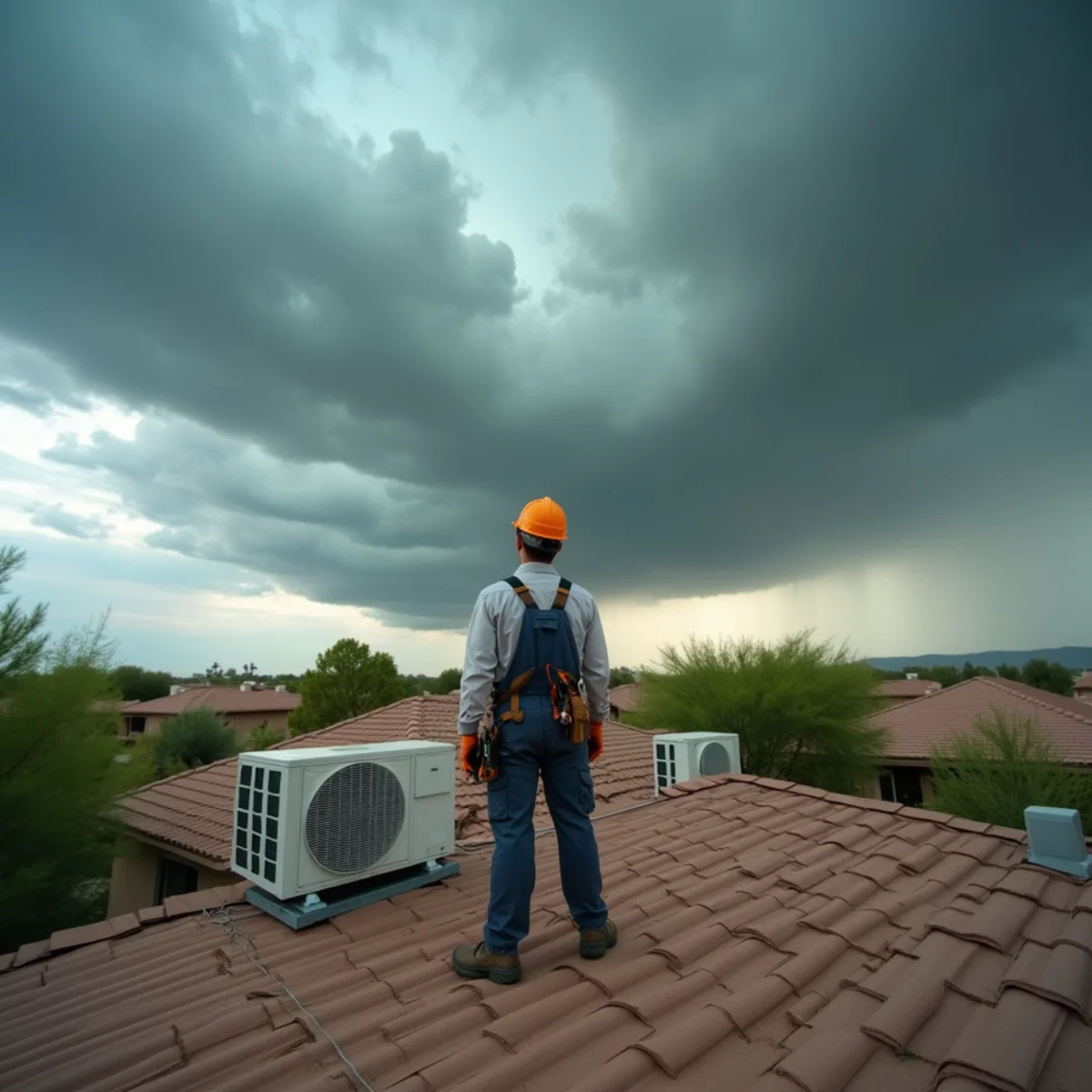
Arizona's monsoon officially runs June 15 through September 30, and for HVAC systems it is the most punishing stretch of the year, worse in its own way than the dry June heat. The National Weather Service tracks a predictable pattern each summer: building humidity, towering afternoon thunderstorms, microbursts with 60-plus mph winds, and the walls of dust we call haboobs that can stand a mile high and swallow the whole East Valley in minutes. Each of those does something different to your air conditioner.
Understanding the three separate threats, and preparing for each, is the difference between riding out the season and calling for an emergency repair the morning after a storm.
Threat One: Dust and the Smothered Condenser
A haboob is essentially a sandblaster aimed at the outdoor unit. The condenser coil is a dense grid of aluminum fins whose entire job is to shed heat into passing air. Pack those fins with fine desert silt and the unit can no longer reject heat, so head pressure climbs, efficiency collapses, and the compressor runs hot and hard. We see condensers after a single big haboob that look like they were dipped in flour.
You can rinse a coil gently with a garden hose from the inside out with the power off at the disconnect, but never use a pressure washer, which folds the soft fins flat and makes things worse. When a storm has truly caked the unit, our monsoon storm HVAC repair crew does a proper coil cleaning and a pressure check so you are not limping into the next 110F afternoon.
Threat Two: Power Surges and Fried Electronics
Monsoon lightning and microbursts hammer the grid, and the utility responds with brownouts, momentary outages, and surges as power snaps back. Those swings are brutal on AC electronics. The single most common post-storm failure we see is a blown run capacitor, followed by damaged contactors and, on higher-end systems, fried control boards and variable-speed drives.
| Surge symptom | Likely damaged part | Typical fix |
|---|---|---|
| AC dead after outage, outdoor fan will not spin | Run capacitor | Capacitor replacement |
| Clicking or buzzing at the outdoor unit | Contactor | Contactor replacement |
| Thermostat blank or resetting | Low-voltage transformer or fuse | Transformer or fuse repair |
| Modern system throwing error codes | Control or inverter board | Board diagnosis and replacement |
The best defense is prevention. A hard-start kit reduces electrical stress on startup, and a dedicated HVAC surge protector at the disconnect or a whole-home surge protector at the panel absorbs the spikes that would otherwise reach the compressor and boards. For the deeper why behind post-storm compressor loss, our guide on monsoon power surges and your compressor walks through the exact chain of failure.
Threat Three: Humidity That Overwhelms Swamp Coolers
Evaporative coolers are wonderful in bone-dry June and useless in a humid August. A swamp cooler works by adding moisture to already-dry air; once monsoon dew points climb into the 60s, the air cannot absorb more water, so the cooler just blows warm, damp air and makes the house feel worse. Homeowners running swamp coolers through the monsoon often deal with musty smells, sticky rooms, and pooling condensation.
This is the season that convinces most holdouts to switch. If you are tired of the monsoon humidity trap, refrigerated air holds a steady temperature and dehumidifies at the same time, and we handle that conversion routinely across the valley.
Your Monsoon Readiness Checklist
- Install surge protection at the panel or the HVAC disconnect before the season peaks.
- Trim vegetation and clear debris at least two feet back from the outdoor unit.
- Change the air filter monthly through the season; dust loads it fast.
- After each significant dust storm, inspect and, if needed, rinse the condenser coil.
- Know where your outdoor disconnect is so you can safely kill power before a storm rolls in.
- Have any bulging capacitor replaced now rather than in the middle of an August failure.
Homes across our Pinal County service area take the brunt of these storms because the open desert to the south and east feeds the dust walls that funnel into Apache Junction. A little preparation before mid-July pays off every time the sky turns brown.
Frequently Asked Questions
You do not need to cover the unit, but if a severe storm is imminent it is reasonable to switch cooling off at the thermostat so the system is not running during the worst of the surge and dust. After the storm, inspect the coil and restart normally. Never wrap a running condenser in plastic.
Evaporative coolers cool by adding moisture to dry air. When monsoon humidity and dew points rise, the air is already too moist to absorb more water, so the cooler blows warm, damp air instead of cool air. Many homeowners use the monsoon as the trigger to convert to refrigerated air.
In monsoon country, yes. Lightning and grid swings during storms routinely blow capacitors and, on modern systems, expensive control and inverter boards. A dedicated HVAC surge protector or whole-home unit costs far less than a single board replacement and pays for itself the first time it absorbs a spike.
Before the next hot afternoon. A coil packed with silt cannot shed heat, so the compressor runs hot and can trip on high pressure. Rinse gently from the inside out with the power off, or call for a professional cleaning if the fins are caked.
Talk to a Local Apache Junction Technician
Same-day across Apache Junction & Gold Canyon — 24/7 in triple-digit heat.
Call +1 (327) 210-5999