
How Long Does an AC Last in Arizona? The Honest Desert Answer
National charts promise 15 to 20 years. In the Sonoran Desert, the real number is lower, and knowing it is the difference between a planned replacement and a July breakdown.
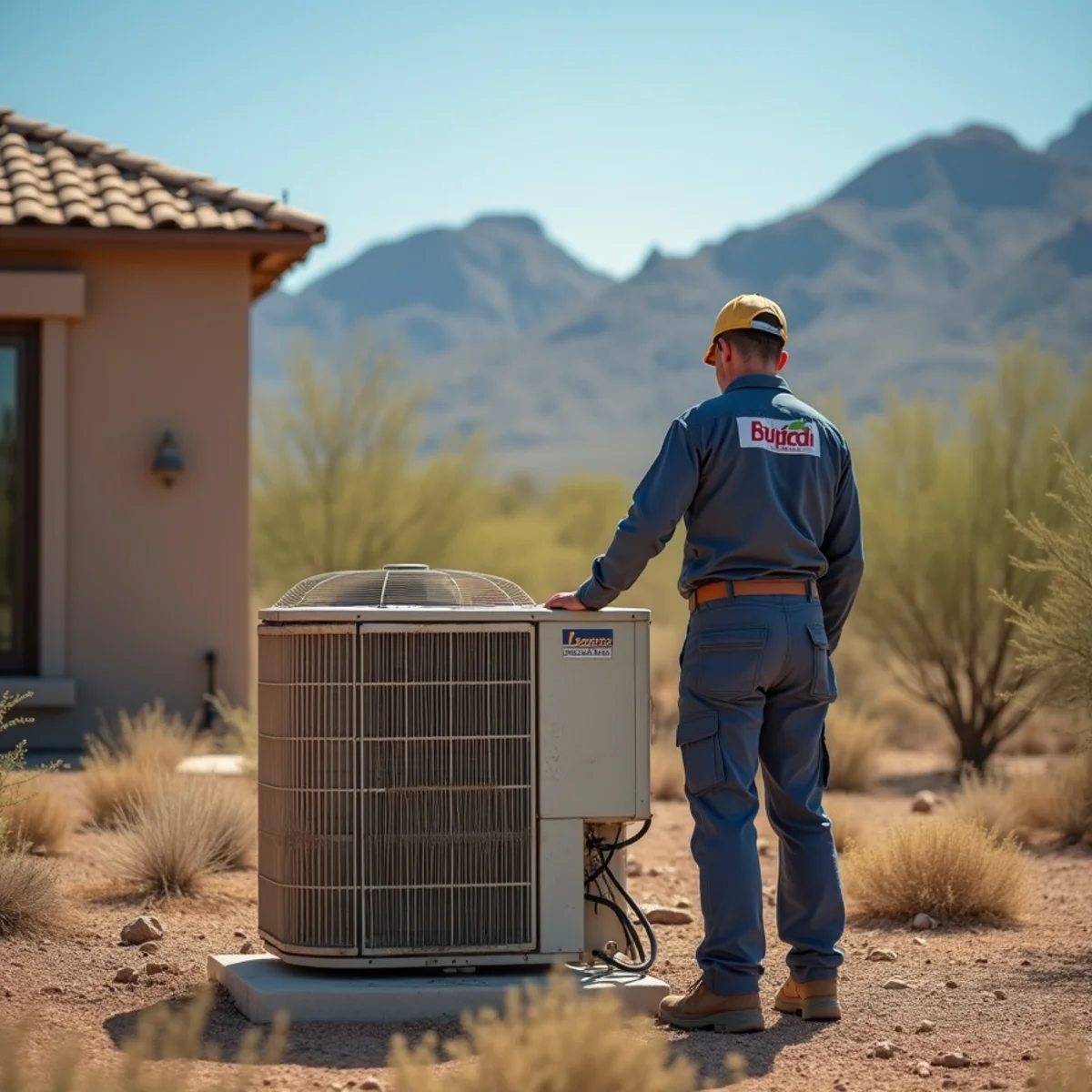
Most air conditioners and heat pumps in Arizona last about 12 to 15 years, noticeably shorter than the 15-to-20-year figure you see in national guides. The reason is simple: a desert AC works far harder than one almost anywhere else in the country. If your system is creeping toward that window, this guide explains why the desert shortens equipment life and how to read the warning signs before a failure strands you in triple-digit heat.
Why Desert ACs Die Younger
Equipment lifespan is really a function of total workload, and a Sonoran Desert summer piles on workload in three ways that a coastal or northern climate never does.
- Run-hours. In Apache Junction a system may run nearly nonstop from May into October. That is thousands of extra compressor hours every year compared to a mild climate, and the compressor is the heart of the system.
- Extreme heat. On a 112-degree afternoon the condenser is trying to dump heat into air that is already brutally hot, so head pressures and temperatures run high and components age faster.
- Dust and monsoon grit. Blowing desert dust and haboob debris cake condenser coils and clog filters, choking airflow and forcing the system to work even harder to move the same heat.
Stack those together and you get accelerated wear on every part, especially the compressor and the coils. That is why the honest local number is 12 to 15 years, and why a neglected system can fade even faster. It is also why that worn-out efficiency quietly shows up on your bill, a pattern we break down in why your AC bill is so high in Arizona.
Lifespan by Equipment Type
| System type | Arizona desert | Mild climate |
|---|---|---|
| Central AC (split system) | 12-15 years | 15-20 years |
| Heat pump | 12-15 years | 15 years |
| Packaged rooftop unit | 12-15 years | 15-18 years |
| Builder-grade AC (new construction) | 10-14 years | 15+ years |
Heat pumps run close to the same window as straight ACs here, even though they also provide heat, because our winters are mild and the summer cooling load dominates total wear. One category deserves special attention: builder-grade equipment installed in the region's many newer subdivisions. Those units are chosen for low upfront cost, not desert longevity, and they often hit a wall early, a pattern we cover in the builder-grade AC cliff at year 12.
There is also a maintenance multiplier hiding in these numbers. The 12-to-15-year range assumes a reasonably cared-for system. A unit that never gets a filter change or a spring tune-up can lose two or three years off the low end, while a diligently maintained one can push past 15. In a climate this punishing, the gap between a neglected system and a cared-for one is wider than almost anywhere else in the country, which is why the same model can give up at 10 on one roof and still run strong at 16 two streets over.
The Signs Your AC Is Near the End
Age is the headline, but the system usually gives you a chapter of warnings before the final failure. Watch for these end-of-life signals, especially if your unit is already past 10 years.
- Rising power bills with no change in habits. A worn compressor and dirty coils drag efficiency down, and your summer bill climbs even though you are not cooling any more than before.
- Running constantly but never quite cooling. When the system runs all afternoon and the house still drifts warm, capacity is fading.
- Repeat repairs. Two or more service calls in the last couple of summers is the system telling you the weak links are failing in sequence.
- Warm or weak airflow at the vents. Declining output points to a tired compressor, low charge, or airflow problems.
- New noises or odors. Grinding, rattling, or a persistent musty smell signals mechanical wear or moisture issues.
- It still uses R-22. Any system old enough to run R-22 refrigerant is both near end-of-life and expensive to repair.
Can You Make an AC Last Longer Here?
Yes, and the difference is significant. The homeowners who get the full 15 years, instead of 11, are almost always the ones who keep up with maintenance. Annual professional service, clean coils, fresh filters, a verified refrigerant charge, and tight electrical connections all reduce the stress that ages a system prematurely. Regular HVAC maintenance is the single biggest lever you control, and in this climate it pays for itself in both lifespan and monthly efficiency. Our guide on whether a maintenance plan is worth it in Arizona runs the numbers.
Filter changes matter more than people think. Desert dust loads a filter roughly twice as fast as a coastal climate, and a clogged filter starves airflow, which makes the system run hotter and longer. A simple seasonal filter habit protects the compressor you are trying to preserve.
Planning the Replacement Before It Plans You
If your system is in the 12-to-15-year zone and showing two or more of the signs above, the smart move is to start the conversation now, in the cool months, rather than after a breakdown. Planning ahead lets you get a proper load calculation, compare efficiency options, and schedule the work when crews are available instead of paying a premium during the summer rush.
Our team has spent 15-plus years tracking exactly how equipment ages across Apache Junction and the surrounding desert, and we will give you a straight answer on where your system stands. If replacement is the right call, our AC installation team handles it start to finish; if you have years of life left, we will tell you that too. For a free assessment from a licensed, insured team with a 4.9-star record across 137-plus reviews, call +1 (327) 210-5999.
Frequently Asked Questions
Because it works far harder. A desert system runs nearly nonstop from May into October, fights to reject heat into 110-plus-degree air, and battles constant dust that clogs coils and filters. That combination of run-hours, extreme heat, and grit accelerates wear on the compressor and coils, trimming typical service life to about 12 to 15 years instead of the 15 to 20 years common in milder climates.
Roughly 12 to 15 years, similar to a straight air conditioner. Even though a heat pump also provides heating, Arizona winters are mild, so the brutal summer cooling load is what drives most of the total wear. Keeping up with annual maintenance and regular filter changes is the best way to reach the upper end of that range rather than the lower end.
The earliest signals are usually rising summer power bills with no change in habits and a system that runs constantly but never quite cools the house. Repeat repairs over recent summers, weak or warm airflow, and new noises or musty odors follow. If your unit is also past 10 years or still uses R-22 refrigerant, treat these signs as a prompt to plan a replacement before a peak-season failure.
Yes, meaningfully. The homeowners who reach 15 years instead of 11 are almost always the ones who keep up with annual professional service and regular filter changes. Clean coils, a correct refrigerant charge, and tight electrical connections all reduce the stress that ages a system early, which matters far more in the desert than in a mild climate where the equipment barely works.
Talk to a Local Apache Junction Technician
Same-day across Apache Junction & Gold Canyon — 24/7 in triple-digit heat.
Call +1 (327) 210-5999Related articles
San Tan Valley & Queen Creek's Builder-Grade AC Cliff: What to Expect at Year 12
The subdivisions that exploded across San Tan Valley and Queen Creek in the mid-2000s were built fast with builder-grade ACs. Those units are now hitting a reliability cliff around year 12, and a wave of homeowners is facing the same decision at once.
Read moreIs an HVAC Maintenance Plan Worth It in the Sonoran Desert?
Maintenance plans get pitched hard, so skepticism is fair. But in a climate where the AC runs half the year at 110 degrees, the math is different. Here is the honest case.
Read moreAC Repair or Replace? An Honest Framework for Apache Junction Homeowners
Repairing a dying AC in the desert can be throwing good money after bad, and replacing a fixable one is a waste. Here is an honest, number-driven framework for deciding which is which.
Read more