
Do I Need a New Thermostat? 7 Signs It Is Time to Upgrade
A failing thermostat can quietly drive up your bill and wear out your AC. Here are the seven clearest signs it is time to replace or upgrade yours, plus what a smart model actually buys you in the desert.
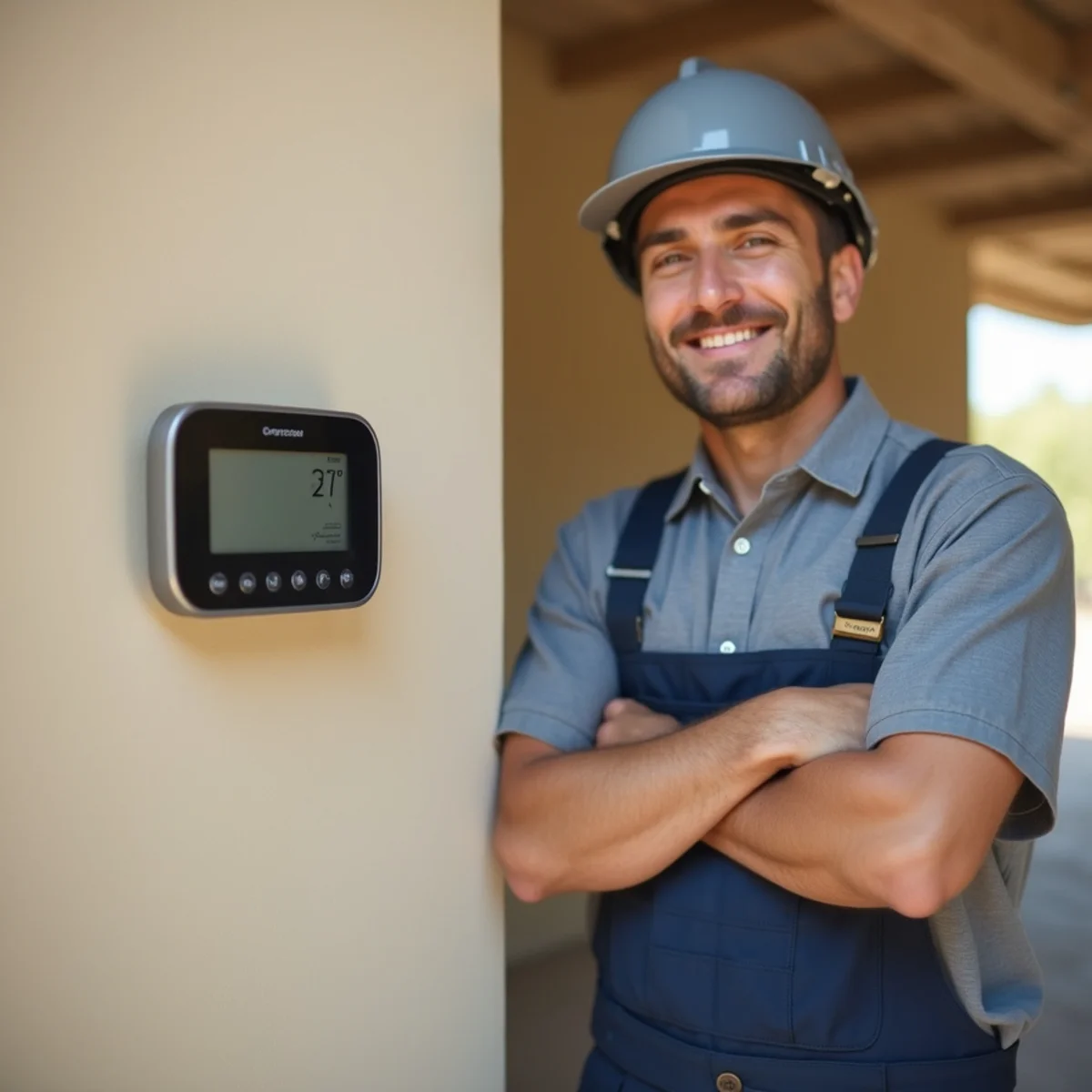
If your home never feels like the number on the wall, your AC clicks on and off constantly, or you are still turning a dial with a little bubble of liquid metal inside, the answer is probably yes: it is time for a new thermostat. The thermostat is the brain of your cooling system, and a failing or outdated one can quietly run up your bill, wear out your equipment, and leave rooms uncomfortable. The good news is that a replacement is usually inexpensive relative to the comfort and savings it delivers. Here are the seven clearest signs to watch for.
A thermostat is easy to overlook because it rarely fails dramatically; it just drifts, misreads, or lacks the features that would save you money. In an Apache Junction summer, where the system runs for months straight, those small failings add up fast. Our smart thermostat and remote monitoring service handles the upgrade and setup so the new unit actually earns its keep.
The 7 Signs It Is Time for a New Thermostat
If one or more of these sounds like your home, a replacement is worth considering:
- The temperature reading is wrong. Put a separate thermometer next to it. If the room is 80 but the thermostat insists it is 74, the sensor has drifted and your comfort and bill are both suffering.
- The AC short cycles. If the system turns on and off every few minutes, a faulty thermostat may be misreading temperature and triggering the system incorrectly, which wastes energy and wears out parts.
- It has no scheduling. If you cannot program setbacks for when you are away or asleep, you are leaving real summer savings on the table every single day.
- It is an old mercury dial unit. Those liquid-metal units are decades old, less accurate, and contain mercury. They cannot come close to the precision or features of a modern thermostat.
- The display is dim, blank, or glitchy. Fading screens, unresponsive buttons, or a unit that needs constant battery changes are all telling you it is near the end.
- You cannot adjust it remotely. If you cannot change the setting from your phone, you cannot pre-cool before you get home or fix a snowbird hold from out of state.
- Rooms never match the setting. Chronic hot or cold spots can point to a thermostat placed badly or too crude to manage the system well.
What a Short-Cycling Thermostat Costs You
Short cycling, when the system starts and stops in rapid bursts, deserves special attention because it is both a comfort problem and an equipment killer. Every startup is the hardest moment for a compressor, so a thermostat that triggers frequent, short runs can shorten the life of your most expensive component. It also never runs long enough to properly dehumidify or evenly cool the house. A thermostat is not the only cause of short cycling, but a faulty one is a common and cheap-to-fix culprit worth ruling out first.
What a Smart Thermostat Actually Buys You
Upgrading is not just about a nicer screen. In this climate, the features pay for themselves through lower runtime and fewer surprises:
- Automated setbacks and pre-cooling. The thermostat raises the temperature while you are out and cools the house just before you return, instead of running cold all day. Our best summer AC temperature guide explains the schedule that saves the most.
- Remote control and alerts from your phone. Priceless for snowbirds who need to manage a summer hold and get warned if the system fails in an empty house.
- Usage insights. Many units show you how long the system runs, helping you spot a developing problem early.
- Time-of-use optimization. If your utility charges more at peak hours, a smart unit can pre-cool before the expensive window.
- Maintenance and filter reminders. Helpful nudges in a climate where filters clog fast.
| Capability | Old / dial unit | Smart thermostat |
|---|---|---|
| Temperature accuracy | Drifts over time | Precise sensor |
| Scheduling and setbacks | Manual or none | Automated |
| Remote phone control | No | Yes |
| Snowbird monitoring | No | Yes, with alerts |
| Usage insights | No | Yes |
Placement matters as much as the model. A thermostat mounted on a hot exterior wall, in direct sun from a nearby window, or right above a supply vent will read a temperature the rest of the house never actually feels, and it will run the system to that false number all day. If yours sits in a bad spot, an upgrade is also the chance to relocate it to a shaded interior wall at eye level, away from drafts and direct sun, so it finally measures the air your family lives in rather than the heat radiating off a sunlit wall.
When to Call a Pro for the Swap
Some thermostats are a simple swap, but desert homes often have quirks, heat pump wiring, missing common wires, or multi-stage equipment, that make a clean, correct installation worth a professional. A miswired thermostat can prevent proper cooling or even damage equipment, so if your system is a heat pump or you do not see a common (C) wire, let a tech handle it. If your thermostat upgrade is part of a bigger comfort problem like a system that runs constantly in Apache Junction, it is worth having the whole system looked at together.
Upgrade Before the Next Heat Wave
A failing thermostat is one of the cheapest fixes in your whole cooling system and one of the most satisfying, because the payoff shows up as both lower bills and a house that finally matches the number on the wall. We install and configure smart thermostats throughout Ironwood and the surrounding communities, wired correctly for your specific equipment. Our same-day, licensed and insured team can have you upgraded before the next triple-digit stretch. Call +1 (327) 210-5999 to schedule.
Frequently Asked Questions
Tape a separate thermometer next to it and wait 20 minutes; if the readings differ by more than a degree or two, the thermostat is misreading the room. Other giveaways are short cycling, a dim or unresponsive display, frequent battery changes, and an inability to hold a schedule. Even a thermostat that technically works may be worth replacing if it lacks scheduling and remote control, which save real money in a desert summer.
Yes. A thermostat that misreads the temperature makes your AC chase the wrong target, running longer or short cycling, both of which waste energy. An older unit without scheduling also means you cannot automate setbacks while you are away, so you cool an empty house at full comfort every day. Upgrading to an accurate, programmable unit is one of the cheapest ways to trim summer cooling costs.
For most desert homes, yes. The automated setbacks and pre-cooling cut runtime during the long cooling season, and remote control plus failure alerts are especially valuable for snowbirds managing a home from out of state. Many units also show usage data that helps catch a developing AC problem early. The modest cost is usually recovered through lower bills and avoided surprises over a single summer or two.
Simple swaps are sometimes a do-it-yourself job, but desert homes frequently have heat pump wiring, a missing common wire, or multi-stage equipment that make a correct installation trickier. A miswired thermostat can prevent cooling or even damage equipment, so if you have a heat pump or do not see a C wire at the existing unit, have a technician handle it to protect your system and your warranty.
Talk to a Local Apache Junction Technician
Same-day across Apache Junction & Gold Canyon — 24/7 in triple-digit heat.
Call +1 (327) 210-5999Related articles
The Best AC Temperature for an Arizona Summer
What should you set your thermostat to during an Arizona summer? Here is how to balance comfort and cost, why 78 is the starting point, and how smart schedules and snowbird holds change the math.
Read moreWhy Your AC Runs Nonstop When It's 105F+ in Apache Junction
When it is 108 outside, a long-running AC is often doing exactly what it should. Here is how to tell the difference between a hard-working system and one that is actually failing.
Read more