
The Best AC Temperature for an Arizona Summer
What should you set your thermostat to during an Arizona summer? Here is how to balance comfort and cost, why 78 is the starting point, and how smart schedules and snowbird holds change the math.
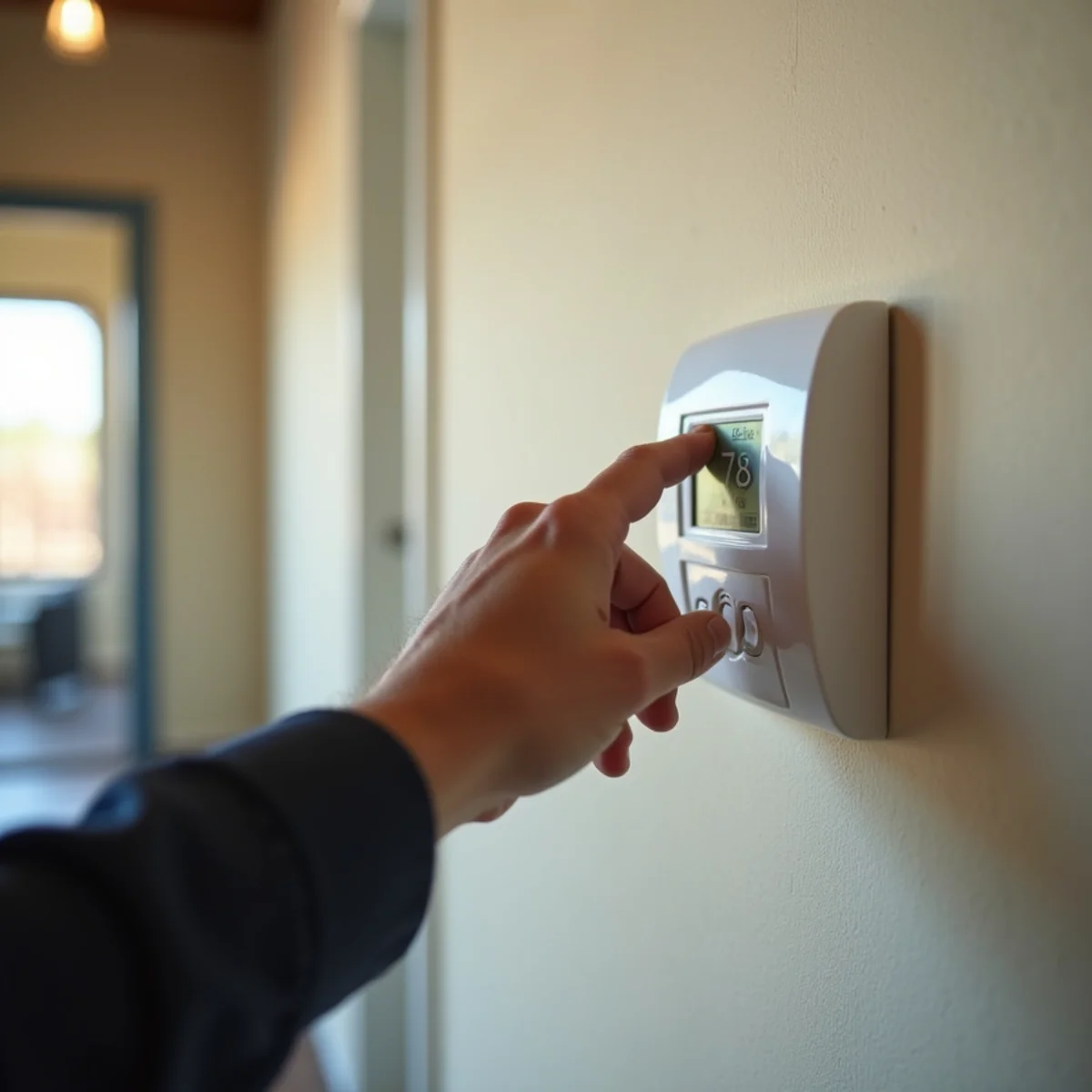
The short answer most energy experts give is 78 degrees Fahrenheit when you are home and awake, with a few degrees higher when you are away or asleep. But in an Apache Junction summer, the right setting is really a balance between comfort, your electric bill, and the hard limits of what your equipment can do on a 115-degree day. Setting it lower does not cool the house faster; it just runs the compressor longer and raises the bill. Here is how to find the setting that keeps you comfortable without punishing your wallet or your AC.
There is no single perfect number for every household, and anyone who tells you otherwise is guessing. What matters is understanding how the setpoint drives cost and runtime, then adjusting around your comfort. Our HVAC maintenance customers ask about this constantly, so here is the full picture.
Why 78 Is the Starting Point
The 78-degree recommendation comes from balancing human comfort against energy use. Every degree lower you set the thermostat increases cooling cost, because the system has to fight a bigger gap between indoor and the brutal outdoor temperature. In the desert, where that outdoor number can sit above 110 for hours, the gap is already enormous, so each degree matters more here than almost anywhere. Starting at 78 when you are home, then using ceiling fans to feel a couple of degrees cooler, is how most families land on real savings without feeling hot.
A Realistic Setpoint Schedule for the Desert
The biggest savings come from not cooling an empty house to the same temperature you would cool an occupied one. Here is a practical starting schedule you can adjust to your comfort:
| Time of day | Suggested setting | Why |
|---|---|---|
| Home, awake | 78F | Comfort-and-cost balance with fans |
| Away at work | 82-85F | Big savings with no one home |
| Sleeping | 75-78F | Slightly cooler for rest, fans help |
| Returning home | Pre-cool before arrival | Smart schedule beats a cold blast |
| Mild night (under 95F) | Fan or higher setpoint | Let the cooler air do the work |
Notice the away setting is not off. In this climate, letting the house soar to 95 while you are gone can backfire: the system then struggles for hours to recover, and everything inside, walls, floors, furniture, soaks up heat that has to be pulled back out. A moderate setback of four to seven degrees usually saves the most without an expensive recovery.
One desert wrinkle worth knowing: during monsoon weeks, higher humidity makes a given temperature feel warmer, so a setting that felt fine in bone-dry June can feel sticky in August. On humid days you may actually be more comfortable letting the system run a little longer at the same setpoint, because longer run cycles pull more moisture out of the air. A properly sized system does this naturally, while one that short cycles never runs long enough to dehumidify, which is one more reason equipment health and setpoint strategy go hand in hand in Apache Junction.
Let a Smart Schedule Do the Work
Manually nudging the thermostat up and down all day is how good intentions fail; most people forget. A programmable or smart thermostat automates the setbacks and, crucially, can pre-cool the house before you get home so you walk into comfort without running the system cold all afternoon. Here is how to use one well:
- Program the away setback for your real work hours so you are not cooling an empty house at full comfort.
- Use pre-cool scheduling to bring the house to 78 shortly before you arrive, rather than cooling all day.
- Take advantage of overnight lows: in late summer, a mild night may let you coast on fans alone.
- If your utility has time-of-use pricing, pre-cool before the expensive peak window and ease off during it.
If your current thermostat cannot do any of this, it may be costing you money every day; our guide on whether you need a new thermostat walks through the signs, and our smart thermostat and remote monitoring service can set one up correctly.
Snowbirds: The Hold Setting Matters
If you leave Apache Junction for the summer, do not shut the AC off entirely. A closed-up desert home with no cooling can climb past 120 degrees inside, which warps floors, cracks furniture, damages electronics, and invites mold where any humidity lingers. The standard advice is to set a hold around 85 to 90 degrees so the house never bakes, paired with remote monitoring so you get an alert if the system fails while you are away. A failed unit in an empty home in July is a disaster you want to catch in hours, not discover in October.
Remote monitoring is especially valuable for the many seasonal residents across the foothills. It lets a neighbor or a service company respond before an empty home turns into a heat-damaged one. We help snowbirds throughout Royal Palm and the surrounding neighborhoods set up sensible summer holds and monitoring before they head north.
Comfort Without the Bill Shock
The best AC temperature is the highest one at which your household is genuinely comfortable, supported by fans, smart setbacks, and a system that is clean and properly charged. A unit choked by a dirty filter or low refrigerant cannot hold 78 on a brutal day no matter what the thermostat says, which is why setpoint strategy and maintenance go together. If your system struggles to hold a reasonable temperature, that is worth a look. Our 15-plus-year, licensed and insured team can dial in your comfort and efficiency together. Call +1 (327) 210-5999 to get set up for the season.
Frequently Asked Questions
A good starting point is 78 degrees when you are home and awake, raised to roughly 82 to 85 when you are away and set to a comfortable 75 to 78 for sleeping, with ceiling fans making those settings feel cooler. The ideal number is the highest one at which your household is genuinely comfortable, since every degree lower raises runtime and cost against the extreme desert heat.
No. In this climate, letting an empty house soar means the system then runs for hours to recover, and the walls, floors, and furniture all reabsorb heat that must be pulled back out. A moderate setback of about four to seven degrees above your comfort setting usually saves the most money without an expensive recovery period when you get home.
Do not shut cooling off entirely. A closed desert home with no AC can exceed 120 degrees inside and damage floors, furniture, and electronics. Set a hold around 85 to 90 degrees so the house never bakes, and pair it with remote monitoring so you are alerted if the system fails while you are away, letting someone respond in hours rather than discovering it months later.
No. Your air conditioner cools at a fixed rate no matter what number you set, so cranking it to 68 when you walk in does not speed anything up. It only makes the system run longer to reach a colder, more expensive target, and people often forget to raise it afterward. Set the temperature you actually want and let the system get there.
Talk to a Local Apache Junction Technician
Same-day across Apache Junction & Gold Canyon — 24/7 in triple-digit heat.
Call +1 (327) 210-5999Related articles
Do I Need a New Thermostat? 7 Signs It Is Time to Upgrade
A failing thermostat can quietly drive up your bill and wear out your AC. Here are the seven clearest signs it is time to replace or upgrade yours, plus what a smart model actually buys you in the desert.
Read moreWhy Your AC Runs Nonstop When It's 105F+ in Apache Junction
When it is 108 outside, a long-running AC is often doing exactly what it should. Here is how to tell the difference between a hard-working system and one that is actually failing.
Read more