
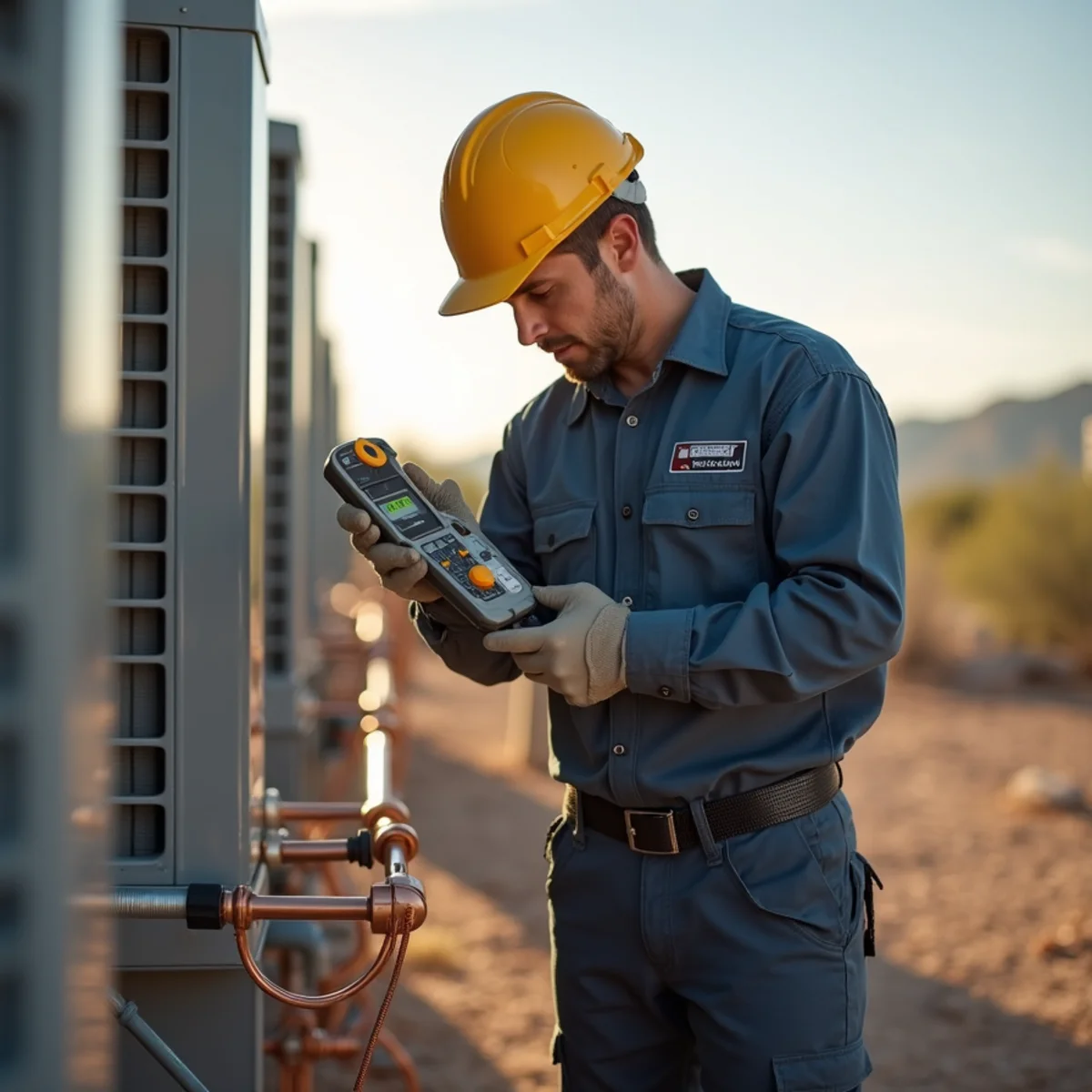
Refrigerant Leak Repair & Recharge in Apache Junction, AZ
If your AC used to cool fine and now struggles, and a company topped it off last summer only for it to fade again this year, you almost certainly have a refrigerant leak. Refrigerant is not fuel that gets used up. A sealed system should hold its charge for the life of the equipment, so a low charge means it is escaping somewhere, and the only real fix is to find that leak, seal it, and recharge to the manufacturer's specification.
- Licensed • Bonded • Insured
- 4.9★ (137 reviews)
- 24/7 Emergency Service
- 15+ Years Local
We locate leaks properly using electronic detectors, dye, and nitrogen pressure testing rather than spraying in more refrigerant and hoping. Common leak points on Apache Junction systems are the evaporator coil, the schrader valve cores, brazed line-set joints, and corroded connections at the condenser. Once we find and repair it, we pull a proper vacuum and weigh in the exact charge, because a system that is overcharged or undercharged cools poorly and wears out early.
This is EPA-regulated work, and a licensed Arizona ROC contractor with EPA Section 608 certified technicians handles it, bonded and insured. Under EPA rules, refrigerant cannot legally be knowingly vented, and a leaking system is supposed to be repaired, not endlessly refilled. We do it the right way and log it correctly.

Signs You Need Refrigerant Leak Repair & Recharge in Apache Junction
- Cooling that gets weaker year over year and needs repeated top-offs
- Ice forming on the copper lines or the indoor evaporator coil
- A hissing or bubbling sound near the lines or coil
- The system runs much longer than it used to for the same comfort
- Higher electric bills as the AC struggles to keep up
- Warm air from the vents despite the compressor running
- An oily residue or dirt-caked film at a line joint or the coil
- A repair company that keeps recharging without ever finding the cause
Why Homeowners Choose Us
We find the leak, not just refill it
Electronic detection, dye, and nitrogen pressure testing pinpoint where refrigerant is escaping so the repair actually lasts, instead of the top-off-and-repeat cycle.
Recharged to exact spec
After sealing the leak we pull a proper vacuum and weigh in the precise charge the manufacturer calls for. An accurately charged system cools better and lasts longer.
R-22 and R-410A handled correctly
Older systems still run phased-out R-22, which is scarce and expensive, while newer units use R-410A. We advise honestly on whether recharging an aging R-22 system is worth it versus replacing.
EPA-compliant and documented
Our EPA Section 608 certified technicians recover and handle refrigerant by the rules, with no illegal venting and proper record-keeping on the work.
Straight repair-versus-replace math
If the leak is in an aging coil on an old R-22 unit, we lay out the numbers plainly so you can decide between a repair and a new, more efficient system.
Our Process, Step by Step
- 1
Confirm the charge and symptoms
We connect gauges, read the pressures and superheat, and confirm the system is actually low rather than suffering an airflow or electrical problem that mimics a leak.
- 2
Locate the leak
Using an electronic leak detector, UV dye where appropriate, and a nitrogen pressure test, we track the leak to its source, whether that is the evaporator coil, a valve core, or a brazed joint.
- 3
Repair and pressure-test
We repair or replace the failed component, then pressure-test with nitrogen to verify the system holds before we put any refrigerant back in. No sealing shortcut that leaks again next month.
- 4
Evacuate and weigh in the charge
We pull a deep vacuum to remove moisture and air, then weigh in the exact factory charge. Finally we verify the temperature split and pressures so you know the fix is complete.
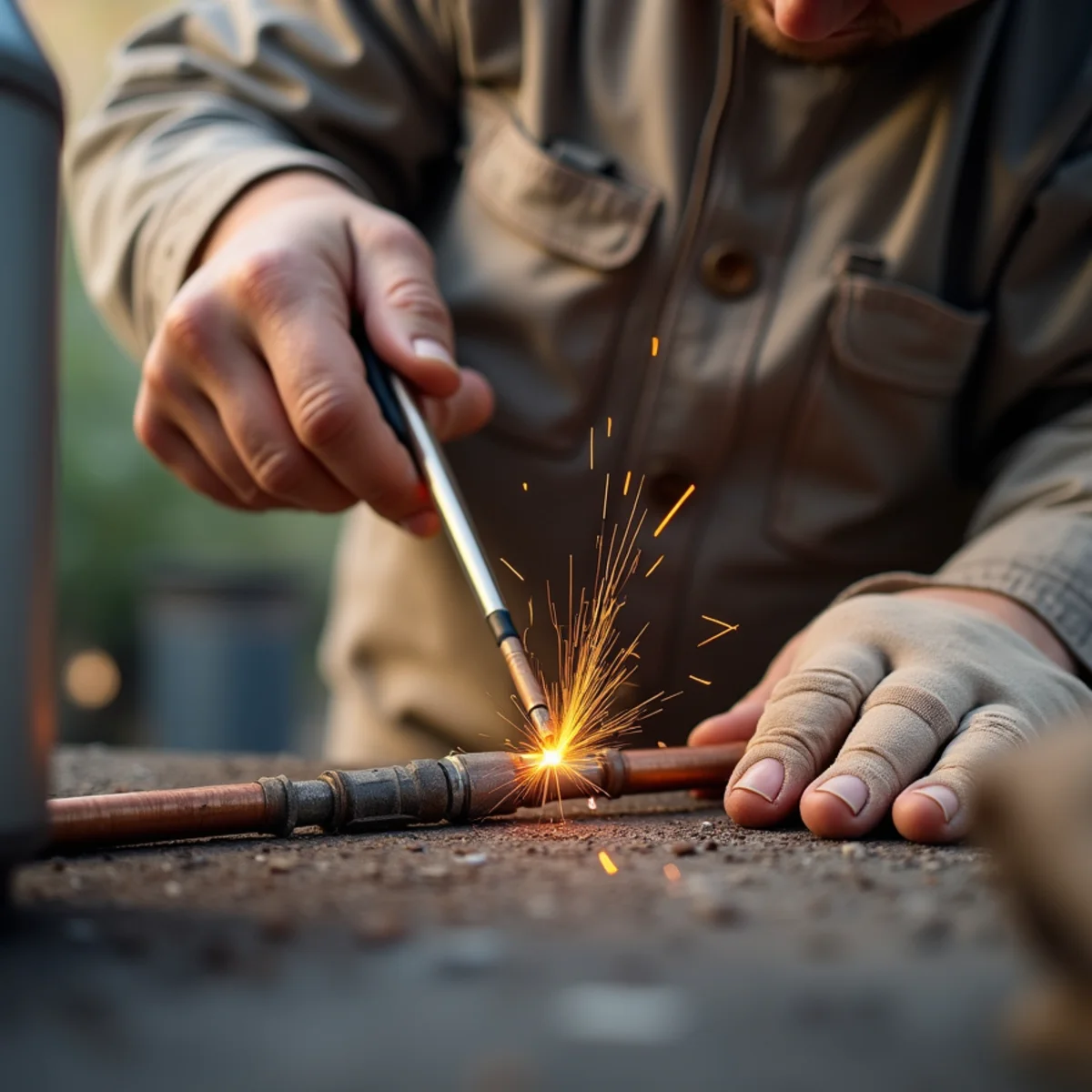
Need Refrigerant Leak Repair & Recharge Today? We’re Minutes Away.
Same-day across Apache Junction & Gold Canyon — 24/7 in triple-digit heat.
Why Topping Off Is Not a Repair
Adding refrigerant to a leaking system is like putting air in a tire with a nail in it. It works for a while, then you are right back where you started, only poorer. Every top-off costs money, and on an R-22 system that money is significant because the refrigerant itself is expensive and getting harder to source.
There is also an efficiency cost. A system limping along low on charge runs longer, works harder, and drives up your electric bill through the hottest months, all while the leak keeps growing. And under EPA Section 608 rules, knowingly venting refrigerant is prohibited and leaks are meant to be repaired, not endlessly refilled. Finding and sealing the leak is both the honest fix and the legal one.
The one time a top-off makes sense is as a stopgap to keep an old system limping through a heat wave while you decide on replacement. We will do that when it genuinely helps, but we will always tell you plainly that it is temporary, not a cure.
R-22 Versus R-410A: What It Means for Your Repair
Many older Apache Junction homes, especially 1970s and 1980s ranches and long-standing manufactured homes, still run air conditioners charged with R-22. That refrigerant has been phased out of production, so what remains is scarce and expensive, and a big R-22 leak can make repairing an aging unit cost more than it is worth.
Newer systems use R-410A, which is still readily available and much cheaper per pound. When you have a leak on a newer R-410A system, repairing and recharging is usually the clear right call. On an old R-22 unit with a leaking evaporator coil, the math often points toward replacement with a modern, higher-efficiency system that meets current SEER2 standards and will cut your summer bills.
We do not push replacement to pad an invoice. We put the actual numbers in front of you, the cost to find and fix the leak and recharge versus the cost and savings of a new system, so you make the call with real information rather than a sales pitch.
Handle It Safely Until We Arrive
Never try to add refrigerant yourself or handle the lines. Refrigerant is under pressure, can cause severe frostbite and eye injury, and DIY recharge kits routinely overcharge systems and mask the real leak. It is EPA-regulated for a reason, and this is genuinely a job for a certified technician.
If you see ice on the lines, switch the system to Off and set the fan to On to let it thaw, then call us. Photograph the model and serial plate on the outdoor unit and any oily residue or dirt buildup you notice at the line joints, since that grime often marks exactly where refrigerant has been weeping out. Do not open the panels or the sealed system.
What Affects Your Price
We never quote blind. Every written estimate is itemized so you can compare line by line — here is what moves the number:
- Refrigerant type, with phased-out R-22 costing far more per pound than R-410A
- How much refrigerant the system lost and needs to be brought back to spec
- Where the leak is located, since an evaporator coil leak is a bigger job than a valve core
- Whether a leaking component can be repaired or must be replaced outright
- The labor to access the coil or line set, including rooftop and packaged units
- The age and condition of the system, which drives the repair-versus-replace decision
- Whether multiple leak points exist on an older, corroded system
- Proper evacuation and vacuum time, which cannot be skipped without harming reliability
Prefer to spread the cost? Ask about HVAC financing & monthly payment options.
Where We Provide Refrigerant Leak Repair & Recharge
Our base at 461 W Apache Trl in Apache Junction puts us minutes from most Superstition-area homes, and we run Pinal County and the East Valley every day. Same-day across Apache Junction & Gold Canyon — 24/7 in triple-digit heat. We bring refrigerant leak repair & recharge to homeowners across Pinal County, Mesa, Gold Canyon, Queen Creek, San Tan Valley, plus the Apache Junction neighborhoods off Ironwood Drive and Idaho Road. Not sure you’re in range? Call +1 (327) 210-5999 and we’ll give you the soonest arrival window for your street — arrival depends on location, traffic, and technician availability.
Browse every city and neighborhood we serve to see local details for your area.
Refrigerant Leak Repair & Recharge — Common Questions
No. A sealed AC does not consume refrigerant, so if it needs a refill every year it has a leak that is getting worse. The right fix is to find and seal the leak, then recharge to spec. Repeated top-offs only cost you money and, on an R-22 system, that money adds up fast.
We use a combination of electronic leak detectors, UV dye where it helps, and a nitrogen pressure test to pinpoint the source, whether it is the evaporator coil, a valve core, or a brazed joint. Once located, we repair it and pressure-test to confirm the system holds before recharging.
Sometimes, and sometimes not. R-22 is phased out, scarce, and expensive, so a large leak on an old unit can cost more to repair than it is worth. We lay out the numbers for repair versus a new R-410A system that meets current efficiency standards and let you decide with the real figures in hand.
We strongly advise against it. Refrigerant is under pressure and can cause serious injury, handling it is EPA-regulated, and DIY kits commonly overcharge a system and hide the underlying leak. A certified technician can do it safely and correctly and will actually find the cause.
Under EPA Section 608, refrigerant cannot be knowingly vented, and a leaking system is meant to be repaired rather than endlessly topped off. Only certified technicians may buy and handle these refrigerants, which is part of why a proper recovery, repair, and recharge has to be done by a pro. We follow those rules and keep the work documented, so you are covered and the fix is done right.
You might also need
From our HVAC blog
Ready for Refrigerant Leak Repair & Recharge? Talk to a Local Tech Today.
Same-day across Apache Junction & Gold Canyon — 24/7 in triple-digit heat.
461 W Apache Trl, Apache Junction, AZ 85120 Licensed • Bonded • Insured