
Why Your Second AC Unit Can't Keep Up: Two-Unit Home Troubleshooting
When one AC unit holds temperature and the other cannot, the two are rarely working equally hard. Here is how to figure out why the struggling unit is falling behind.
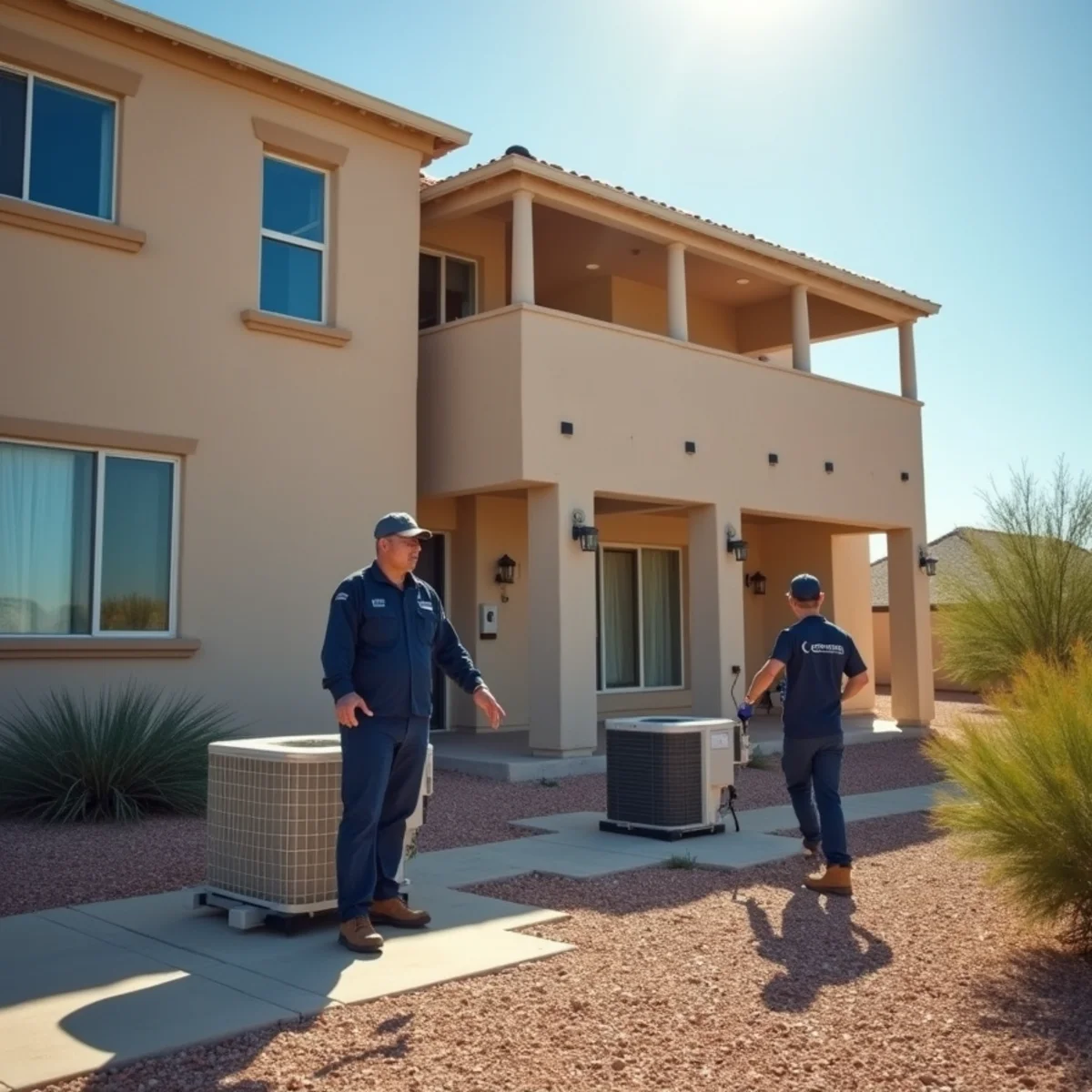
Larger and newer Apache Junction homes, especially the two-story and south-side builds, often run two separate AC systems: one for the main floor, one for upstairs or the far wing. It is a smart design, but it creates a specific headache. When one unit cools its zone perfectly and the other cannot keep up, homeowners assume the struggling unit is broken. Sometimes it is. Often, though, the two units are simply not fighting the same battle, and the upstairs one is losing an unfair fight.
Let us work through why one unit falls behind, what you can safely check, and when the difference points to a real fault.
Why Two Units Rarely Work Equally Hard
Heat rises, and the sun does not treat every part of your house the same. The upstairs unit almost always carries a heavier load than the downstairs one, even when both are the same size and age. Before you conclude the second unit is failing, understand the built-in disadvantages it faces in an Apache Junction summer.
- Upstairs collects the heat that rises from the lower floor, so its unit starts behind.
- The upper floor sits right below that 140-degree attic, absorbing heat through the ceiling all day.
- Second-floor ducts often run through the hottest part of the attic, losing cooling before it arrives.
- West and south-facing upstairs rooms take direct afternoon sun with less shade than ground level.
- The two units may be different ages, and the older one loses capacity as it wears.
- Zoning or thermostat settings may simply be asking more of one system than the other.
When It Is Actually a Problem
A small, heat-driven gap is expected. A large or growing one is not. Suspect a genuine fault when you see these signs on the struggling unit.
- The lagging unit blows warm or room-temperature air while the other blows cold.
- One zone falls five or more degrees behind and never recovers, even overnight when the load eases.
- The struggling unit's outdoor fan is not spinning, or the compressor hums without starting.
- Ice appears on the refrigerant lines at the underperforming unit.
- One unit trips its breaker repeatedly while the other runs fine.
- The gap between the two zones is getting worse week over week.
Any of these point to a component problem, a failing capacitor, low refrigerant from a leak, a dirty coil, or a tired compressor, on that specific unit. Because each system is independent, the fix is the same as for any single AC. Our same-day AC repair in Apache Junction team can test the struggling unit's electrical draw, refrigerant charge, and temperatures to pin down which it is. A unit that runs constantly and still loses ground has its own common causes, which we cover in why your AC runs nonstop in the heat.
What You Can Safely Check
You can gather a lot of useful information without any risk, and it helps you tell the two situations apart.
- Check the filter for the struggling zone. Each unit usually has its own filter or return, and a clogged one on just that system explains a lot.
- Compare the two outdoor units side by side while both call for cooling. Are both fans spinning? Is one coil visibly dirtier than the other?
- Feel the air at vents in each zone. Cold from one and merely cool from the other narrows down which system is down on capacity.
- Confirm both thermostats are set the same way and both are in cooling mode with fresh batteries if applicable.
- Note the temperature difference between zones and whether it holds steady, matches the afternoon heat, or keeps growing.
- Make sure upstairs registers are open and not blocked, and close blinds on sun-facing upstairs windows during peak heat.
| Observation | Likely story | Next step |
|---|---|---|
| Upstairs 2-3 degrees warm on a hot day | Normal load difference | Ease setpoint, shade windows |
| One unit blows warm air | Component fault on that unit | Shut it off, call for repair |
| Struggling unit's fan not spinning | Capacitor or motor failure | Professional repair |
| Gap widening each week | Developing fault (coil, refrigerant) | Schedule a diagnosis |
Balancing a Two-Unit Home
If both units are healthy but upstairs still runs warm, the answer is often about balance rather than repair: sealing leaky second-floor ducts, adding attic insulation, adjusting setpoints so the upstairs thermostat runs a touch cooler in the evening, and shading west-facing glass. These steps close the natural gap without straining the equipment. Two-unit homes are common across the East Valley, including newer builds in Gilbert, and the same troubleshooting logic applies everywhere.
When one of two AC units cannot keep up, start by asking whether it is being asked to do more, or whether it has actually failed. A modest, heat-driven gap upstairs is normal. Warm air, a widening gap, or a stalled fan is a fault worth a professional look, unit by unit.
Frequently Asked Questions
Upstairs carries a heavier cooling load: heat rises from the lower floor, the upper ceiling absorbs heat from a 140-degree attic, and second-floor ducts often run through that hot attic. Even two identical units will not hold the same temperature, so a small upstairs gap on a hot afternoon is usually normal.
On an extreme Apache Junction afternoon, two or three degrees warmer upstairs is common and not a sign of failure. A gap of five degrees or more that never recovers, even overnight when the load eases, points to a real problem on the struggling unit and is worth a professional diagnosis.
No. In a two-unit home each system is completely independent, with its own compressor, coil, and refrigerant. A fault in one does not harm the other, which is actually good news: the working unit confirms your home's basics are fine and isolates the problem to the struggling system.
When both systems are healthy, the fix is about balance: sealing leaky upstairs ducts, adding attic insulation, shading west-facing windows, and setting the upstairs thermostat a bit cooler in the evening. These steps close the natural gap between floors without overworking the equipment.
Talk to a Local Apache Junction Technician
Same-day across Apache Junction & Gold Canyon — 24/7 in triple-digit heat.
Call +1 (327) 210-5999