
Swamp Cooler vs. Refrigerated Air: The Real Cost in Apache Junction
Plenty of older Apache Junction homes still run a swamp cooler. It is cheap to run, until monsoon season arrives. Here is the honest cost and comfort comparison against refrigerated air.
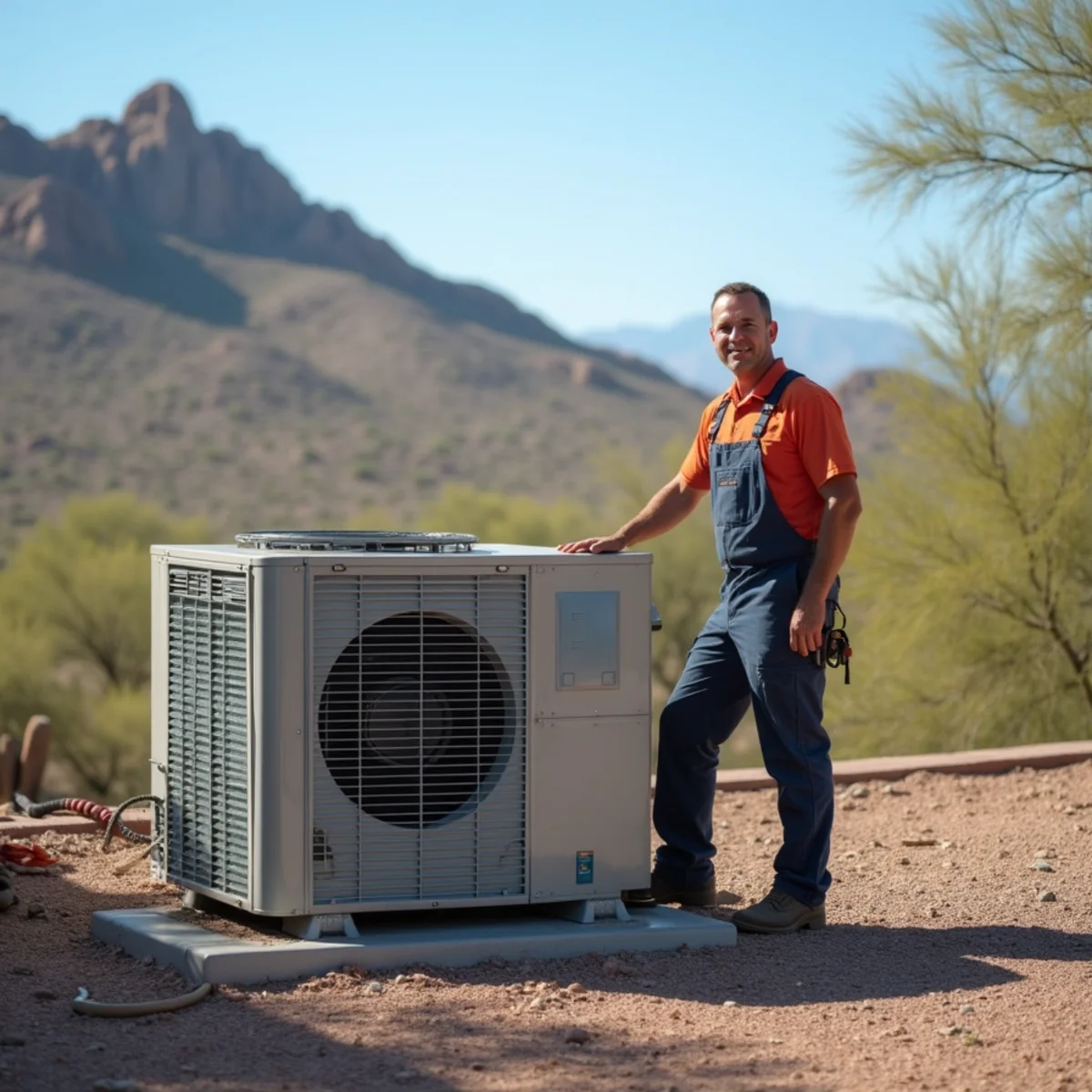
Drive through the older parts of Apache Junction and you will still see plenty of swamp coolers, those boxy evaporative units on rooftops and back walls of 1970s and 1980s homes. They are cheap to run and they have cooled desert homes for generations. But every longtime local knows their weakness: the day the monsoon humidity rolls in, a swamp cooler stops cooling and starts blowing warm, damp air. That is the crux of the swamp cooler versus refrigerated air decision, and it comes down to more than just the electric bill.
Here is an honest comparison of the two for our specific climate, including where each one wins. If you have already decided to make the switch, our swamp cooler to refrigerated air conversion service handles it end to end.
How Each One Actually Works
A swamp cooler, or evaporative cooler, pulls hot dry air across water-soaked pads. As the water evaporates, it cools the air, the same way sweat cools your skin. It only works when the air is dry, because dry air can absorb moisture. Refrigerated air, a standard AC or heat pump, uses a refrigerant cycle to remove heat and humidity from the air regardless of what the weather is doing outside. That fundamental difference drives everything else.
Side by Side
| Factor | Swamp Cooler | Refrigerated Air |
|---|---|---|
| Up-front cost | Lower | Higher |
| Running cost (dry heat) | Very low | Higher |
| Performance in monsoon humidity | Poor; blows warm damp air | Excellent; unaffected |
| Cooling on 110F+ days | Struggles in peak heat | Consistent |
| Water use | High; uses water constantly | None |
| Humidity added indoors | Adds moisture | Removes moisture |
| Maintenance | Pads, hard-water scale, seasonal | Filter and annual tune-up |
The Monsoon Problem
This is the deciding factor for most Apache Junction homeowners. From roughly July through September, monsoon season pushes humidity way up, and that is exactly when a swamp cooler fails you. The wetter the air, the less water can evaporate, so the less cooling you get. On a humid August afternoon, a swamp cooler can leave your home muggy and uncomfortable, adding moisture to already damp air. Refrigerated air does not care about the humidity, it removes heat and moisture no matter the weather. For a house occupied through the summer, that reliability during the worst months is worth a great deal.
The Running-Cost Trade-Off
Swamp coolers earn their loyalty on operating cost. In dry desert heat, they use a fraction of the electricity of refrigerated air, because a fan and a water pump draw far less power than a compressor. That is real savings across a long cooling season. The catch is twofold: they only deliver that cheap comfort while the air is dry, and they use a lot of water to do it, which matters both for your water bill and in a region where water is precious. Refrigerated air costs more to run but delivers consistent comfort every single day of the summer, humidity or not.
The Conversion Question
Many older homes across Apache Junction and nearby Coolidge were built with swamp coolers and homeowners eventually convert to refrigerated air for that monsoon-season reliability. A conversion involves more than swapping a box: it means installing a proper condenser and air handler, running or adapting ductwork, and handling the electrical. The up-front cost is real, but so is the payoff in year-round comfort and home value. A full AC or heat-pump system in this market runs roughly $7,000 to $11,500 installed, and a conversion falls into that same range depending on your home's ductwork and layout.
When a Swamp Cooler Still Makes Sense
Evaporative cooling is not obsolete. It can be a smart, economical choice for a garage, a workshop, a patio, or a home used mainly in the dry spring and fall rather than through peak monsoon summer. Some homeowners even run a hybrid setup, leaning on the swamp cooler in dry months and refrigerated air when humidity climbs. The right answer depends on how you use the space and when you are actually there.
Our Honest Recommendation
For a home lived in through the full Apache Junction summer, refrigerated air is usually the better long-term choice, purely because it works during the humid monsoon weeks when a swamp cooler cannot keep up. For a seasonal space, a workshop, or a tight budget in a home used mostly in dry months, a well-maintained swamp cooler still earns its place. We will walk your home with you, look at how you use it, and give you honest numbers for either path rather than pushing the bigger ticket.
Frequently Asked Questions
Swamp coolers cool by evaporating water into dry air. When monsoon humidity rises, the air cannot absorb much more moisture, so cooling drops off and the unit can blow warm, damp air. Refrigerated air is unaffected by humidity because it removes heat and moisture regardless of the weather.
For a home occupied through the full summer, usually yes. Swamp coolers are cheaper to run in dry heat but fail during humid monsoon weeks. Refrigerated air costs more to operate but delivers consistent comfort every day, and it removes humidity instead of adding it.
A conversion involves a new condenser, air handler, ductwork, and electrical, so it falls into the same range as a full system, roughly $7,000 to $11,500 installed in this market, depending on your home's ductwork and layout. We provide a written, itemized quote after inspecting your home.
Yes, for the right use. They can be economical for a garage, workshop, patio, or a home used mainly in the dry spring and fall. Some homeowners run a hybrid, using the swamp cooler in dry months and refrigerated air when humidity climbs. It depends on how and when you use the space.
Talk to a Local Apache Junction Technician
Same-day across Apache Junction & Gold Canyon — 24/7 in triple-digit heat.
Call +1 (327) 210-5999