
Arizona Hard Water: What It Does to Evaporative Coolers & HVAC
Arizona has some of the hardest water in the country, and it quietly wrecks evaporative coolers from the inside out. Crusted pads, seized pumps, and rusted pans are all the same problem: mineral scale. Here is how to slow it down.
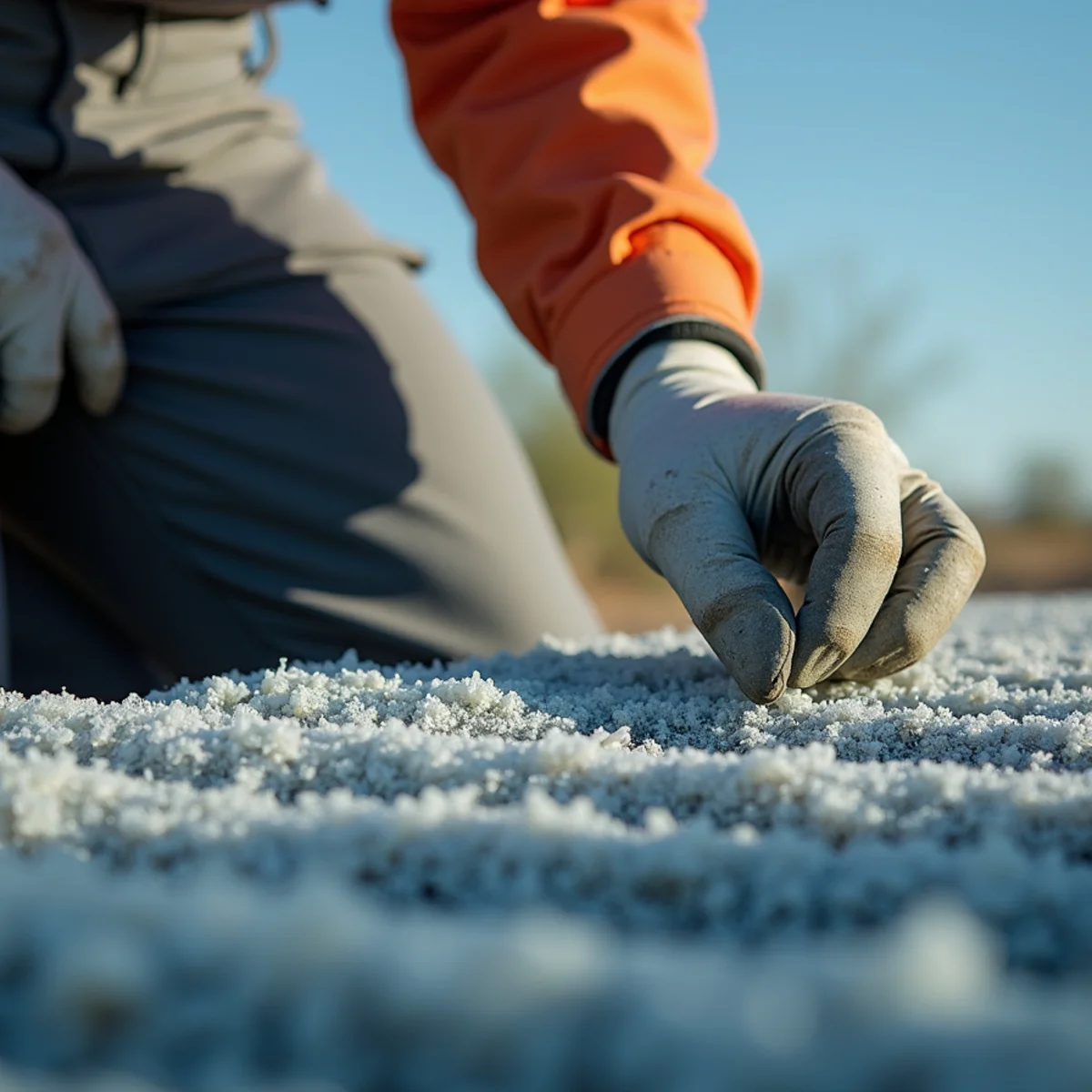
If you own an evaporative cooler in Apache Junction, you already know the white crust. It builds on the pads, cakes the water pan, and eventually seizes the little recirculating pump. That crust is mineral scale, and it is the direct result of one of the hardest water supplies in the United States. Central Arizona water regularly tests well above the threshold for very hard water, and an evaporative cooler is essentially a machine that concentrates those minerals on purpose.
Understanding why scale forms so aggressively here is the key to keeping a swamp cooler alive, and to deciding when it is finally time to walk away from evaporative cooling altogether.
Why Evaporative Coolers Are Scale Machines
A swamp cooler cools by trickling water over fibrous pads while a fan pulls dry desert air through them. The water evaporates, the air cools, and the house gets relief. But here is the catch: when water evaporates, the dissolved calcium and magnesium do not leave with it. They stay behind and concentrate. Every gallon that evaporates leaves its mineral load on the pads and in the pan. Over a hot Apache Junction summer, a cooler can evaporate hundreds of gallons, and every bit of hardness in that water ends up crusted somewhere inside the unit.
The Damage, Component by Component
| Part | What hard water does | Result |
|---|---|---|
| Cooler pads | Minerals crust the fibers | Poor cooling, airflow blockage, frequent replacement |
| Water pump | Scale locks the impeller | Pump seizes, no water to pads |
| Float valve | Deposits stick the valve | Overflow or dry pads |
| Pan and housing | Trapped minerals and moisture | Rust, leaks, structural rot |
| Distribution lines | Internal scale narrows tubing | Uneven water spread, dry spots on pads |
How to Slow the Scale Down
You cannot make Arizona water soft inside a swamp cooler, but you can manage the buildup and stretch the equipment's life considerably.
- Run a bleed-off or purge system that continuously dumps a little of the mineral-heavy water so it never fully concentrates.
- Use a pump saver or bleed kit and replace pads at the start of every cooling season rather than nursing crusted ones.
- Clean the pan and pump at least twice a season, scraping scale and flushing the lines.
- Drain and dry the unit fully when you close it up for winter so minerals are not baking onto wet metal for months.
- Consider a scale-inhibiting treatment designed for evaporative systems, changed on schedule.
Even with perfect maintenance, hard water sets a ceiling on how long and how well a swamp cooler performs, and monsoon humidity takes those coolers offline for weeks each summer anyway.
When It Is Time to Convert to Refrigerated Air
For a lot of homeowners, the scale battle is the last straw. Refrigerated air uses a sealed refrigerant loop with no water and no pads, so hard water simply stops being part of the equation. No more crusted pads, no more seized pumps, no more rusted pans, and no more useless cooling when the monsoon humidity rolls in. Our swamp cooler to refrigerated air conversion team handles this transition regularly, sizing the new system with a proper Manual J load calculation so it actually fits the house.
Homes out in Florence and the older parts of Pinal County lean heavily on evaporative cooling, so we field a lot of these conversion questions from that direction. If you are weighing the numbers, our detailed breakdown of swamp cooler versus refrigerated air cost in Apache Junction lays out what to expect on both the equipment and the utility side.
Frequently Asked Questions
Central Arizona has some of the hardest water in the country, loaded with calcium and magnesium. A swamp cooler evaporates water on purpose, and when that water evaporates the minerals stay behind and concentrate on the pads, pump, and pan. Over a summer that adds up to heavy scale.
Softened water can reduce scale, but many homeowners do not want to plumb softened water to a rooftop cooler, and softener salt has its own tradeoffs. A more common approach is a bleed-off or purge system that continuously drains the mineral-heavy water so it never fully concentrates, plus seasonal cleaning.
Often just one cooling season, sometimes less. Hard-water scale crusts the fibers so they stop wicking water, which kills cooling performance. Most owners here replace pads every spring and clean the pan and pump at least twice per season.
For many homes, yes. Refrigerated air has no water, pads, or pump, so hard-water scale stops being an issue entirely, and unlike a swamp cooler it keeps working during humid monsoon weeks. The tradeoff is higher equipment cost and different operating costs, which is worth comparing for your specific home.
Not the way it punishes a swamp cooler, because a refrigerated AC does not evaporate household water across pads. The place hard water still shows up is the condensate side: mineral-laden humidity and any misting or bleed-off accessories can leave scale in the drain pan and line, which is why we clear the condensate drain on every desert tune-up. Keeping that drain clear is what prevents a clog and water damage during monsoon.
Talk to a Local Apache Junction Technician
Same-day across Apache Junction & Gold Canyon — 24/7 in triple-digit heat.
Call +1 (327) 210-5999