
Snowbird Season: The April & October Tune-Up Calendar for AJ Homes
Snowbird homes have their own HVAC rhythm: leave in April, return in October. Timing two tune-ups around those dates protects the system all summer and guarantees you walk back into a cool house. Here is the calendar.
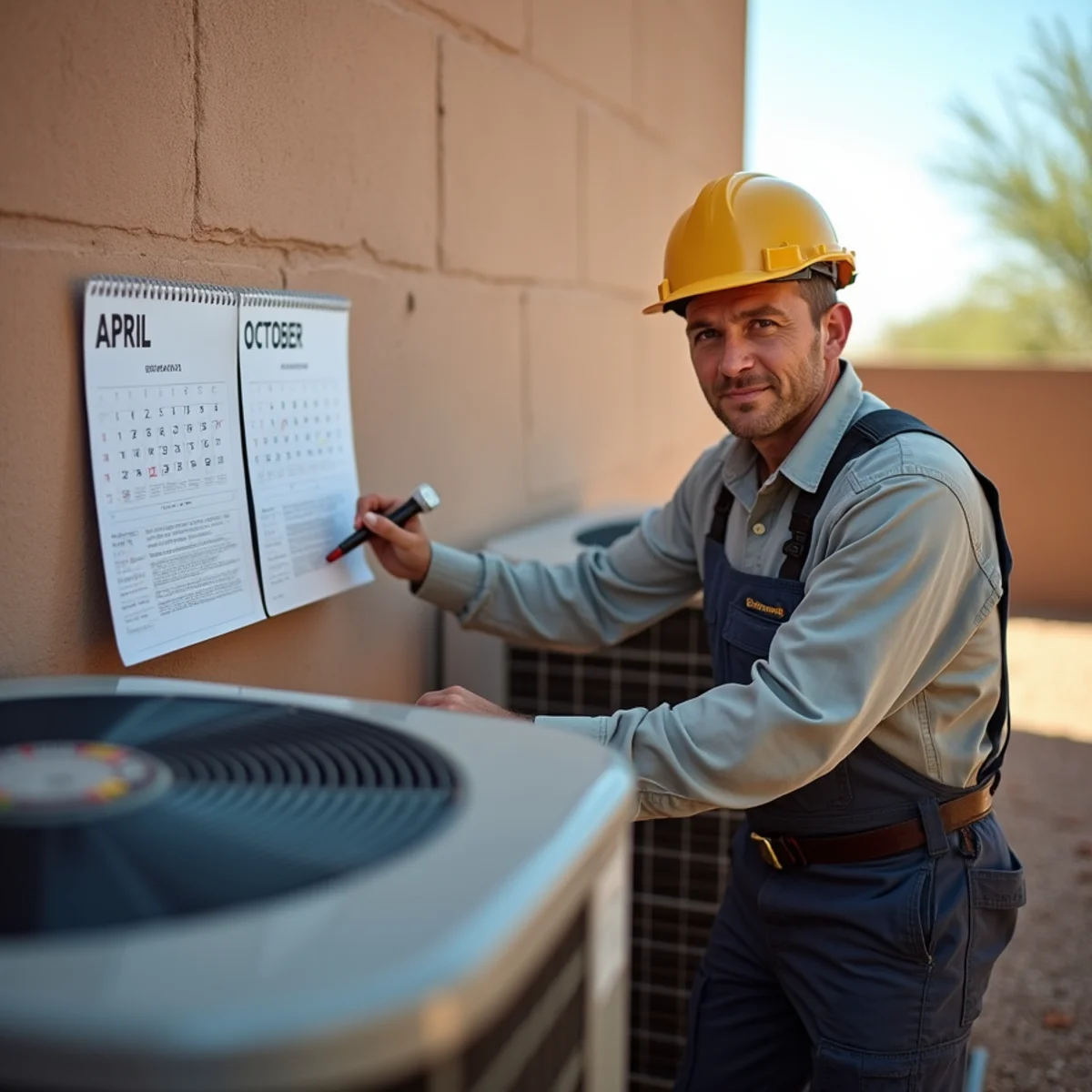
A snowbird home runs on a different clock than a year-round one. You are here for the mild half of the year, gone for the brutal half, and your HVAC system spends the entire Arizona summer running, or worse, sitting idle, with nobody home to notice trouble. That pattern calls for a specific maintenance rhythm, and it comes down to two dates: your April departure and your October return.
Bookend the season with the right service at each end, and you avoid the two worst snowbird outcomes: a system that quietly fails in July with the house closed up, and a system that will not start when you walk back in the door in the fall.
Why April and October Are the Anchor Dates
The timing is not arbitrary. April is the last comfortable window before the heat truly arrives, so it is when a technician can prep the system for a hard summer and set it up for the months you are away. October is when the worst heat has broken and returning residents flip everything back on, so it is the natural moment to catch anything that drifted out of tune while the house sat empty.
| Timing | Visit | Main goal |
|---|---|---|
| Late March to April | Departure tune-up | Prep for summer, set up for absence |
| Summer (remote) | Monitoring | Catch failures while you are gone |
| October | Return tune-up | Verify system after months idle |
The April Departure Checklist
Before you head north, the goal is a system that can run reliably all summer with nobody watching it, or sit safely idle without inviting problems. A thorough spring visit should cover:
- Full cooling performance check, refrigerant charge, and temperature split verification
- Capacitor and contactor inspection, since these are the parts most likely to fail in summer heat
- Condenser coil cleaning ahead of monsoon dust
- Condensate drain clearing so a clog does not cause water damage in an empty house
- A fresh filter and a supply of spares if anyone will check on the home
- Setting the thermostat to a safe summer hold, not off, so the house never bakes to the point of damaging finishes, electronics, or the system itself
Watching the House While You Are Gone
The blind spot of snowbird ownership is the summer itself. A capacitor blows in July, the AC stops, and the house sits at 115F for six weeks until you or a neighbor discovers it. A smart thermostat with remote monitoring closes that gap by alerting you the moment indoor temperature climbs past a set point, so a small repair never becomes a ruined home. For homes that sit empty through the heat, this is the single best upgrade, and our full write-up on snowbird home monitoring costs and savings covers what to expect. It pairs naturally with a maintenance relationship so someone local can respond.
The October Return Checklist
When you come back, the house has been through a full desert summer. Even a system that ran fine deserves a startup check before you rely on it into winter and next spring:
- Test both cooling and heating so you are ready for October afternoons and the winter freeze snaps that follow.
- Replace the filter, which is almost certainly overdue after months of summer runtime.
- Inspect the outdoor unit for storm and dust damage from the monsoon you missed.
- Check the condensate drain and safety switch after a season of heavy use.
- Verify the thermostat schedule and any monitoring alerts are set for an occupied home again.
This twice-a-year rhythm is exactly what a good HVAC maintenance plan is built around, and it is why so many seasonal residents put their service on autopilot. Homes in Gold Canyon, with its high concentration of seasonal and gated communities, run this calendar constantly, and the ones that stick to it almost never get the dreaded July phone call from a neighbor.
If you want the granular version of the spring visit, our April pre-summer AC checklist drills into each step. Between that and a solid October startup, your snowbird home stays boring, in the best possible way.
Frequently Asked Questions
No. Set the thermostat to hold around the mid-80s instead of off. An empty Apache Junction house with cooling fully off can reach interior temperatures that warp doors, crack furnishings, and damage electronics, and it lets humidity build during monsoon. A modest hold costs far less than that damage.
Aim for late March or April before you leave, and October when you return. April lets a technician prep the system for a hard summer and set it up for your absence, while October catches anything that drifted out of tune while the house sat empty. Book both a few weeks early, since those are the busiest changeover weeks.
Without monitoring, you usually do not until you or a neighbor finds a baking house. A smart thermostat with remote monitoring alerts you the moment indoor temperature climbs past a set point, so a small repair does not become a ruined home. It is the top upgrade for any home that sits empty through the Arizona summer.
It is the ideal rhythm for a snowbird property. The April visit prepares the system for months of unattended summer runtime, and the October visit verifies everything after the house sat through a full desert summer. A maintenance plan usually bundles both visits and keeps them on schedule automatically.
Talk to a Local Apache Junction Technician
Same-day across Apache Junction & Gold Canyon — 24/7 in triple-digit heat.
Call +1 (327) 210-5999