
April Pre-Summer AC Checklist for Apache Junction
April is the last quiet stretch before Apache Junction bakes. Here is exactly what to check yourself, what to leave to a licensed tech, and why each step matters before the first 110-degree week.
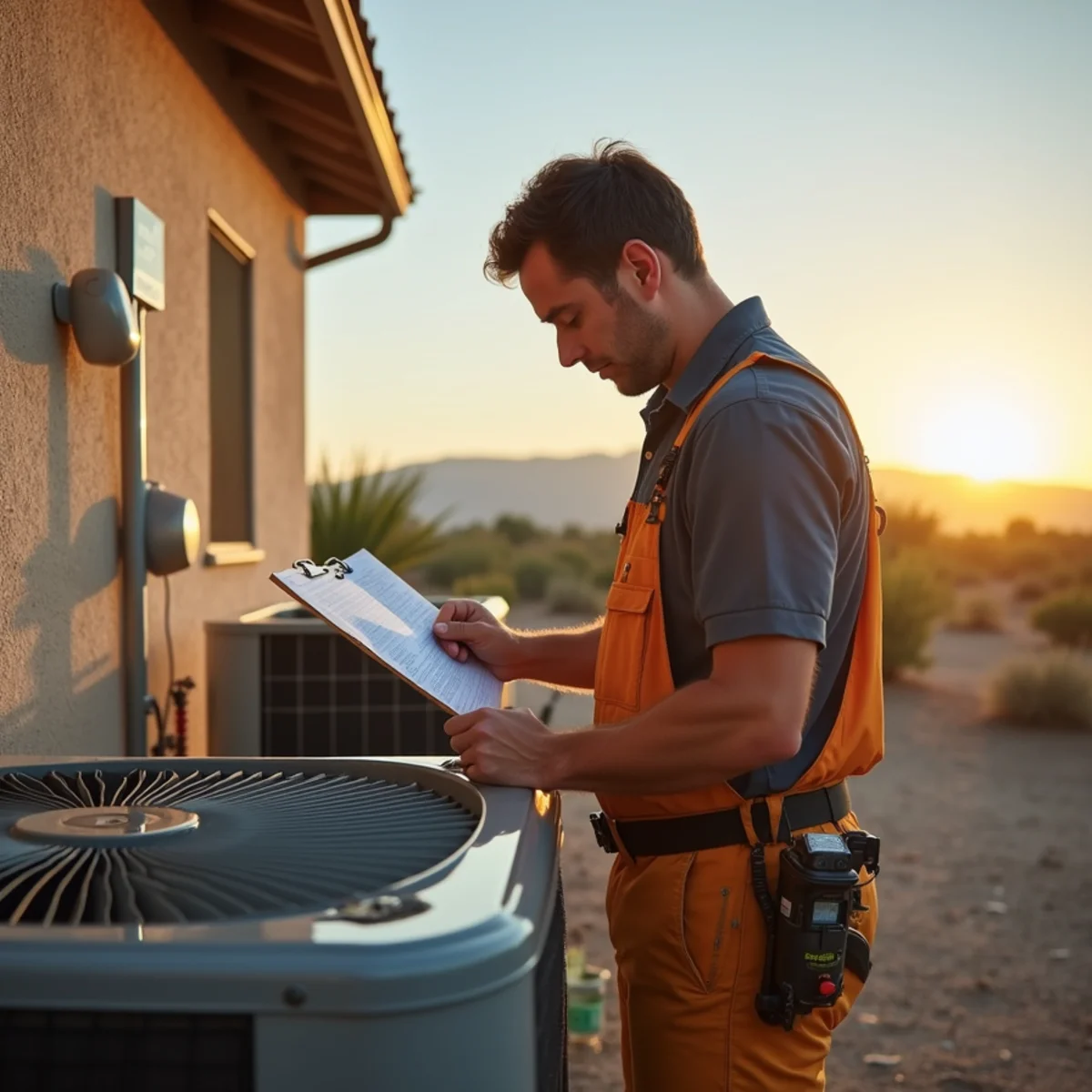
In Apache Junction, April is the calm before the furnace. Daytime highs are still comfortable, the nights still drop into the 50s, and your air conditioner has barely worked since October. That makes April the single best month to get it ready, because the moment the calendar flips toward June, this system will run ten to fourteen hours a day against 110-degree afternoons. A small problem you ignore now becomes a no-cooling emergency the week everyone else is calling too.
This checklist is built for our climate specifically. Desert dust, blowing off the Superstition foothills and out of every unpaved lot in town, loads coils and filters far faster than it would in a wetter place. We have split the list into what you can safely do yourself and what belongs to a licensed technician. Do the homeowner steps this weekend; book the pro steps before the rush.
Do These Yourself (Power Stays On)
None of the following requires opening a sealed panel, touching wiring, or handling refrigerant. If a step asks you to do any of those things, stop and call a pro.
- Replace the air filter with a fresh one and write the date on the frame. A clean filter is the cheapest way to protect the whole system.
- Walk the house and open every supply register. Closing vents to save money actually raises pressure in the ducts and strains the blower.
- Clear a two-foot circle around the outdoor condenser. Pull weeds, move the trash cans, trim back any oleander or bougainvillea crowding the coil.
- Gently rinse the outdoor coil fins from the outside with a garden hose on low pressure, top to bottom, with the system switched off at the thermostat.
- Pour a cup of distilled vinegar down the condensate drain line to clear algae before humid monsoon weeks arrive.
- Test the system: set the thermostat to Cool, drop it five degrees, and confirm cold air reaches the farthest room within a few minutes.
- Change the batteries in the thermostat and any smoke or carbon-monoxide detectors while you are thinking about it.
Leave These to a Licensed Technician
A real pre-season tune-up covers the parts you cannot safely reach. During a spring visit our techs check the numbers that predict a mid-summer failure, and most of these require meters, gauges, and training. Our pre-season HVAC maintenance in Apache Junction visit walks every one of these:
- Measure capacitor microfarads against the rated value. A capacitor drifting weak in April is the number-one cause of a dead outdoor fan in July.
- Check refrigerant charge with gauges and read the superheat and subcooling, since a low charge quietly wrecks cooling as temperatures climb.
- Tighten electrical connections and inspect the contactor for the pitting that causes hard starts.
- Read amp draw on the compressor and fan motor to catch a motor pulling too hard before it burns out.
- Deep-clean the condenser coil and evaporator coil beyond what a hose rinse can reach.
- Verify the temperature split across the evaporator, roughly 18 to 22 degrees on a healthy system.
Why April Timing Beats June Timing
Parts fail under load. A capacitor that reads slightly low will still spin the fan on a mild 85-degree April afternoon, then quit the first time the system fights a 112-degree wall of heat. When you catch that part in spring, it is a scheduled ten-minute swap. When it dies in July, it is a sweltering house, a packed dispatch board, and often an after-hours call.
| Task | April cost/effort | July if ignored |
|---|---|---|
| Weak capacitor | Quick planned replacement | No cooling, emergency visit |
| Low refrigerant | Top off and find the leak calmly | Frozen coil, warm air, downtime |
| Dirty coil | Simple cleaning | High bills, tripped breakers |
| Clogged drain line | One-minute flush | Water damage, shutdown switch trips |
Older Systems Need a Straight Answer
If your unit is a 1970s or 80s ranch original, or any system past twelve years, April is also the month to ask an honest repair-versus-replace question before you sink money into a system on its last legs. A tech who reads a failing compressor and an R-22 charge can tell you whether one more summer is realistic. For a full replacement, market context in the East Valley runs roughly $7,000 to $11,500 installed depending on size and efficiency, and spring is a far calmer time to plan that than the middle of a heat wave.
Apache Junction homeowners are not the only ones on this calendar. Neighbors across Pinal County run the same spring routine, and snowbirds heading north lean on it even harder because no one is home to notice a problem. Whatever your situation, pairing this April walk-through with the ongoing habit in our monthly desert filter schedule keeps the system breathing all summer.
Frequently Asked Questions
Aim for late March through April, before daytime highs settle into the 90s and 100s. That gives you time to book a pro tune-up and order any parts before the mid-summer rush, when boards fill up fast during triple-digit weeks.
You can do the visible steps: filter, registers, clearing and rinsing the outdoor unit, flushing the drain, and a test run. The measurements that actually predict a summer failure, like capacitor microfarads and refrigerant charge, need meters and training, so those belong to a licensed tech.
A large one. Most July no-cooling calls trace back to a part that was already reading weak in spring. Catching it under mild load turns an emergency into a planned ten-minute fix and keeps your system running efficiently through the hottest months.
It can be, but pair it with an honest repair-versus-replace conversation. A tech can tell you whether the compressor and refrigerant charge will realistically survive another Apache Junction summer, or whether planning a replacement now beats an emergency swap in July.
Talk to a Local Apache Junction Technician
Same-day across Apache Junction & Gold Canyon — 24/7 in triple-digit heat.
Call +1 (327) 210-5999