
Packaged Rooftop Unit Problems: A Guide for AJ's Mobile & Ranch Homes
Packaged units sit fully exposed on the roof, taking the full force of AJ sun, dust, and monsoon storms. Here are the problems they develop and how to tell what is safe to check.
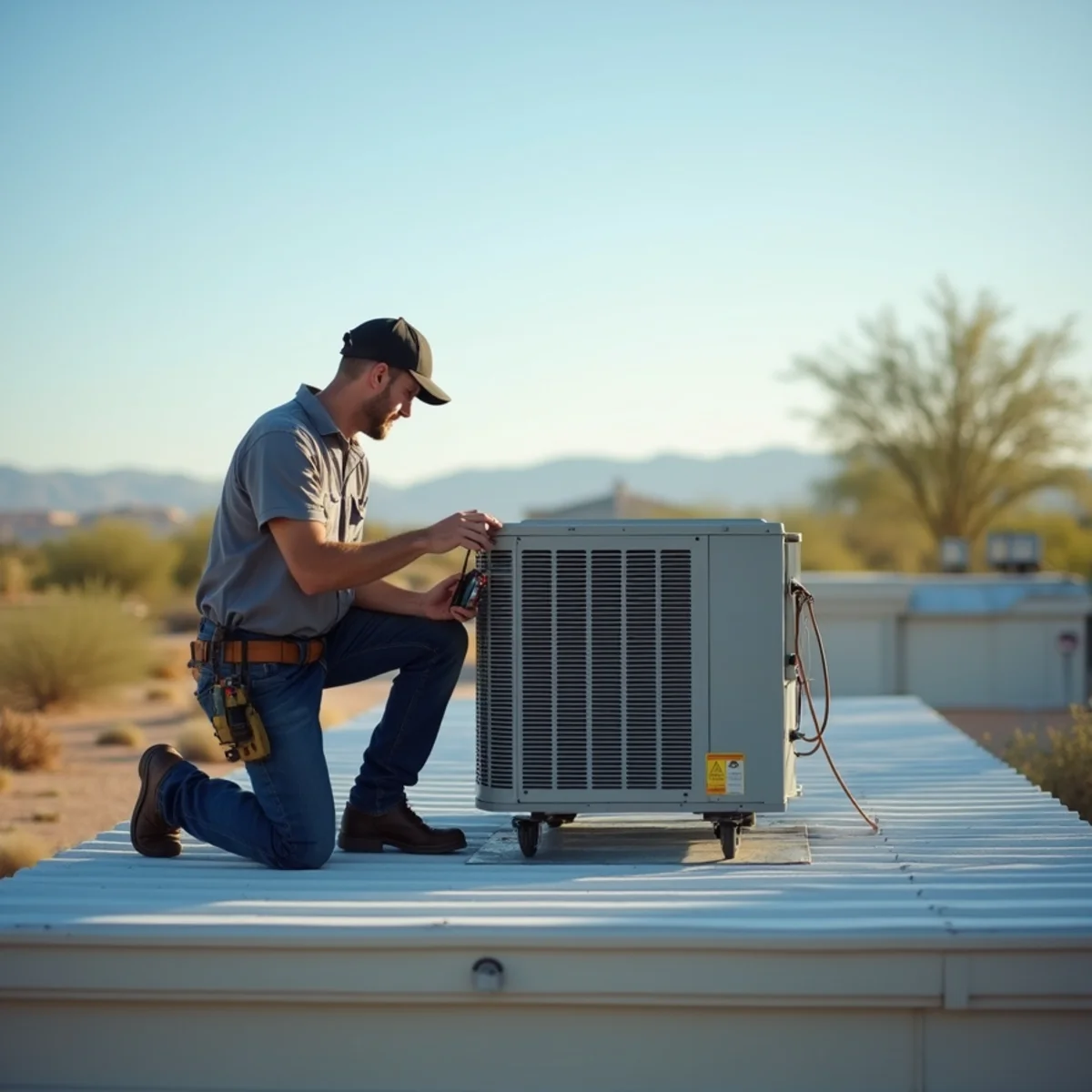
A big share of Apache Junction homes, especially manufactured homes and older ranch-style houses, cool with a packaged unit instead of a split system. Everything, the compressor, coils, and blower, lives in one cabinet on the roof or on a slab beside the home. That all-in-one design is simple and space-saving, but it also means the entire system bakes in full desert sun and swallows every dust storm that rolls off the Superstitions.
If you own one, knowing the common failure points helps you describe the problem clearly and avoid the handful of things that make a bad situation worse.
What Makes Packaged Units Different
In a split system, the noisy, hot components sit outside while the coil and blower live in a closet or attic. A packaged unit puts all of it in one weatherproof box connected to the home by a supply and return duct, often through the roof or a side wall. That means one lightning-exposed cabinet handles cooling, and on a gas pack, heating too.
The upside is easy access and no indoor equipment. The downside is total exposure. Roof-mounted units face UV, blowing grit, monsoon downpours, and the reflected heat of a dark roof deck. On manufactured homes, the duct connections at the roof jack are also a notorious leak point. Our manufactured home HVAC crews see the same rooftop failures over and over across town.
Common Packaged Unit Problems in Apache Junction
- Dust-clogged condenser coils. The outdoor coil wraps around the cabinet and packs full of dust after every haboob, choking heat rejection and spiking run times.
- Roof-jack and duct-connection leaks. Where the ducts pass through the roof, seals crack under UV and heat, dumping cool air into the attic cavity or open air.
- Sun-degraded cabinet seals and gaskets. Panels warp and gaskets crumble, letting hot outside air leak into the airstream.
- Rooftop drainage backups. Condensate lines and pans clog with dust and algae, and standing water can rust the base or trip a float switch.
- Storm and surge damage. Monsoon lightning surges kill capacitors and control boards on these fully exposed units.
- Failed capacitors and contactors, the single most common electrical failure, made worse by rooftop heat soak.
- Bearing and blower wear from grit working into the moving parts over years of dust exposure.
What You Can Safely Check From the Ground
A rooftop unit is not a place for a homeowner to climb around, especially in summer heat on a manufactured-home roof that may not be rated to walk on. Keep your checks safe and simple.
- Change the filter. On packaged units the filter usually sits behind a return grille inside the home or in a slot on the unit itself. A clogged filter is the number-one airflow killer.
- From the ground, look and listen. Is the fan on top spinning when the system calls for cooling? Do you hear a hum with no fan, or repeated clicking?
- Feel the air at your vents. Warm or weak air with the system running means capacity is down.
- After a dust storm, note whether run times jumped or cooling faded. That usually means the coil needs professional cleaning.
- Check for water stains on the ceiling near the roof jack, a sign of a condensate or duct-connection leak.
- Keep the area around a ground-mounted packaged unit clear of weeds, stored items, and blowing debris.
| What you observe | Likely cause | Safe next step |
|---|---|---|
| Fan hums, top fan not spinning | Failed capacitor or motor | Shut it off, call for repair |
| Run times spiked after a haboob | Dust-clogged condenser coil | Schedule professional coil cleaning |
| Ceiling stain near roof jack | Condensate or duct leak | Call before water damage spreads |
| Weak air, clean filter | Blower, cabinet leak, or duct issue | Professional diagnosis |
Why Rooftop Work Belongs to a Technician
Servicing a packaged unit means getting on the roof safely, opening a cabinet with live electrical and a charged capacitor inside, and often working on refrigerant, all of which are regulated and genuinely hazardous. Manufactured-home roofs in particular need proper weight distribution to avoid damage or a fall. Our technicians bring the right access equipment, EPA Section 608 certification for refrigerant, and the parts to fix common failures on the first trip.
Because these units live outside year-round, they reward regular maintenance more than almost any other system. Our deeper look at why manufactured-home packaged units need special care explains the seasonal rhythm that keeps them alive, and homeowners out in Queen Valley and across the AJ area count on us to keep their rooftop systems running through the worst of summer.
Packaged units are workhorses, but they live a hard life on Apache Junction rooftops. Keep the filter fresh, watch for post-storm changes, and bring in a pro for anything that involves the roof, the cabinet, or the refrigerant.
Frequently Asked Questions
A packaged unit houses the compressor, coils, and blower in one cabinet on the roof or a side slab, connected to the home by ducts. A split system separates the outdoor condenser from an indoor coil and blower. Packaged units are common on Apache Junction manufactured and ranch homes because they save interior space.
The condenser coil wraps around the cabinet and sits fully exposed, so a haboob packs it with dust in minutes. A clogged coil cannot reject heat, which drives up run times and cuts cooling. Professional coil cleaning after major storms is one of the best things you can do for a packaged unit.
Beyond changing the filter and keeping a ground-mounted unit clear of debris, no. Rooftop service means climbing a roof that may not be walk-rated, opening a cabinet with a charged capacitor and live wiring, and often handling regulated refrigerant. Those tasks belong to a certified technician.
Twice a year is ideal here, once in spring before cooling season and once in fall, because these units take the full brunt of desert sun, dust, and monsoon storms. Regular service catches coil buildup, weak capacitors, and duct-connection leaks before they turn into a summer breakdown.
Talk to a Local Apache Junction Technician
Same-day across Apache Junction & Gold Canyon — 24/7 in triple-digit heat.
Call +1 (327) 210-5999