
AJ's Manufactured-Home Boom: Why Packaged Units Need Special Care
Apache Junction has one of the largest manufactured-home communities in the region, and those homes run HVAC differently than a stick-built house. Packaged units and belly ducts need their own kind of care to survive the desert.
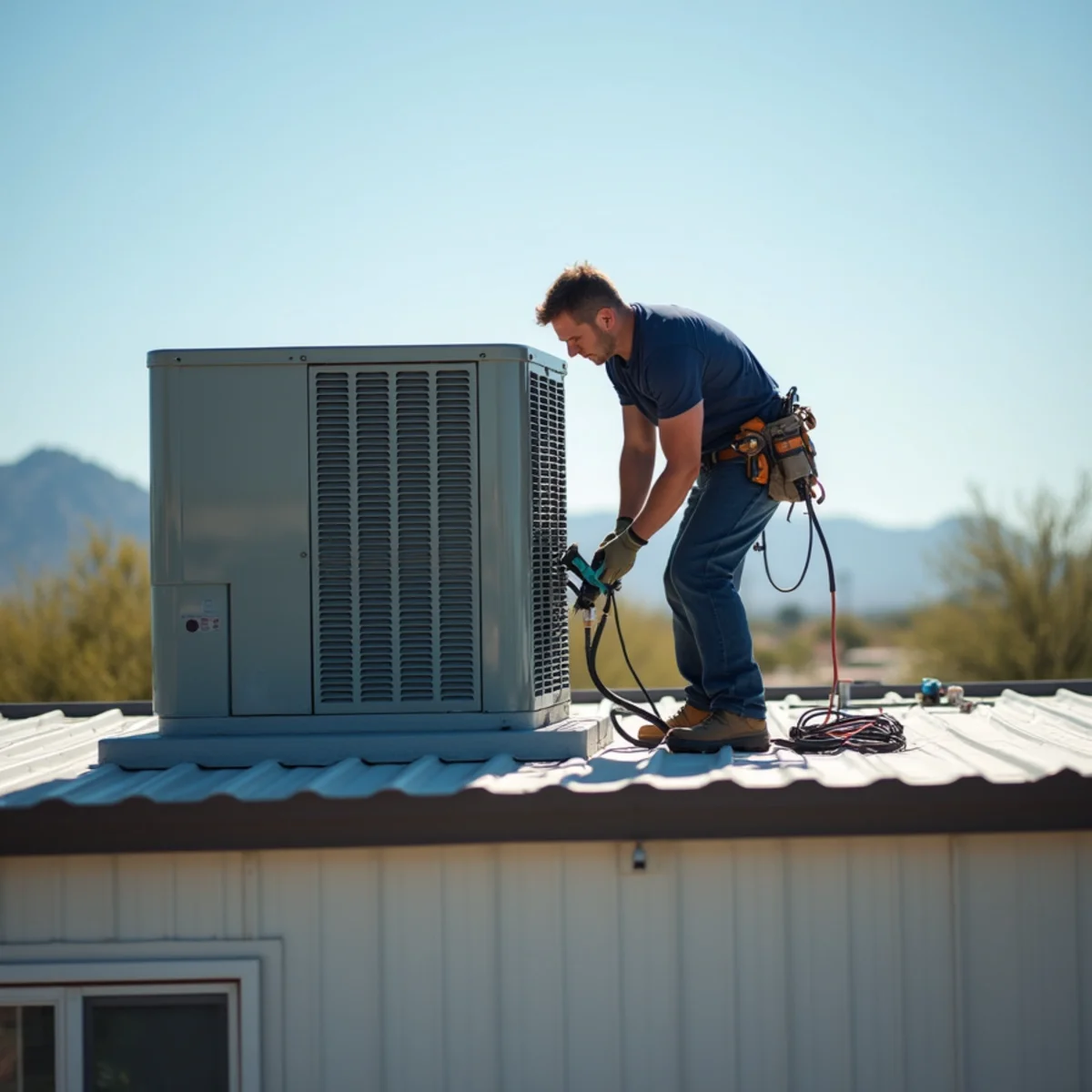
Drive through Apache Junction and you cannot miss it: this is manufactured-home country. Between the 55-plus resorts, the RV communities that converted to permanent living, and decades of affordable mobile-home parks, a huge share of the housing here is manufactured rather than stick-built. Those homes keep cool with a specific kind of equipment that most HVAC advice ignores, and treating a manufactured home like a conventional house is how people end up with weak airflow and premature failures.
If you own one of these homes, understanding how your system is different is the first step to keeping it running through the desert summer.
The Packaged Unit: Everything in One Box
A conventional house usually has a split system: a condenser outside and a furnace or air handler inside, connected by refrigerant lines. Most manufactured homes instead use a packaged unit, where the compressor, coils, and blower all live in a single cabinet, typically mounted on the roof or on a slab beside the home. All the cooling and heating happens in that one box, and the conditioned air is ducted into the home through a single large connection.
Belly Ducts: The Hidden Weak Point
Here is where manufactured homes really diverge. Instead of ducts running through an attic, most manufactured homes distribute air through a single main trunk running underneath the floor, inside the belly of the home, wrapped in the underbelly membrane and insulation. That design creates its own failure modes:
- The underbelly membrane tears or sags, letting cooled air dump into the crawl space instead of the rooms.
- Rodents and pests get into the belly and nest in or chew the insulation and ducts.
- Duct connections at each floor register work loose over years of settling.
- Damaged skirting lets hot outside air and dust circulate under the home, heating the duct trunk.
- A single blocked or crushed belly duct can starve an entire wing of the home.
When a manufactured home has weak airflow at the far rooms, the belly duct and skirting are usually the first place to look, not the unit itself. Our manufactured home HVAC service is built around exactly this kind of home, from packaged units to belly duct repair to proper skirting sealing.
Sizing and Replacement Are Different Too
You cannot simply drop a standard residential split system onto a manufactured home. Packaged units are their own product category, often with specific duct connection configurations, and replacement requires matching the new unit to the home's existing setup and roof or pad. A proper Manual J load calculation still matters, since manufactured homes have thinner walls and different insulation than block construction and can gain heat quickly.
| Feature | Manufactured home | Typical stick-built |
|---|---|---|
| Equipment | Packaged unit (all-in-one) | Split system |
| Ductwork | Belly / underfloor trunk | Attic ductwork |
| Exposure | Fully outdoor | Indoor air handler |
| Weak-airflow cause | Belly duct or skirting | Attic leaks or blower |
| Replacement | Match packaged config | Match split components |
A Care Routine That Fits
Keeping a manufactured home comfortable in the desert comes down to a handful of habits: change filters monthly through cooling season, keep the packaged unit's coils clean after dust storms, inspect the skirting and belly for damage each spring, and have the whole system checked before summer. Communities like Lamplighter Mobile Village are full of these homes, and the owners who stay ahead of belly and skirting issues get far more comfortable summers than those who wait for a room to go warm.
For a closer look at the equipment on the roof, our guide to packaged rooftop unit problems walks through the specific failures these units throw and how to catch them early.
Frequently Asked Questions
A packaged unit houses the compressor, coils, and blower all in one cabinet, usually on the roof or a slab beside a manufactured home, rather than splitting the equipment between an outdoor condenser and an indoor air handler. Because the whole system sits outdoors, it faces harder sun, dust, and storm exposure and needs more frequent coil cleaning.
In manufactured homes, air travels through a belly duct trunk under the floor. Torn underbelly membrane, pest damage, loose register connections, or damaged skirting can starve airflow to entire sections of the home. When the filter is clean and registers are open but a wing stays warm, the belly duct is usually the culprit.
Not usually. Manufactured homes are designed around packaged units with specific duct connections, so a replacement needs to match that configuration and the home's roof or pad setup. A proper load calculation still matters because these homes have thinner walls and gain heat faster than block construction.
Change filters monthly during cooling season, clean the packaged unit's coils after dust storms, and have the full system, skirting, and belly ducts inspected each spring before summer. Because the equipment is fully exposed to the desert, staying ahead of dust and duct issues matters even more than on a stick-built home.
Talk to a Local Apache Junction Technician
Same-day across Apache Junction & Gold Canyon — 24/7 in triple-digit heat.
Call +1 (327) 210-5999