
No Heat During a Desert Freeze Snap: Apache Junction Winter Guide
Apache Junction winters are mild until a freeze snap drops nights into the 30s and every heat system in town runs at once. Here is how to safely troubleshoot no heat before you call.
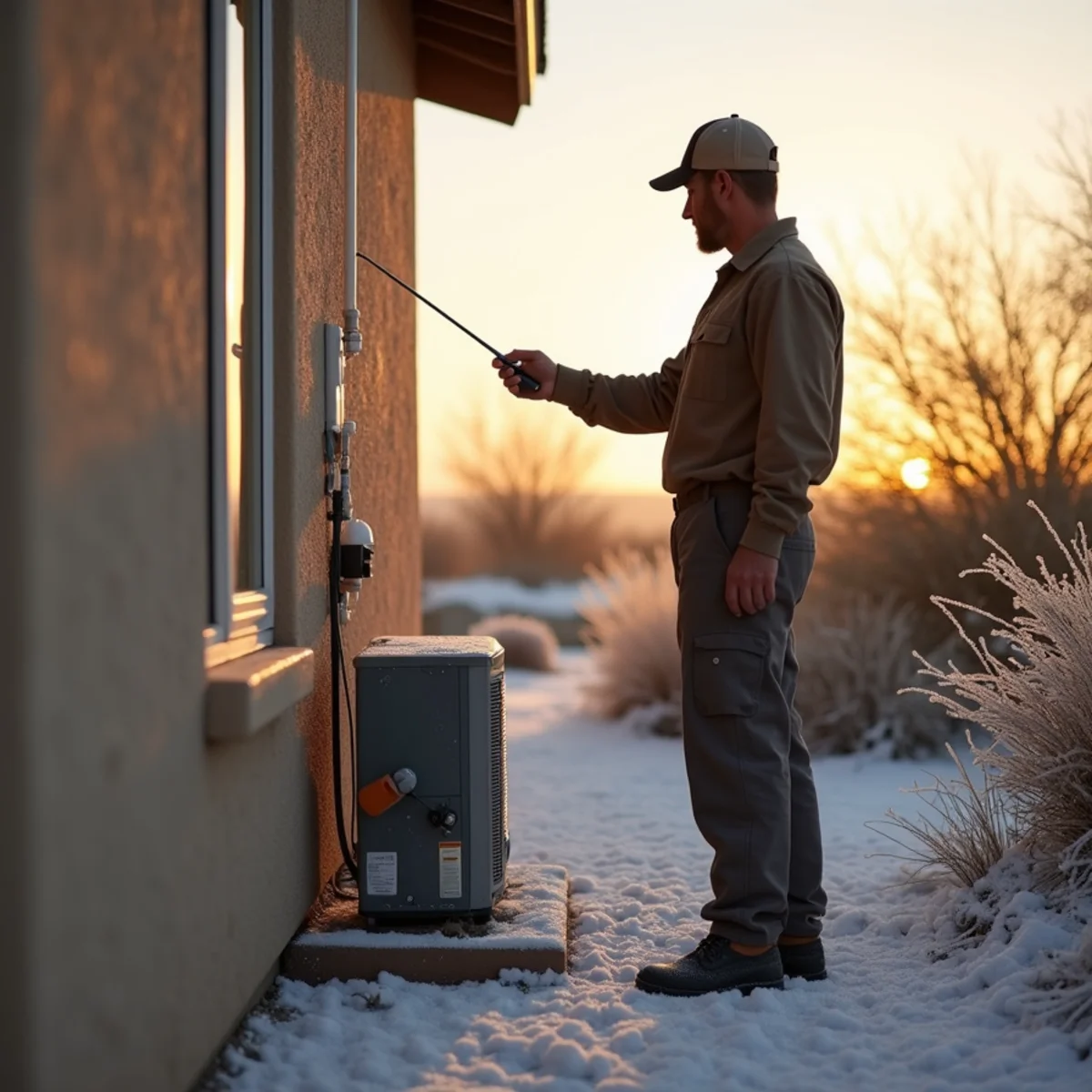
People move to Apache Junction partly to escape real winter, and most of the year that works out. Then a cold front drops out of the north, the wind comes off the Superstitions, and suddenly the overnight low is 34 degrees and your heat is not keeping up, or not coming on at all. Because our winters are so mild, a lot of homes here run heat pumps that only earn their keep a handful of nights a year, and furnaces that sit idle for months. When that equipment is finally asked to work, the weak links show up fast.
This guide covers what to check safely when you have no heat during a freeze snap, why heat pumps behave the way they do in the cold, and when a no-heat call becomes urgent, especially for older residents and homes with vulnerable occupants.
First, Understand What Kind of Heat You Have
Most Apache Junction homes fall into one of three camps, and the troubleshooting differs for each. A heat pump is an AC that runs in reverse to pull warmth from outside air; it is efficient but struggles when it gets truly cold and leans on backup strips. A gas furnace burns fuel for fast, strong heat. Electric resistance heat, common in older mobile and manufactured homes, is simple but expensive to run. If you are not sure which you have, the thermostat and the outdoor unit give it away: if the outdoor unit runs in winter, you have a heat pump.
The Safe Checks Before You Call
Work through these first. None involve opening a furnace cabinet or touching gas or wiring.
- At the thermostat, confirm it is set to Heat, the temperature is set above the current room temperature, and the batteries are fresh.
- Check the air filter. A clogged filter chokes a furnace into shutting off on a safety limit just as easily as it starves an AC.
- Reset the system breaker one time. If it trips again, stop and call.
- For a gas furnace, make sure the gas is on and, if you know where it is and it is safe to reach, that the furnace switch is on.
- Give a heat pump a few minutes to move through a defrost cycle before deciding it has failed.
- Confirm supply vents are open and not blocked by furniture, and that return grilles are clear.
Why Heat Pumps Struggle in a Freeze Snap
A heat pump pulls heat from outdoor air, so the colder it gets outside, the less heat there is to grab and the harder the system works. Below about 40 degrees, most heat pumps call on backup electric heat strips or auxiliary heat to keep up. If those strips have failed, you will feel the house fall behind on the coldest nights even though the system seems to be running. That is one of the most common no-heat calls we get during an Apache Junction cold snap: the heat pump is fine, but the backup that was supposed to cover the freeze is dead.
This is also why the heat-pump-versus-furnace decision matters so much here. If you are weighing your options for the next system, our comparison of heat pumps versus furnaces for Apache Junction's mild winters and freeze snaps lays out which makes sense for our climate and why sizing the backup heat correctly is the whole ballgame.
| Symptom | Likely cause | What to do |
|---|---|---|
| Runs but house stays cold | Failed heat pump backup strips | Call for diagnosis |
| No air at all | Thermostat, breaker, or blower | Check thermostat and breaker once |
| Furnace starts then shuts off | Clogged filter or flame sensor | Replace filter, then call |
| Outdoor unit iced solid | Stuck defrost cycle | Turn to Off for an hour, then call |
| Gas smell | Gas leak | Evacuate and call utility and us |
When No Heat Becomes Urgent
For a healthy household, a chilly night while you wait for morning service is uncomfortable but manageable. For older residents, infants, or anyone with a medical condition, an unheated house during a hard freeze is a genuine safety issue, and we treat it that way. Our heating repair team responds same-day across Apache Junction and Gold Canyon, and we prioritize no-heat calls for vulnerable homes during cold snaps. We work on heat pumps, gas furnaces, and the electric systems common in the older neighborhoods and mobile-home communities out here.
We cover the higher, colder pockets too. Homes up around Superstition Mountain sit at enough elevation to run a few degrees colder and frost harder than the valley floor, so those heat pumps get leaned on more, and their backup heat needs to actually work when the temperature drops.
Do Not Tough Out a Cold Snap
Run the safe checks, keep the house closed up to hold what heat you have, and dress in layers while you troubleshoot. If the heat will not come back, or if it runs but cannot keep up on a freezing night, call us. A no-heat night is not the time to wait it out, especially for the folks most at risk. Reach HVAC Apache Junction AZ at +1 (327) 210-5999 and we will get your heat back on.
Frequently Asked Questions
Usually it is just running a defrost cycle to clear frost off the outdoor coil, which lasts a few minutes and then heating resumes. If it never recovers and the house keeps falling behind, the backup heat strips may have failed and it is time to call.
Winters are mild, but freeze snaps drop overnight lows into the 30s, and higher-elevation spots near the Superstitions can frost hard. Those are the nights when heat pumps lean on backup heat and any weakness in the system shows up.
Use portable electric space heaters cautiously and never leave them unattended, but never use a gas oven or any fuel-burning device to heat a room. Carbon monoxide is a real danger. If you smell gas, evacuate and call from outside.
For vulnerable households, older residents, infants, or anyone with a medical need, yes. We prioritize those same-day during a freeze snap. For a healthy home, we still respond same-day but can plan around your schedule.
Talk to a Local Apache Junction Technician
Same-day across Apache Junction & Gold Canyon — 24/7 in triple-digit heat.
Call +1 (327) 210-5999