
Heat Pump vs. Furnace for AJ's Mild Winters and Freeze Snaps
AJ winters are mild with occasional freeze snaps, which changes the heat-pump-versus-furnace math from what you would hear in a cold climate. Here is how the two really compare here.
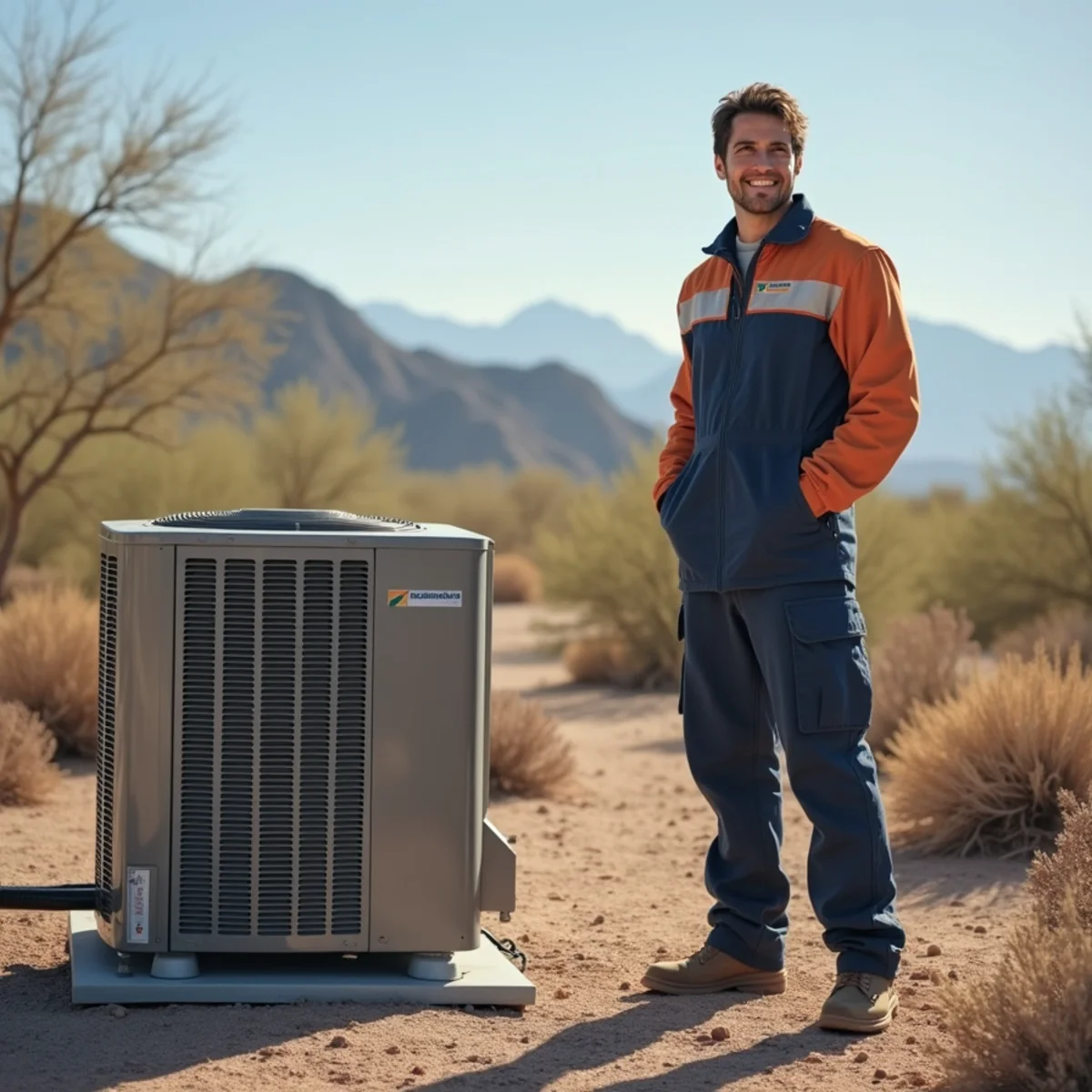
Heating advice written for Minnesota does not translate to Apache Junction. Here, winter means mild days, chilly desert nights, and a handful of hard freeze snaps when the temperature dips near or below 32. You are not fighting weeks of subzero cold, you are covering cool nights and a few genuinely cold mornings. That climate reality reshapes the classic heat-pump-versus-furnace decision, and for most AJ homes it tilts strongly toward one answer.
Let us break down how each system works in our conditions, what each costs to run, and which makes sense for your home.
How Each System Fits Our Climate
A heat pump is the same outdoor unit that cools your home in summer, run in reverse to move heat indoors in winter. Because Apache Junction already needs strong air conditioning, most homes here have a heat pump or a straight-cool AC anyway. Adding heating capability to that outdoor unit is efficient and simple, and a heat pump is remarkably good at exactly the kind of mild heating our winters demand.
A gas furnace burns natural gas or propane to produce heat. It excels in bitter cold, delivering hot air no matter how low the outdoor temperature drops. That strength is real, but it is built for a climate AJ does not have. Many homes here would fire that furnace only a few dozen times a winter.
Cost and Comfort Compared
| Factor | Heat pump | Gas furnace |
|---|---|---|
| Best suited for | Mild winters with freeze snaps | Sustained hard cold |
| Runs on | Electricity (also cools in summer) | Natural gas or propane |
| Efficiency in AJ winters | Very high, most days | High output, but overbuilt here |
| Equipment footprint | One system heats and cools | Separate furnace plus AC |
| Freeze-snap coverage | Backup electric heat strips | Strong regardless of cold |
| Gas line needed | No | Yes, or propane tank |
For the vast majority of Apache Junction homes, the heat pump wins on both cost and simplicity. One system handles cooling and heating, there is no gas line or propane tank to maintain, and modern heat pumps sip electricity during our mild winter days. On the rare freezing morning, electric backup heat strips fill any gap. Because summer cooling is the dominant expense in this climate, choosing a high-efficiency heat pump installation also upgrades the part of your comfort system you use most.
When a Furnace Still Makes Sense
A furnace is not wrong for everyone. There are a few cases where it earns its place.
- You already have a working furnace and functioning gas service, and only the AC needs replacing.
- Your home sits at higher, colder elevation, such as toward Queen Valley or the Superstition foothills, where freezes are more frequent.
- You strongly prefer the feel of gas heat, which delivers noticeably warmer air at the register.
- You have reliable, affordable natural gas already run to the home.
In those situations a dual-fuel setup, a heat pump paired with a gas furnace, can be the premium answer: the heat pump handles mild days efficiently, and the furnace takes over only in a hard freeze. It costs more up front, so it fits homeowners who want maximum comfort and have the gas service to support it.
How to Decide for Your Home
- Check what you have now. If you are replacing a straight-cool AC and have no gas service, a heat pump is usually the obvious upgrade.
- Consider your elevation and how cold your specific area gets on winter nights.
- Think about how you use the home. Snowbirds who leave before the coldest weeks rarely need furnace-grade heat.
- Factor summer. Cooling dominates your energy use here, so weight the decision toward the system that cools your home efficiently.
- Get a proper load calculation. Right-sizing matters as much as system type, and a professional Manual J removes the guesswork.
The cost side of this decision runs deep, and we cover the dollars and cents in our companion piece on heat pump versus straight-cool AC cost in Arizona. For a complete replacement, budget roughly 7,000 to 11,500 dollars installed depending on size, efficiency, and your ductwork, that is market context, not a quote. We help homeowners across Pinal County weigh these options with an honest, no-pressure assessment.
For most Apache Junction homes, a high-efficiency heat pump is the smart, economical choice: it matches our mild winters, covers freeze snaps with backup heat, and does double duty as the strong AC our summers demand. A furnace or dual-fuel system earns its keep mainly for higher-elevation homes or those already set up for gas.
Frequently Asked Questions
They work exceptionally well here. Heat pumps lose some efficiency in extreme cold, but Apache Junction winters are mild, sitting right in the range where a heat pump is most efficient. On the rare freezing morning, electric backup heat strips cover any shortfall.
Usually not, given our climate. Furnaces shine in sustained hard cold that AJ rarely sees, so a furnace here is often overbuilt for the actual heating load. For most local homes, a heat pump's efficiency on mild winter days makes it the more economical choice, and it also handles summer cooling.
A dual-fuel system pairs a heat pump with a gas furnace, using the heat pump on mild days and the furnace only in a hard freeze. It offers premium comfort and makes sense for higher-elevation homes or those with existing gas service, but it costs more up front than a heat pump alone. Most AJ homes do not need it.
If you have no gas service and are replacing a straight-cool AC, a heat pump is usually the natural upgrade. It adds efficient heating to the same outdoor unit that cools your home, so one system covers both seasons. A load calculation confirms the right size and confirms it fits your home.
Talk to a Local Apache Junction Technician
Same-day across Apache Junction & Gold Canyon — 24/7 in triple-digit heat.
Call +1 (327) 210-5999