
Mini-Splits for Garage Workshops & Casitas in Apache Junction
A garage that hits 120 degrees or a casita off the main duct system is a perfect match for a ductless mini-split. Here is how to think about cooling those hard-to-reach spaces.
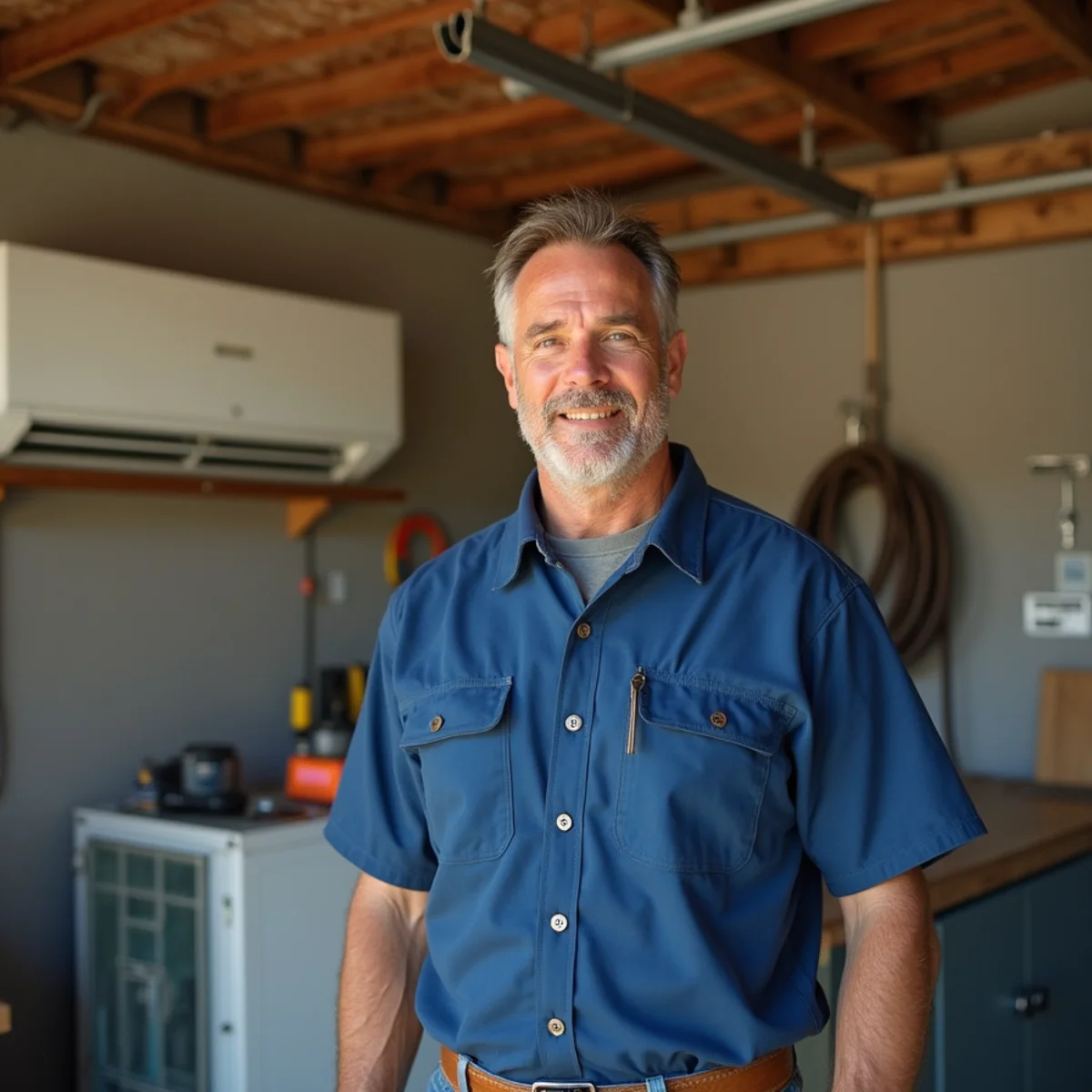
Ask anyone who has tried to work in an Apache Junction garage in July: by mid-afternoon it can be 120 degrees in there, hotter than outside, because that big metal door and uninsulated walls soak up sun all day. The same goes for a detached casita, a converted Arizona room, or a home office over the garage. These spaces almost never connect to the main duct system, and stretching ductwork to them rarely makes sense. A ductless mini-split is usually the right answer.
This guide covers why mini-splits fit these spaces so well, how to think about sizing in the desert, and what separates a good install from a disappointing one.
Why Ductless Wins for Garages and Casitas
A mini-split pairs a small outdoor condenser with one or more wall or ceiling heads, linked by a slim line set through a three-inch hole in the wall. There are no ducts to run, no attic to invade, and no way for a hot attic to sap efficiency. For a space that was never part of the home's original cooling plan, that is exactly what you want.
- No ductwork means no duct losses, a big deal when the alternative is running ducts through a 140-degree attic.
- Independent zone control lets you cool only the space you are using, so the garage AC is off until you are out there working.
- Inverter compressors modulate output, holding a steady temperature efficiently instead of blasting on and off.
- Most systems are heat pumps, so the same unit warms the space during AJ's winter freeze snaps.
- Quiet operation, which matters in a home office or casita bedroom.
- They do not overload your existing AC by adding square footage it was never sized to handle.
That last point matters. Trying to tie a garage or added room into a system sized for the original house often leaves the whole home struggling. A dedicated ductless mini-split sidesteps that entirely.
Sizing for Desert Reality
Here is where a lot of do-it-yourself installs go wrong. A garage or casita in Apache Junction is not a typical room. An uninsulated garage with a west-facing door pulls far more heat than its square footage suggests. Sizing a mini-split by floor area alone, the way an online calculator might, leaves you with a unit that runs flat out and never catches up.
A proper load calculation, a Manual J, accounts for insulation, glass, the door, ceiling height, and how the space is used. A metal garage door and slab absorb and radiate enormous heat. A workshop with a welder or a bank of tools adds heat load of its own. We size these systems for the worst hour of a July afternoon, not an average day.
| Space | Desert challenge | Sizing note |
|---|---|---|
| Uninsulated garage | Metal door, slab heat soak | Size up; insulate the door if possible |
| Detached casita | Full sun exposure, own walls | Consider a heat-pump model for winter |
| Converted Arizona room | Lots of single-pane glass | Account for solar gain from windows |
| Room over garage | Heat rising from below | Extra capacity for the hot floor |
What a Homeowner Can Do, and What Needs a Pro
Plenty of prep is homeowner-friendly. The install itself is not a weekend project.
- Clear the space and decide where the indoor head and outdoor unit will go. High on a shaded wall is usually best for the head.
- Add insulation to the garage door and any accessible walls before install day. It shrinks the load and improves comfort.
- Seal obvious gaps around the garage door and any pass-throughs to cut down on hot-air infiltration.
- Think about electrical. Most mini-splits need a dedicated circuit, which a licensed electrician or your installer sets up.
- Leave the refrigerant line set, vacuum, charge, and startup to a certified technician. This is regulated work that has to be done right for the system to last.
Those pre-charged do-it-yourself kits sold online are tempting, but a system that is not properly evacuated and charged for our conditions will underperform and can fail early. EPA rules also govern refrigerant handling. Our EPA Section 608 certified technicians size, install, and commission the system so it delivers rated capacity on the hottest days.
Mini-splits also shine in manufactured homes and additions where extending belly ducts is impractical. If weak airflow to an added room is your real problem, our guide on weak airflow in manufactured homes may point you to the root cause. We install ductless systems throughout the area, including established neighborhoods like Ironwood.
For a garage that becomes an oven or a casita the main system never reaches, a properly sized ductless mini-split is the cleanest fix in the desert. Insulate first, size for a July afternoon, and let a pro handle the refrigerant so the space is finally usable year-round.
Frequently Asked Questions
Yes, as long as it is sized for the space's real heat load rather than just its square footage. An uninsulated garage with a west-facing metal door absorbs enormous heat, so the unit must be sized for a July afternoon. Adding insulation to the door and walls first lets a smaller unit keep up comfortably.
Extending ducts usually means running them through a 140-degree attic, adding load your existing AC was never sized for, and often leaves the whole home struggling. A ductless mini-split gives the space its own efficient, independently controlled system with no duct losses.
Most mini-splits are heat pumps, so the same unit provides efficient heating during Apache Junction's winter freeze snaps. That makes them a good year-round solution for a casita or workshop you use in every season.
We do not recommend it. Pre-charged kits often underperform in desert heat because the system is not properly evacuated and charged for our conditions, and refrigerant handling is EPA-regulated. A certified technician sizes, installs, and commissions the system so it delivers full capacity and keeps its warranty.
Talk to a Local Apache Junction Technician
Same-day across Apache Junction & Gold Canyon — 24/7 in triple-digit heat.
Call +1 (327) 210-5999