
Heat Pump vs. Straight-Cool AC in Arizona: Cost & Comfort Compared
When you replace your system, you also choose between a heat pump and a straight-cool AC. For most Arizona homes the answer is clearer than you think. Here is the honest cost comparison.
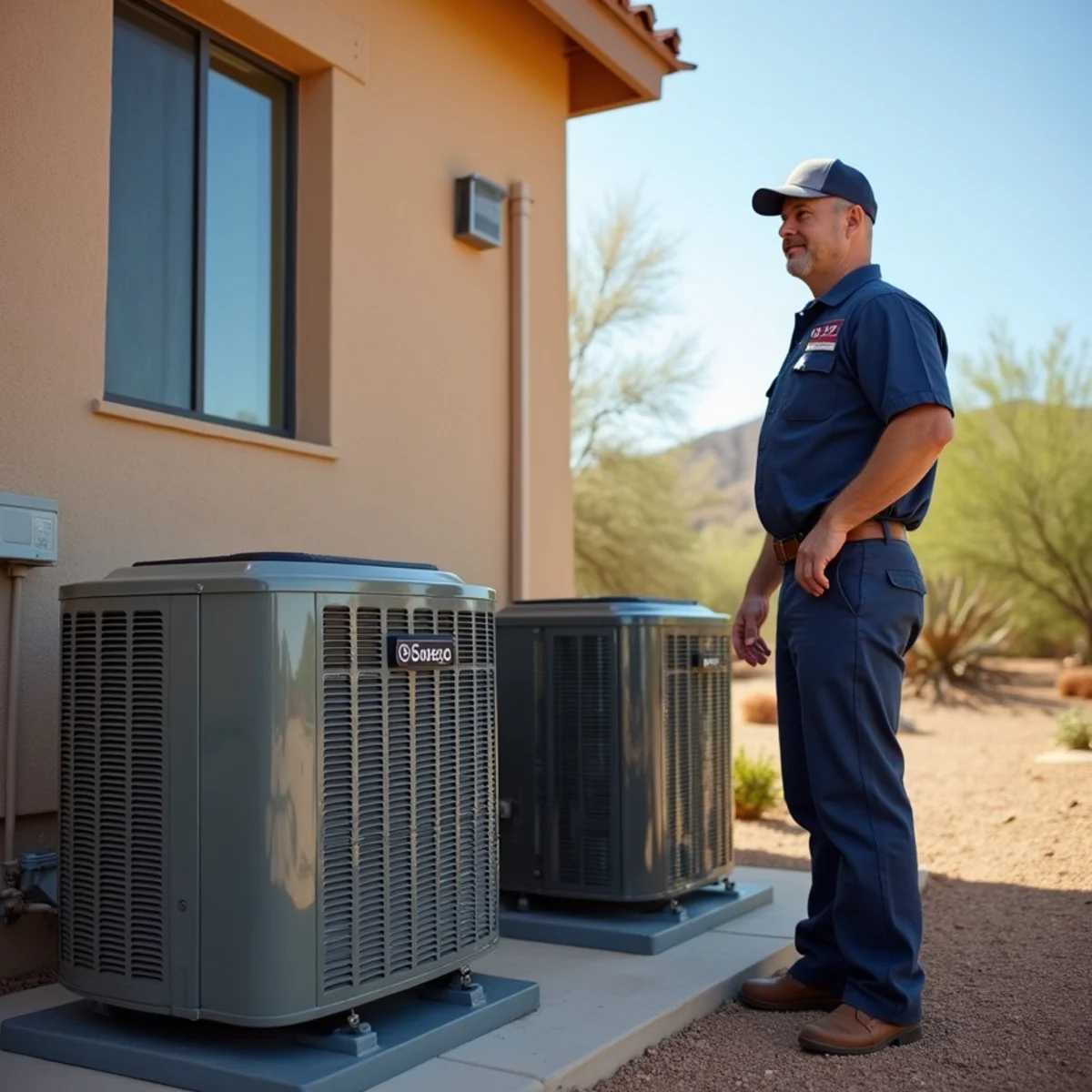
Every time an East Valley homeowner replaces a system, they hit the same fork in the road: a straight-cool air conditioner, or a heat pump. The two look nearly identical sitting beside the house. The difference is what they do in winter, and that single difference changes the up-front cost, the running cost, and how your home stays comfortable during a freeze snap in the Superstition foothills.
This guide compares the two honestly for our climate, no sales spin. If you are weighing a full system replacement, read it alongside our heat pump installation overview.
The Core Difference in One Paragraph
A straight-cool AC only cools. For heat, it relies on a separate gas furnace or electric heat strips. A heat pump is the same cooling machine, but it can run in reverse to pull warmth from outside air and heat your home, no furnace required. In cooling mode they perform essentially the same. In heating mode, a heat pump is remarkably efficient in our mild winters, where the temperature rarely drops low enough to challenge it.
Side by Side
| Factor | Straight-Cool AC | Heat Pump |
|---|---|---|
| Cooling performance | Excellent | Excellent (identical) |
| Heating | Needs furnace or heat strips | Built in, very efficient here |
| Up-front equipment cost | Often slightly lower alone | Comparable; may skip furnace cost |
| Winter running cost (mild AZ) | Higher with electric strips | Lowest for our climate |
| Best fit | Homes with good existing gas furnace | All-electric homes, freeze-snap winters |
| Freeze-snap comfort | Depends on backup heat | Strong down to near freezing |
Why Heat Pumps Shine in the Sonoran Desert
Heat pumps lose efficiency in genuinely cold climates, which is why they get a mixed reputation nationally. But Apache Junction is not Minnesota. Our winters are mild with occasional 40-degree nights and rare freeze snaps, which sits squarely in a heat pump's sweet spot. For most of the heating season, a heat pump moves heat rather than burning fuel to make it, and moving heat is far cheaper than generating it. On the rare truly cold night, a small backup heat strip covers the gap.
The Up-Front Cost Question
On paper, a heat pump's outdoor unit can carry a slightly higher price tag than a comparable straight-cool condenser. But that comparison is misleading if it ignores the heating side. A straight-cool system needs a separate furnace or heat strips to keep you warm. A heat pump bundles heating in. When you price the complete system, heating included, the gap often narrows or disappears. A full heat pump or AC replacement in this market runs roughly $7,000 to $11,500 installed, and the type you choose shifts your number within that band rather than blowing past it.
The Running-Cost Question
This is where a heat pump pulls ahead for most local homes. In our long cooling season, both systems perform the same, so cooling bills are a wash. The savings show up in winter. A heat pump heating your home in December costs a fraction of what electric-resistance strips cost to do the same job, because it is moving heat instead of making it. Over a decade of Arizona winters, that adds up to real money.
When Straight-Cool Still Makes Sense
Heat pumps are not automatically right for everyone. If your home already has a healthy, efficient gas furnace and inexpensive natural gas service, pairing a new straight-cool AC with that existing furnace can be the more economical path. There is no need to scrap a good furnace. The right call depends on your fuel situation, your furnace's age, and your ductwork. For a deeper look at the heating side specifically, see our comparison of heat pumps versus furnaces for Apache Junction winters.
Sizing and Installation Matter More Than the Badge
Whichever you choose, a correct Manual J load calculation and a clean installation matter far more than the logo on the unit. An oversized or poorly charged system of either type will disappoint. We serve Gold Canyon and the eastern communities where afternoon sun and mountain-edge temperature swings make right-sizing especially important. Our technicians walk you through both options with your actual home, fuel type, and budget in front of us, then give you a written proposal for each so you can compare on your own terms.
The Bottom Line for Most Local Homes
For an all-electric Apache Junction home, or any home without cheap gas heat, a heat pump is usually the smarter long-term buy: identical cooling, far cheaper winter heating, one tidy system. For a home with a solid gas furnace already in place, a straight-cool AC paired to it can win. Either way, the decision deserves real numbers for your house, not a generic rule.
Frequently Asked Questions
Very well. Heat pumps struggle only in genuinely cold climates. Apache Junction winters are mild with occasional freeze snaps, which is exactly where a heat pump is most efficient. On rare truly cold nights, a small backup heat strip covers the gap, so you stay comfortable year-round.
The outdoor unit alone can cost a bit more, but a straight-cool AC needs a separate furnace or heat strips for heat. When you price the complete heating-and-cooling system, the gap often narrows or disappears, and the heat pump usually costs less to run in winter.
For an all-electric home, a heat pump is usually the clear choice. It handles both cooling and heating efficiently from one outdoor unit, instead of relying on costly electric-resistance heat strips all winter. Many Apache Junction manufactured homes fall into this category.
Yes. If your gas furnace is healthy and efficient and you have inexpensive gas service, pairing a new straight-cool AC with it can be the more economical path. We inspect your furnace and ductwork and give you honest numbers for both options.
Talk to a Local Apache Junction Technician
Same-day across Apache Junction & Gold Canyon — 24/7 in triple-digit heat.
Call +1 (327) 210-5999