
AC Making Noises? A Sound-by-Sound Guide for AZ Homeowners
A new sound from your AC is the system trying to tell you something before it quits. Here is a sound-by-sound guide to what buzzing, clicking, screeching, banging, and hissing actually mean in the desert.
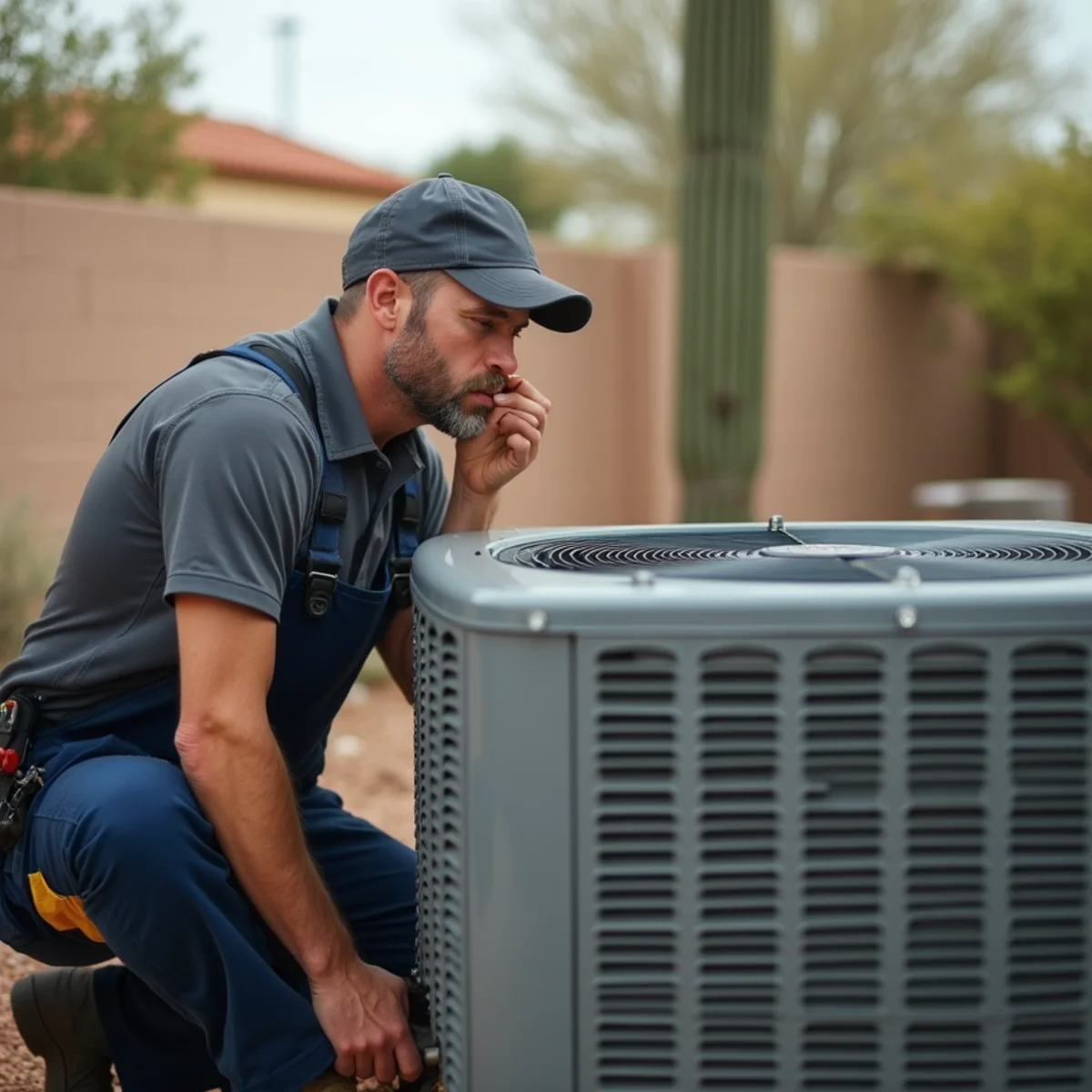
A brand-new noise from your air conditioner is almost always an early warning, and the specific sound tells you a lot about what is wrong. In short: buzzing usually points to an electrical issue like a failing contactor or capacitor, clicking that will not stop signals a relay or control problem, screeching means a motor or bearing, banging means something loose inside the compressor, rattling means debris or a loose panel, and hissing points to a refrigerant leak. Some of these are safe to investigate; others mean shut it down and call a tech. This guide walks each one, desert-specific, so you know which is which.
Apache Junction air conditioners work brutally hard, often ten-plus hours a day against 110-degree heat, so parts wear and loosen faster here than in milder climates. Catching a noise early frequently turns a small fix into a non-event. Ignoring it is how a ten-dollar part becomes a compressor. If any sound below has you concerned, our AC repair team can pinpoint it fast.
A Quick Sound-to-Cause Reference
Start here to narrow things down, then read the detail on your specific sound below. Urgency assumes a hot day with the system running:
| Sound | Most likely cause | Urgency |
|---|---|---|
| Loud buzzing / humming | Failing contactor, capacitor, or motor | High |
| Repeated clicking | Relay, control board, or thermostat | Medium |
| Screeching / squealing | Blower or fan motor bearing, belt | Medium to high |
| Banging / clanking | Loose or failing compressor part | High |
| Rattling / buzzing panel | Loose screws, panel, or debris | Low to medium |
| Hissing / bubbling | Refrigerant leak | High |
| Clicking at startup only | Normal relay engaging | None |
Buzzing or Humming: Usually Electrical
A loud buzz or hum, especially when the unit struggles to start or the outdoor fan sits still while the unit hums, typically means an electrical component is failing. The usual culprits are the contactor (the relay that switches high voltage to the compressor) and the capacitor (the part that gives motors their starting jolt). Capacitors fail constantly in our heat; we cover why in our guide to AC capacitor failure in Apache Junction.
Clicking: Normal Once, a Problem When Constant
A single click when the system turns on or off is normal; that is a relay engaging. Constant clicking is not. Repeated clicking during startup often means a relay or control board is failing to make a clean connection, or the capacitor is too weak to start the compressor so it keeps trying and giving up. A clicking thermostat that will not fire the system can also be a wiring or control issue. If the system clicks but never starts cooling, it is a diagnostic call, not a DIY fix.
Screeching or Squealing: Motors and Belts
A high-pitched screech usually comes from a motor. On older systems with a belt-driven blower, it can be a worn or slipping belt. More often in modern desert units, it is a failing bearing in the blower motor or the outdoor fan motor, which our dry, dusty air wears down over time. A squeal that appears at startup and fades can be a belt; a steady metallic screech while running points to a bearing that is on its way out. Either way, the motor is the fix, and that is pro work.
Banging or Clanking: Treat It as Urgent
A hard bang or clank from the outdoor unit usually means a loose or broken part inside the compressor, or a component that has come adrift and is striking the housing. The compressor is the heart and the most expensive part of the system, so a banging compressor is the one noise you never ignore. Shut the system off and call for service. Running it through a banging sound risks turning a repairable problem into a full replacement, which for a complete system runs in the $7,000 to $11,500 range.
Rattling: Often the Cheapest Fix
Rattling is the most homeowner-friendly noise. It is frequently just a loose access panel vibrating, screws that have backed out under years of compressor vibration, or desert debris, twigs, gravel, a palm frond, caught in the condenser. Here is what you can safely do:
- With the system OFF at the thermostat, look for sticks, leaves, or gravel in the outdoor fan grille and clear anything loose by hand.
- Check that the access panels on the outdoor cabinet are seated and their screws are snug; a loose panel is a classic rattle.
- Trim back any plants or oleander crowding the condenser so nothing is being sucked against the grille.
- Rinse caked dust off the exterior fins gently with a hose on low pressure, never a pressure washer.
If the rattle continues after the obvious debris is gone, it may be an internal fan or motor mount, which moves it into pro territory.
Hissing or Bubbling: Suspect a Refrigerant Leak
A hiss or a gurgling, bubbling sound often means refrigerant is escaping under pressure. Beyond the noise, a leak starves the system so it cools poorly and can freeze the coil. Refrigerant is regulated and must be handled by a certified tech; it is never a DIY repair. If you hear hissing along with weak cooling, read the warning signs in our refrigerant leak signs guide for Arizona and have it checked. A loud hiss near the indoor cabinet can also be a duct or air-pressure issue, which a tech can distinguish quickly.
When to Call and Who to Trust
Rattles and debris you can often handle yourself with the power off. Buzzing, constant clicking, screeching, banging, and hissing all mean it is time to bring in a licensed tech before the noise becomes a breakdown on the hottest day of the year. We serve Mesa and the wider East Valley with same-day diagnostics during cooling season. Our 4.9-star, 137-plus-review crew will identify the sound, show you the worn part, and give you an honest repair-or-replace answer. Call +1 (327) 210-5999 the moment a new noise appears; early almost always costs less.
Frequently Asked Questions
A hum with no startup usually means an electrical component cannot get the motor moving, most often a failed capacitor or a burned contactor. Both are extremely common in Arizona heat. Do not open the condenser panel, because the capacitor holds a dangerous charge even with the power off. Switch the system off at the breaker and call a licensed tech, since this is a quick, inexpensive fix when caught early.
It is the sound to take most seriously. A bang or clank from the outdoor unit usually means a loose or broken part inside the compressor, the most expensive component in the system. Running it through that noise can destroy the compressor and force a full replacement. Shut the system off and call for service rather than letting it keep running.
A steady hiss or a bubbling sound frequently points to a refrigerant leak escaping under pressure, often paired with weak cooling or a frozen coil. Refrigerant must be handled by an EPA-certified technician, so this is never a do-it-yourself repair. A hiss near the indoor unit can also be a duct pressure issue, which a tech can tell apart during diagnosis.
Often, yes. With the system switched off, clear any debris like twigs or gravel from the outdoor fan grille, make sure the cabinet access panels are seated and their screws are tight, and trim back plants crowding the unit. A loose panel is a very common rattle. If the sound continues after that, the cause is likely internal, such as a fan mount, and should be checked by a technician.
Talk to a Local Apache Junction Technician
Same-day across Apache Junction & Gold Canyon — 24/7 in triple-digit heat.
Call +1 (327) 210-5999Related articles
Capacitor Failure After a Monsoon Storm: AJ's Most Common Breakdown
The single most common AC failure we fix in Apache Junction is a blown capacitor. Here is how to spot it, why our heat and monsoon storms cause it, and why it is one of the cheaper fixes if you catch it fast.
Read moreRefrigerant Leak Signs to Catch Before the Next Triple-Digit Week
A slow refrigerant leak hides all spring and then leaves you without cooling on the first 110-degree day. Learn the early warning signs so you can fix it before the heat exposes it.
Read more