
Sawtooth Fire Smoke Lessons: Wildfire IAQ for the Superstition Foothills
The Sawtooth Fire in the Superstition foothills was a reminder that wildfire smoke can settle over Apache Junction with little warning. Your HVAC system is the first line of defense for indoor air, if you set it up correctly.
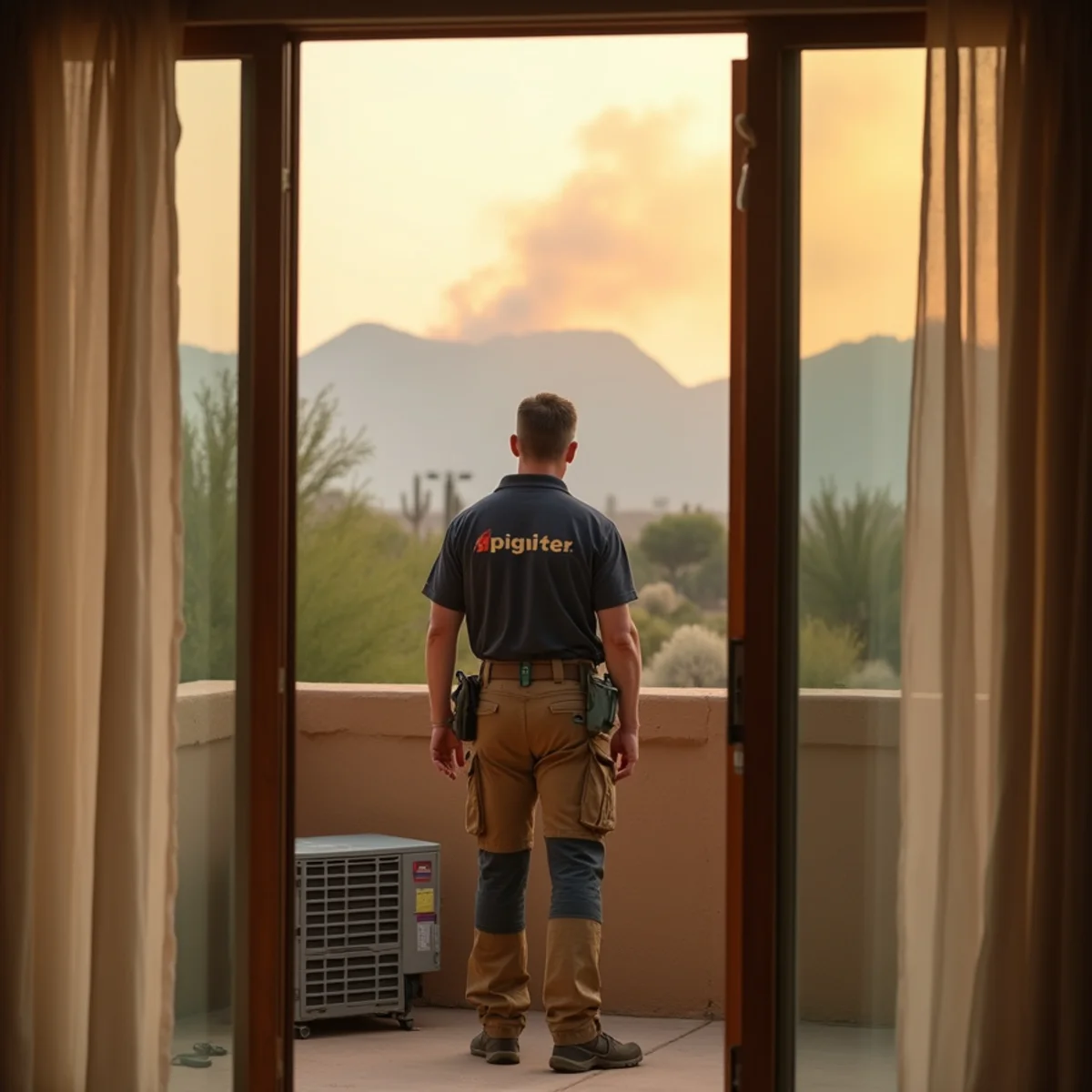
The Superstition Wilderness that gives Apache Junction its dramatic backdrop is also fuel. Brush fires like the Sawtooth Fire that burned in the foothills are a recurring summer reality, and when the wind is wrong, smoke slides down out of the mountains and settles over the neighborhoods along the eastern edge of town. Unlike a haboob, which passes in an hour, wildfire smoke can hang for days, and the fine particulate it carries is far more dangerous to breathe than dust.
During a smoke event, your air conditioning system is not just for comfort. It is the machine that decides whether the air inside your home is cleaner or dirtier than the air outside. How you set it up matters.
Why Wildfire Smoke Is Worse Than Dust
The health hazard in wildfire smoke is PM2.5, particulate matter smaller than 2.5 microns, roughly thirty times thinner than a human hair. These particles slip deep into the lungs and into the bloodstream, and public health guidance from the EPA and Arizona health agencies is consistent: during heavy smoke, stay indoors and keep indoor air as clean as possible. Regular desert dust is coarse and irritating; wildfire PM2.5 is fine and genuinely harmful, especially for children, older adults, and anyone with asthma or heart conditions.
Setting Up Your HVAC for a Smoke Event
The instinct to open windows for fresh air is exactly wrong during a smoke event. Here is the right sequence:
- Close all windows and doors and keep them closed for the duration of the smoke.
- Set the thermostat fan to On rather than Auto, so the system continuously pulls indoor air through the filter even when it is not actively cooling.
- Upgrade to a higher-efficiency filter your system can handle, ideally MERV 13, which captures a meaningful share of fine smoke particles.
- Make sure any fresh-air intake or economizer is closed so you are not deliberately drawing smoky outside air in.
- Run a portable HEPA air cleaner in the bedrooms or main living area to supplement the central system.
- Change the filter promptly after the event, because it will load heavily with smoke particulate.
| Filter type | Smoke PM2.5 capture | Notes |
|---|---|---|
| Fiberglass (MERV 1-4) | Essentially none | Protects equipment only |
| MERV 8-11 | Partial | Good for dust, limited on fine smoke |
| MERV 13 | Strong | Best residential option if airflow allows |
| Portable HEPA unit | Excellent (room-scale) | Great supplement to central system |
The Airflow Tradeoff
There is a catch worth understanding. A denser MERV 13 filter captures far more smoke, but it also restricts airflow, and not every older residential blower can push against that resistance without straining or icing the coil. If you want serious smoke protection without starving the system, the right answer is often a dedicated filtration upgrade sized to your equipment. Our indoor air quality specialists can fit a deep-pleat media cabinet or a whole-home solution that filters hard while keeping airflow healthy, which is a better long-term answer than jamming a restrictive filter into a slot built for a thin one.
Foothills Homes Are on the Front Line
Neighborhoods like Superstition Foothills sit right up against the wilderness boundary, which is exactly where smoke settles first and lingers longest during a mountain fire. If you live along the eastern edge of town, it is worth setting up your air quality defenses before fire season rather than scrambling when the sky turns brown. The same equipment that handles wildfire smoke also tames the fine desert dust that plagues these homes year-round, which our guide on why AJ filters load twice as fast covers in depth.
Frequently Asked Questions
Yes, but set it up correctly. Keep windows and doors closed, set the fan to On so the system continuously filters indoor air, close any fresh-air intake, and use the best filter your system can handle. Running the AC this way keeps indoor air cleaner than the smoky air outside, which is exactly what you want.
A MERV 13 filter captures a strong share of the fine PM2.5 particles in wildfire smoke, far more than standard dust filters. The catch is that it restricts airflow, so not every older blower can handle it. A dedicated media cabinet sized to your system, plus a portable HEPA unit in the bedrooms, is often the best combination.
Yes. Wildfire smoke is loaded with PM2.5, particles smaller than 2.5 microns that slip deep into the lungs and bloodstream. Desert dust is coarser and mostly irritating. Public health agencies treat heavy wildfire smoke as a serious hazard, especially for children, older adults, and people with asthma or heart conditions.
It depends on the system. A restrictive filter in a blower built for a thin one can starve airflow and even ice the coil. If you want strong smoke protection without that risk, have a technician fit a deep-pleat media cabinet or whole-home filtration sized to your specific equipment rather than forcing a dense filter into a standard slot.
Keep the fan running and the good filter in place for at least a day or two after outdoor air quality recovers, since fine particles settle and re-circulate indoors well after the sky looks clear. Then swap the loaded filter — a smoke event can pack a filter as fast as a haboob. For homes near the Superstition foothills that catch wildfire smoke off the Tonto National Forest, it is worth keeping a spare high-MERV filter on hand each summer.
Talk to a Local Apache Junction Technician
Same-day across Apache Junction & Gold Canyon — 24/7 in triple-digit heat.
Call +1 (327) 210-5999