
Rooftop Package Unit Maintenance for East Valley Retail
Retail lives on foot traffic, and foot traffic disappears the moment a store gets hot. Here is a season-by-season rooftop package unit maintenance plan built for East Valley stores and the technicians who keep them cool.
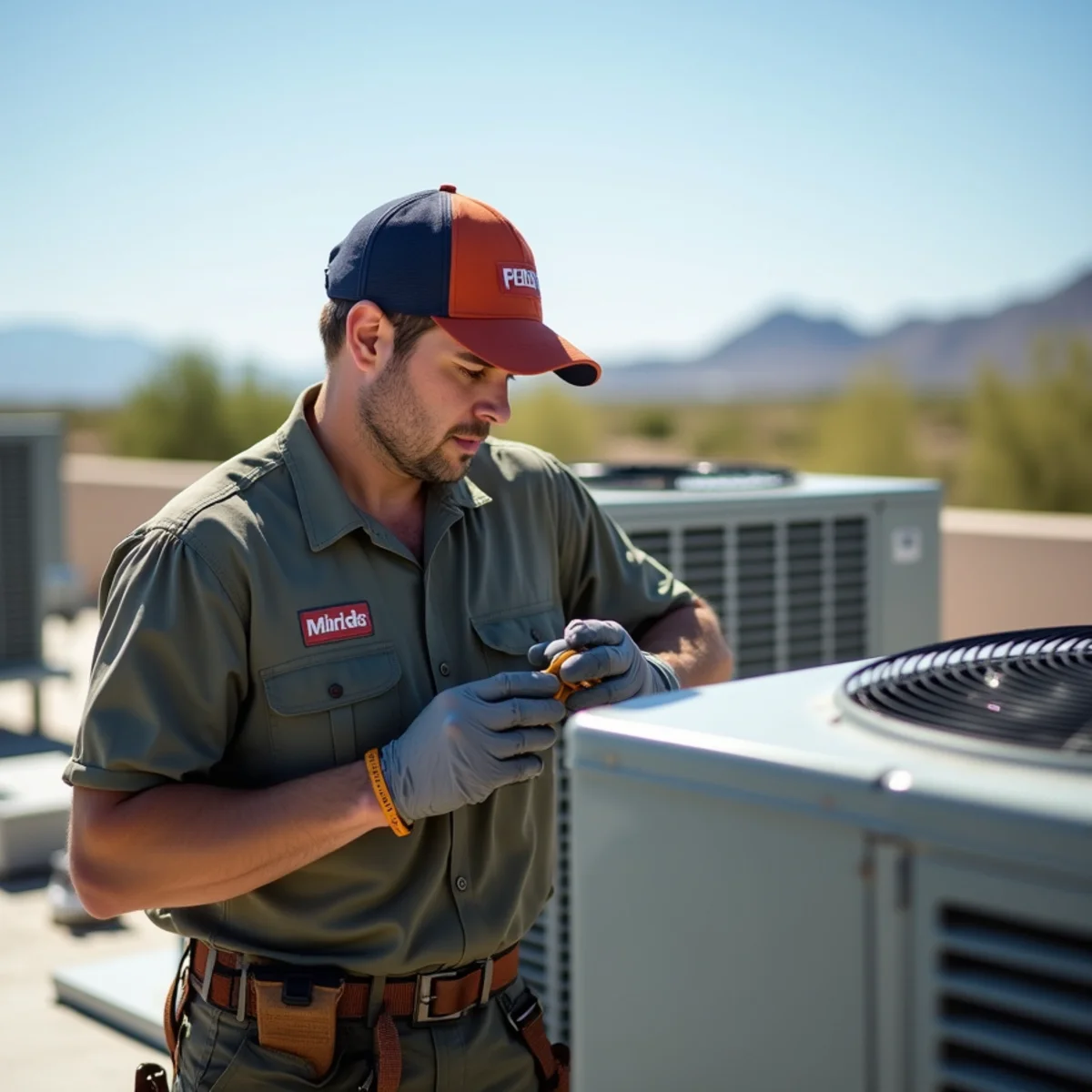
A retail store has a comfort problem that an office does not: customers vote with their feet in real time. If your sales floor drifts from 72 to 80 degrees on a Saturday in July, browsers become leavers, and the register goes quiet. The equipment responsible for keeping that from happening is almost always a rooftop package unit (RTU), and in the East Valley it is fighting one of the hardest cooling environments in the country.
This is a practical, season-by-season maintenance plan for retail RTUs, written for store owners and property managers from Mesa out to Apache Junction. Follow it and you keep your floor comfortable, your energy bills sane, and your worst-case failure off the calendar. Our commercial HVAC crew runs this exact playbook on retail roofs across the corridor.
Why Retail RTUs Need a Tighter Schedule Than Most
Three things make retail rooftop units age faster than the units on a quiet office building. First, extended hours: many stores run 10 or more hours a day, seven days a week, so the compressor logs far more runtime. Second, door cycling: every customer who walks in dumps hot outside air onto the sales floor, forcing the unit to work against a moving target. Third, the East Valley climate itself, where 150-degree roof surfaces and monsoon dust storms punish every exposed component.
Put those together and a retail RTU that gets only a once-a-year glance will usually give you three or four fewer years of service life than one on a documented plan, and it will pick the busiest day of the year to remind you.
The Season-by-Season RTU Maintenance Schedule
Desert HVAC does not run on a national quarterly calendar. It runs on our seasons: the pre-summer ramp, the brutal core, the monsoon, and the mild winter changeover. Here is what each unit needs and when.
| Season | Key tasks | Why it matters for retail |
|---|---|---|
| Spring (Mar-Apr) | Deep coil cleaning, refrigerant charge check, capacitor and contactor test, belt and drain-pan service | Sets the unit up to survive July at full sales-floor load |
| Early summer (May) | Filter change, amp-draw log, thermostat and staging check | Catches a weak compressor before peak season |
| Monsoon (Jul-Sep) | Post-storm coil rinse, drain-line clearing, electrical inspection | Dust and power surges cause most mid-season failures |
| Fall (Oct) | Heat-mode check, economizer damper service, filter change | Ensures shoulder-season comfort and dry-heat readiness |
Coil Cleaning Is the Job That Actually Saves You Money
If you do only one thing on a retail rooftop, clean the condenser coil properly. A coil packed with desert dust and traffic grime cannot reject heat, so head pressure climbs, the compressor runs hot, and efficiency collapses, which shows up as both a higher power bill and a shorter equipment life. A proper cleaning reaches the fin face and flushes the debris all the way through, not just a cosmetic rinse of the cabinet.
- A blocked coil can cut cooling capacity 20 to 30 percent on the hottest days, exactly when your floor needs it most.
- High head pressure from a dirty coil is one of the top causes of premature compressor failure in this climate.
- Clean coils lower monthly energy use, which on a summer retail bill is real money back on the lease's operating costs.
Protecting Sales-Floor Comfort and Minimizing Downtime
The goal of all of this is simple: keep the floor comfortable during open hours and keep any necessary service out of your peak windows. That means scheduling coil cleanings and filter changes for early morning before doors open, and it means catching failing parts, capacitors, contactors, and worn belts, during a planned visit instead of during a Saturday rush.
It also means being realistic about aging equipment. An RTU past 15 years that needs a compressor is often a replacement conversation, not a repair one. Documented amp-draw and pressure trends let you plan that replacement in a shoulder season and budget for it, rather than being forced into an emergency swap during your busiest month. We serve retail corridors throughout the region, including HVAC service across Mesa, where strip-mall roofs carry the same package-unit challenges.
Build the Plan Before the Heat Builds
The best time to get a retail RTU on a maintenance schedule is spring, before the first triple-digit stretch loads the system to its limit. If summer is already here, a mid-season baseline inspection still pays for itself the first time it catches a failing capacitor before it strands your sales floor. For tourist-heavy and seasonal storefronts with their own rhythm, see our guide on keeping tourist-season businesses cool near Lost Dutchman State Park.
Retail is a comfort business whether you sell coffee or hardware. The rooftop unit is what makes that comfort possible. Treat it like the revenue-protecting asset it is, and it will keep your doors open through the worst the desert throws at it.
Frequently Asked Questions
At minimum once a year in spring, before peak cooling season. High-traffic stores and any building along a dusty frontage road benefit from a second cleaning after the monsoon storms pass in early fall. Because East Valley dust and traffic grime cake coils quickly, this one task does more to protect capacity and energy costs than any other single service.
The two leading causes are a clogged filter starving airflow, which can freeze the coil and trip the compressor, and a dirty condenser coil driving head pressure and compressor temperature too high. Both are preventable with routine service. Monsoon power surges are the third major cause, which is why post-storm electrical checks are part of a good plan.
Yes, for planned maintenance. Coil cleanings, filter changes, and inspections are scheduled for early morning before you open, so customers never notice. The service happens on the roof, not on your sales floor. Only a mid-day emergency failure disrupts business, which is the whole argument for staying on a preventive schedule.
When a unit past roughly 15 years needs a major component such as a compressor, replacement usually makes more financial sense than repair, especially given the efficiency gains of a newer unit in this climate. Tracking amp draws and pressures over time lets you plan that replacement in a cool shoulder season rather than being forced into an emergency swap during peak retail hours.
Talk to a Local Apache Junction Technician
Same-day across Apache Junction & Gold Canyon — 24/7 in triple-digit heat.
Call +1 (327) 210-5999