
Leaky Ducts in a 140F Attic: The Hidden Money Pit
Every joint your ducts leak in a 140-degree attic pulls in superheated air or dumps the cooling you paid for. Here is how to spot the waste and stop it.
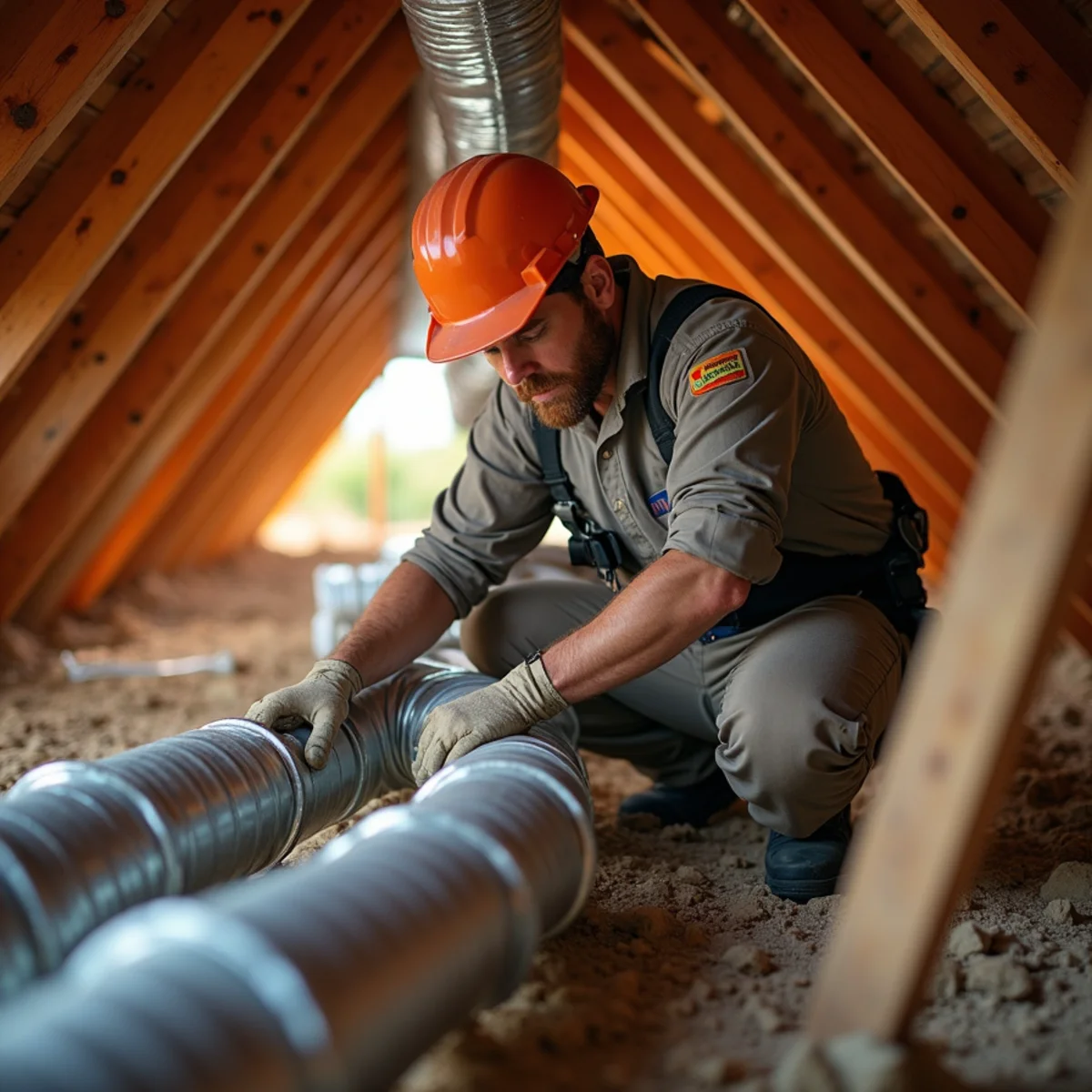
On a July afternoon in Apache Junction, the attic above your ceiling can reach 140 degrees or more. Now picture the ducts running through that oven with leaks at the joints. Every gap either lets that superheated attic air get sucked into the return, or blows the cold air you paid to make straight into a space no one lives in. It is one of the most expensive problems in desert homes, and one of the most invisible.
Studies of typical duct systems find that leaks waste 20 to 30 percent of the air a system moves. In our climate, where the attic is punishingly hot for months, that lost efficiency shows up as a soaring power bill and rooms that never quite cool.
Why a Hot Attic Turns Small Leaks Into Big Losses
In a mild climate, a leaky duct in a 90-degree attic is a modest problem. In Apache Junction, the attic is often 60 degrees hotter than the air inside your ducts. That enormous temperature gap magnifies every leak. A supply-side leak dumps 55-degree air into a 140-degree attic, a total loss. A return-side leak does something worse: it pulls 140-degree attic air, along with dust and insulation fibers, directly into your system, forcing the AC to cool that scorching air before it ever reaches your rooms.
Signs Your Ducts Are Leaking
- Some rooms never cool as well as others, especially those farthest from the air handler.
- Summer electric bills that climb year over year with no change in how you use the AC.
- Excessive dust in the home, a classic sign that return leaks are pulling attic air and debris into the system.
- The system runs nearly nonstop but struggles to hold the setpoint.
- Rooms that feel stuffy, or a noticeable difference between the temperature at the thermostat and in back bedrooms.
- Visible disconnected or drooping flex duct if you glance into the attic hatch.
That last point about dust ties directly to how fast filters load here. Our article on why desert dust loads AJ filters twice as fast explains the connection between leaky returns and the gray filter you keep replacing.
What You Can Safely Check
You can gather useful clues without crawling into a 140-degree attic. Save the sealing itself, and any real attic work, for cooler heads and a professional.
- Walk the house with the AC running and note which rooms are weak or warm. A clear pattern, worse the farther from the unit, points to duct loss.
- Feel and compare vent airflow room to room. Big differences suggest leaks or disconnects between here and there.
- Check your filter. If it loads with fine gray dust unusually fast, return leaks may be feeding it attic debris.
- Look, do not climb, into the attic hatch with a flashlight. Obvious disconnected or hanging flex duct is worth reporting.
- Compare this summer's bills to last year's. A steady upward creep with the same habits often traces to worsening leaks.
- Note whether the rooms nearest the air handler cool fine while distant rooms lag, a telltale duct-loss fingerprint.
| Clue | What it suggests | Action |
|---|---|---|
| Back rooms always warm | Supply leaks or disconnects | Professional duct inspection |
| Filter loads with gray dust fast | Return-side attic leaks | Duct sealing and return check |
| Bills creeping up each summer | Growing duct losses | Duct evaluation and sealing |
| Visible hanging flex duct | Disconnected run | Reconnect and seal (pro) |
How the Fix Works, and What It Saves
Professional duct sealing starts with finding the leaks, sometimes with a pressure test, then sealing joints with mastic and proper tape, reconnecting anything that has pulled apart, and confirming the results. Older cloth-tape connections that have dried and let go get redone the right way. Where insulation has slipped off duct runs baking in the attic, that gets restored too. The goal is simple: keep the air you paid to cool inside the ducts until it reaches your rooms. Our ductwork repair and sealing team handles this from evaluation through verification.
The payoff in a desert home is real. Tightening a leaky system commonly trims cooling costs meaningfully and, just as important, lets distant rooms finally reach temperature so the whole house is comfortable. Homeowners in neighborhoods like Apache Villa with original 1970s and 80s ductwork often see the biggest gains, because those systems have had decades for tape to fail and joints to loosen.
Leaky ducts are the quiet money pit of Apache Junction homes, invisible above the ceiling but very visible on the utility bill. Watch for the warm-back-room and fast-dusting-filter clues, and let a pro seal the system so your cooling stops leaking into the attic.
Frequently Asked Questions
Typical duct systems lose 20 to 30 percent of the air they move to leaks. In an Apache Junction attic that can top 140 degrees, that loss translates into a much larger cooling bill and rooms that never fully cool, because the system is either dumping cold air into the attic or cooling superheated attic air it pulled through return leaks.
The attic here is often 60 degrees hotter than the air inside your ducts, which magnifies every leak. A leak that would be minor in a mild climate becomes a major energy loss when it is 140 degrees on the other side of the duct wall.
Very possibly. Return-side leaks in the attic pull in attic air loaded with dust and insulation fibers, then circulate it through your home and load your filter fast. Persistent dust plus a quickly graying filter is a common sign of return leaks.
No, and ironically cloth duct tape is one of the first things to fail in a hot attic. Proper sealing uses mastic and rated materials applied to clean, accessible joints, work that means safely entering a dangerously hot attic. It is best left to a professional who can seal it to last.
Talk to a Local Apache Junction Technician
Same-day across Apache Junction & Gold Canyon — 24/7 in triple-digit heat.
Call +1 (327) 210-5999